
Grim Outlook for Poultry Sector Amid Integrated Chicken Downstreaming Programme
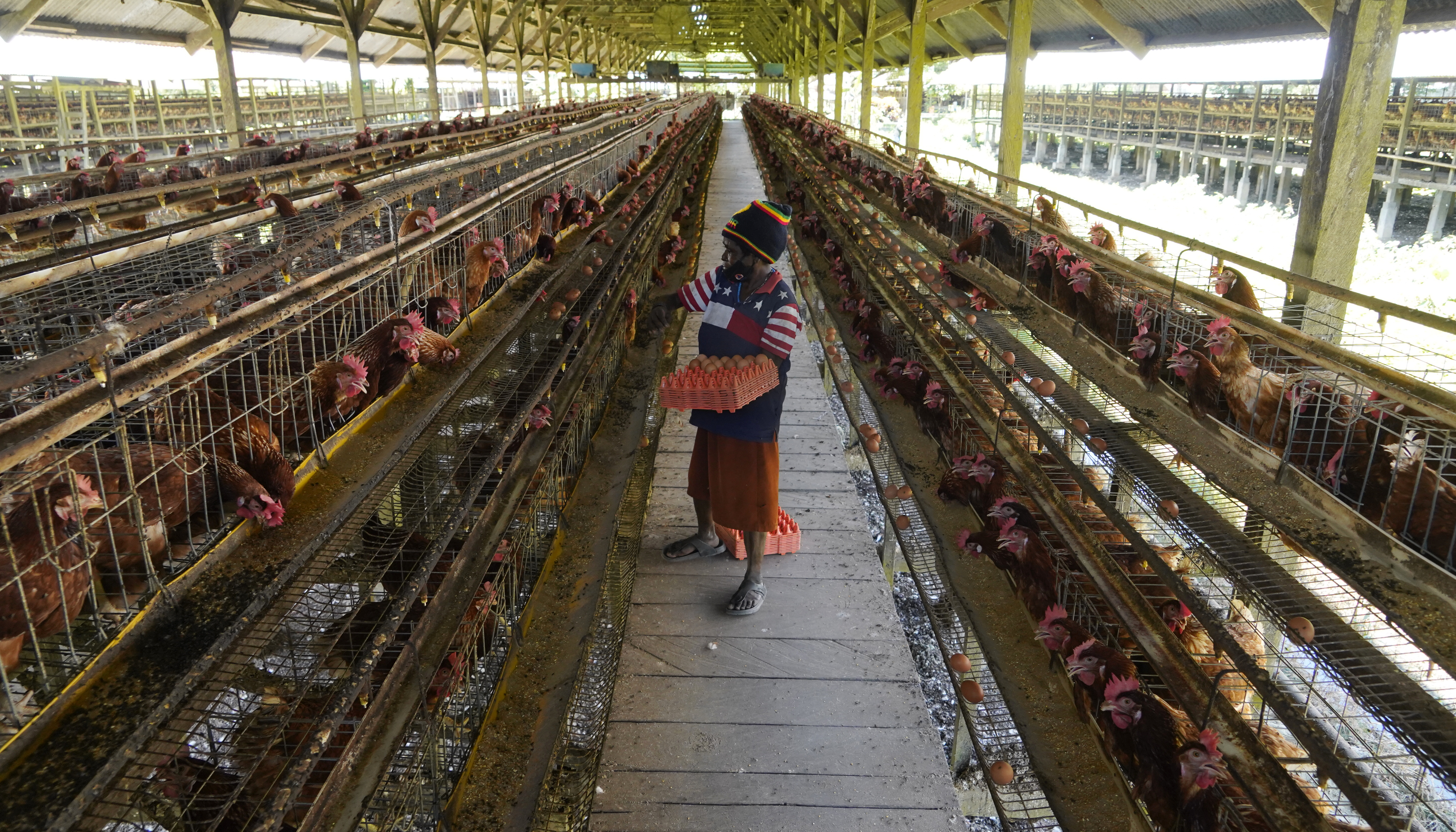
Amid the rollout of the Free Nutritious Meals programme, the national poultry sector is presenting a grim picture. Instead of enjoying a windfall, the number of poultry farming businesses has declined and egg prices have slumped while feed prices have risen. However, there remains a glimmer of hope for improving and developing the sector. The acceleration of the Integrated Chicken Downstreaming programme, which has begun in East Java and South Sulawesi, is expected to be one of its drivers.
On 14 August 2026, Statistics Indonesia published the 2025 Poultry Farming Company Statistics. The statistics cover the number and status of poultry companies, the number of livestock raised and their production, the number of workers, and the income and expenditure of poultry companies. In terms of numbers, Indonesia had 858 legally registered poultry farming companies in 2025. These consisted of 286 poultry breeding companies and 572 poultry cultivation companies. This figure fell by 6.33 percent, or 58 companies, compared with 2024, when there were 916 companies. Of that total, poultry cultivation companies decreased by 36 and breeding companies by 22.
In terms of location, these poultry companies are spread across 32 provinces. Around 70 percent are on Java, with West Java having 242 companies, Banten 147, East Java 115, and Central Java 102. National poultry farming companies are dominated by broiler and layer farms. Over the past year, from 2024 to 2025, the number of both types of companies declined. The number of layer farms fell from 290 to 269 units, while broiler farms fell from 289 to 270 units.
In the statistics, BPS also recorded production developments from poultry farming companies in 2024 and 2025. This production mainly consists of slaughtered poultry and poultry eggs. Production of slaughtered poultry increased from 230.62 million birds, worth Rp 6.92 trillion, in 2024 to 303.25 million birds, worth Rp 11.08 trillion, in 2025. In other words, the volume of slaughtered poultry production rose by 31.49 percent in a year. Conversely, over the same comparison period, poultry egg production fell by 25.05 percent. Egg production volume in 2024 reached 485,603 tonnes, worth Rp 9.55 trillion. In 2025, production volume was 363,959 tonnes, worth Rp 9.09 trillion.
Reflecting on the decline in the number of poultry companies, including broiler and layer farms, the condition of the national poultry sector is quite concerning. This is especially so given that the Free Nutritious Meals programme began rolling out quite massively and evenly across almost all regions of Indonesia in 2025. The National Nutrition Agency recorded that, from its launch on 6 January 2025 until 31 December 2025, the number of Nutrition Fulfilment Service Units grew from 190 to 19,069. These units are spread across 7,022 sub-districts in 609 regencies/cities in 38 provinces and serve 55 million beneficiaries. This number has reached 59.59 percent of the government’s target of 32,000 units to serve 82.9 million beneficiaries. Naturally, the surge in the number of meal kitchen service units demands an extraordinarily large supply of food, including chicken meat and eggs.
The Ministry of Agriculture records that, to meet the needs of 82.9 million Free Nutritious Meals beneficiaries, an additional 700,000 tonnes of chicken eggs and 1.1 million tonnes of chicken meat are required. For this, Indonesia needs an additional 54.79 million laying hens and 1.23 billion broiler chickens. However, reflecting on the 2025 Poultry Farming Company Statistics, the number of broiler and layer farming companies in 2025 actually declined. In terms of production, slaughtered poultry production did increase. Conversely, egg production fell.
Amid these conditions, layer and broiler farming companies have been hit by rising feed prices in recent months. In fact, chicken egg prices at farm and consumer level have slumped below the reference price. Suwardi, chairman of the Prosperous Poultry Farmers Cooperative of Central Java, said that feed prices remain high at Rp 7,400 to Rp 7,700 per kilogram. This is because the prices of raw materials such as maize, rice bran, and soybean meal have risen. The price of feed maize has reached Rp 7,000 per kg due to a production crisis caused by El Nino and the dry season. Rice bran prices have also reached Rp 6,000 per kg. “Likewise, the price of imported soybean meal has risen by Rp 2,000 per kg due to rising international market prices and the weakening rupiah,” he said.
Referring to the 2025 Poultry Farming Company Statistics, BPS states that feed is the largest expenditure for poultry farming companies. Of the total expenditure of poultry farming companies across Indonesia in 2025, which reached Rp 25.306 trillion, 64.26 percent was total feed expenditure. This was followed by expenditure on worker wages and salaries at 10.41 percent, medicines at 4.16 percent, fuel at 3.94 percent, and electricity and water at 3.48 percent. Specifically for feed, the largest expenditure was on concentrate purchases (88.52 percent), maize (8.96 percent), other feed (2.35 percent), and rice bran (0.17 percent).
Source: jawawa.id (https://jawawa.id/newsitem/grim-outlook-for-poultry-sector-amid-integrated-chicken-downstreaming-programme-1787827824)
Originally published by kompas.id (https://www.kompas.id/artikel/wajah-muram-perunggasan-dan-hilirisasi-ayam-terintegrasi), translated from Indonesian