
Grim Fate for Indonesia's Lower-Class Citizens: Salaries Evaporate Quickly - Wallets Scream
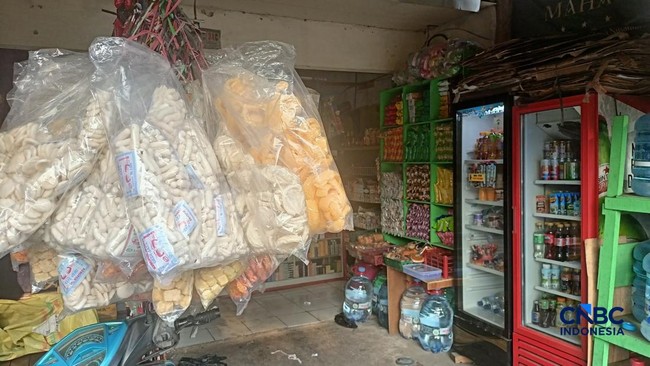
Jakarta, CNBC Indonesia - The purchasing power of lower-class society can be seen, among other things, from daily shopping activities at small warungs. This phenomenon is directly felt by the keeper of Warung Madura, Mukmin, who daily serves residents and project workers in the Cirendeu residential area, South Tangerang.
According to Mukmin, the shopping rhythm of customers usually starts to slow down after the beginning of the month has passed. This situation has even become a routine pattern that occurs almost every month.
“If it’s the warung, when it’s the end of the month, it’s quiet,” said Mukmin when met by CNBC Indonesia on Wednesday (13/5/2026).
Daily necessities purchasing activities begin to change when entering the end of the month. He sees some customers starting to reduce their spending.
“Yes, it’s like they’re fasting,” he said while serving another buyer.
Amid the warung’s activities that remain busy with customers coming and going, Mukmin assesses that this condition is not new. However, lately he feels that people are indeed starting to be more careful in spending their money.
“There might be, the impact is there, sir,” he said.
Mukmin said the character of customers in his area is quite diverse because many daily project workers live around the location. This condition makes the shopping pattern not always the same as in urban areas dominated by office workers.
“Here there are many labourers, right. Labourers get paid differently every week, unlike employees who wait for monthly salaries,” he said.
Meanwhile, another keeper at a Madura warung in the same area, Rahmat, also expressed something similar. According to him, sales start to slow down at the end of the month. Buyers start to be more careful in spending their money.
“Those who used to buy two packs of cigarettes at once, when it’s near the end of the month, it becomes just one pack, so less,” he said.
He mentioned that small warungs are actually one of the places that quickest capture changes in society’s consumption patterns.
“If the lower class society’s condition is like that, it depends on the economic situation as well. If there’s money, they shop more,” said Rahmat.