
Gresik SEZ Investment Reaches Rp113.4 Trillion, Government Supports Expansion
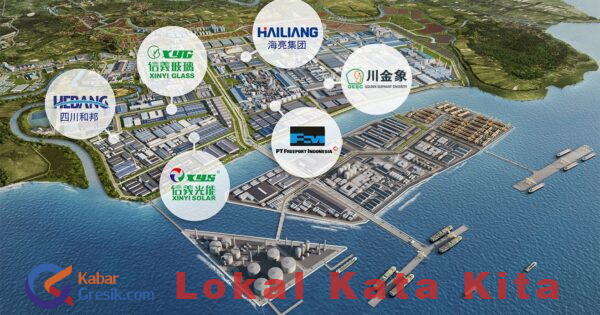
The government is supporting plans to expand the Gresik Special Economic Zone (KEK) after the industrial area recorded cumulative investment of Rp113.4 trillion up to the first quarter of 2026. This support emerged during a coordination meeting on the Spatial Utilisation Activity Conformity Approval (PKKPR) for the expansion plan, held at the Java Integrated Industrial and Ports Estate (JIIPE) in Manyar, Gresik, on Friday (12/6/2026).
Secretary of the Coordinating Ministry for Economic Affairs and Secretary of the National KEK Council, Susiwijono Moegiarso, stated that the government will continue to oversee the expansion process to accommodate the high level of investment interest entering KEK Gresik. “The government fully supports the expansion of KEK Gresik so that existing investment opportunities and potential can be immediately realised and converted into economic activity and employment,” he said in an official statement.
Since its designation through Government Regulation Number 71 of 2021, KEK Gresik has developed into a new economic growth centre in East Java. By the first quarter of 2026, incoming investment had reached Rp113.4 trillion. Of this amount, Rp108.2 trillion was realised after the area obtained KEK status, representing an increase of more than 1,900 per cent compared to the period before designation.
This investment growth has also impacted labour absorption. Currently, KEK Gresik employs 45,860 workers, with more than 44,000 jobs created after the area was granted KEK status. According to Susiwijono, the need for expansion demonstrates high investor confidence in Indonesia’s investment climate, particularly in KEK Gresik, which features an integrated industrial and port ecosystem. He added that the expansion is also a strategic step to strengthen manufacturing, logistics, and port activities, as well as to support the development of green energy in the future.
The government, together with relevant ministries, agencies, regional administrations, and zone operators, will continue coordination to accelerate the licensing process and the completion of spatial planning. “It is hoped that the licensing and approval process for the expansion of KEK Gresik can proceed optimally to support increased investment, job creation, and national and regional economic growth,” Susiwijono said. The expansion of KEK Gresik is expected to open up space for new investment while strengthening Gresik’s position as a strategic national industrial and downstream processing zone.