
Greenpeace Wins as Government Ordered to Disclose Revocation of Four Nickel Mining Permits in Raja Ampat
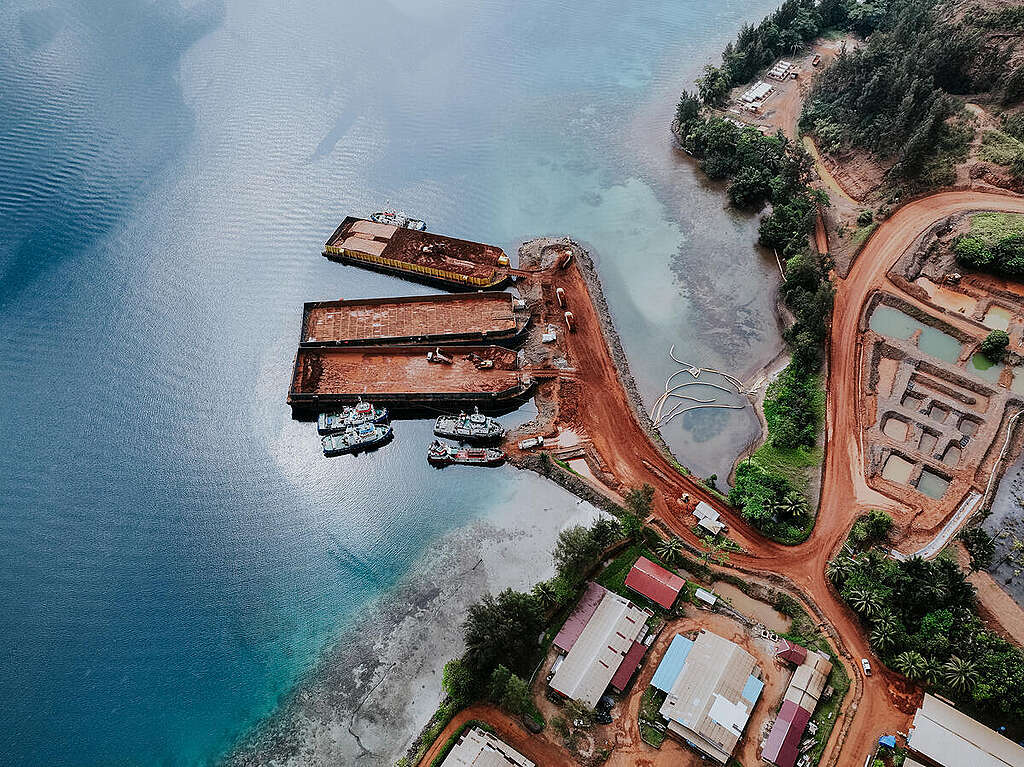
Greenpeace Indonesia has welcomed today’s ruling by the Jakarta State Administrative Court (PTUN), which rejected the objection filed by the Ministry of Investment and Downstream Industry/Investment Coordinating Board (BKPM) against disclosing the decrees revoking the mining business permits of four nickel mining companies in Raja Ampat.
The ruling upholds an earlier decision by the Central Information Commission, which declared that the permit revocation documents and details of their implementation stages constitute information open to the public.
Anggi Putra Prayoga, Forest Campaigner for Greenpeace Indonesia, said the ruling offers a rare piece of good news amid the opacity surrounding the revocation decrees for the four nickel mining permits (IUP) in Raja Ampat.
“The government must stop evading its obligation to be transparent: immediately disclose the revocation decrees, the stages of their implementation, and how the companies’ responsibility to restore the environment damaged by nickel mining on the small islands will be ensured,” said Anggi.
For nearly a year, Greenpeace Indonesia has sought the official documents revoking the four nickel mining IUPs in Raja Ampat. Since Energy and Mineral Resources Minister Bahlil Lahadalia announced the revocations in June 2025, no official documents have been made accessible to the public to confirm how the decision has been carried out.
Greenpeace Indonesia first submitted an information request to the Ministry of Energy and Mineral Resources in July 2025, roughly a month after public pressure mounted through the #SaveRajaAmpat campaign. The ministry’s reply stated that the revocation of the IUPs falls under the authority of the Ministry of Investment and Downstream Industry/BKPM.
In the same month, Greenpeace wrote to BKPM, but the letter went unanswered, leading to a public information dispute before the Central Information Commission (KIP).
The dispute process at KIP ran from October 2025 to June 2026. On 10 June 2026, the panel of commissioners read out its ruling, granting part of Greenpeace’s claim: the permit revocation documents and their implementation details are information open to the public.
Information on the personal data of company owners was agreed to be withheld from the public or redacted.
The ruling rejected BKPM’s earlier claim that the revocation decrees were confidential. Yet rather than acting transparently and complying with the decision, BKPM appealed by filing an objection with the Jakarta PTUN.
Arie Rompas, Head of the Forest Campaign Team at Greenpeace Indonesia, said the government’s opaque conduct from the outset is deeply puzzling. What exactly is being covered up if even the decrees are not disclosed? A healthy business and investment climate also requires openness and legal certainty.
“For the public, transparency is essential to ensure the accountability of government and companies in addressing the nickel mining problems in Raja Ampat,” said Arie.
Greenpeace is urging full and permanent protection for Raja Ampat from destructive industrial activity, as well as law enforcement to protect small islands and conservation areas on land and at sea. The Raja Ampat archipelago is a vital ecosystem: its land and waters are home to Indigenous Peoples and local communities, and its waters hold the greatest marine biodiversity in the world.
Source: jawawa.id (https://jawawa.id/newsitem/greenpeace-wins-as-government-ordered-to-disclose-revocation-of-four-nickel-mining-permits-in-raja-ampat-1789465832)
Originally published by prohealth.id (https://prohealth.id/greenpeace-menang-pemerintah-diperintah-buka-pencabutan-izin-4-tambang-nikel-di-raja-ampat/), translated from Indonesian