
Greenpeace Victory: Administrative Court Orders Government to Release Revocation Decrees for Four Mines
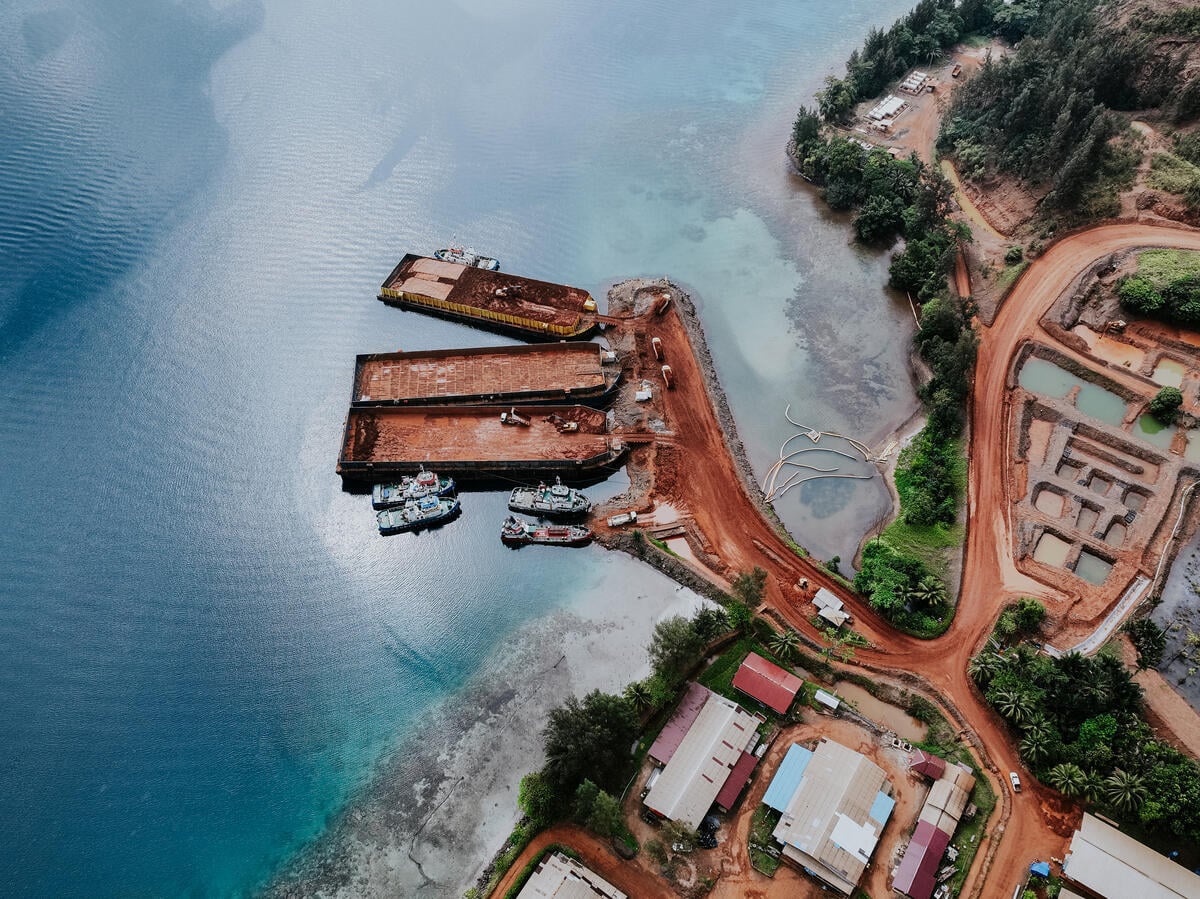
Jakarta, 14 September 2026. Greenpeace Indonesia has welcomed the decision by the Jakarta Administrative Court (PTUN) today, which rejected the objections of the Ministry of Investment and Downstreaming/Investment Coordinating Board (BKPM) regarding the disclosure of the decree (SK) for the revocation of mining business licences for four nickel mining companies in Raja Ampat. This ruling upholds a previous decision by the Central Information Commission (KIP), which stated that the revocation documents and the details of their implementation stages constitute information open to the public.
“This ruling is a small piece of good news amidst the lack of information regarding the revocation decrees for four nickel mining IUPs in Raja Ampasting. The government must stop evading its obligation to be transparent: immediately release the revocation decrees, explain the implementation stages, and ensure how company responsibilities for restoring the environment damaged by nickel mining on small islands will be enforced,” said Anggi Putra Prayoga, Greenpeace Indonesia Forest Campaigner.
For almost a year, Greenpeace Indonesia has been seeking the official revocation documents for the four nickel mining IUPs in Raja Ampat. The four companies are PT Anugerah Surya Pratama, PT Kawei Sejahtera Mining, PT Mulia Raymond Perkasa, and PT Nurham. Since the Minister of Energy and Mineral Resources (ESDM), Bahlil Lahadalia, announced the revocations in June 2025, no official government documents have been accessible to the public to verify how the decision is being executed.
Greenpeace Indonesia first submitted a request for information to the Ministry of ESDM in July 2025, approximately one month after intense public pressure emerged through the #SaveRajaAmpat campaign. The Ministry of ESDM’s reply stated that the revocation of the IUP was the authority of the Ministry of Investment and Downstreaming/BKPM. In the same month, Greenpeace wrote to BKPM, but the letter went unanswered, leading to a public information dispute at the Central Information Commission (KIP).
The dispute process at the KIP lasted from October 20lar 2025 to June 2026. On 10 June 2026, the KIP commissioners read a verdict partially granting Greenpeace’s lawsuit, stating that the revocation documents and their detailed stages are public information. However, information regarding the personal data of the company owners was agreed to remain undisclosed or redacted.
The ruling rejected the pretext used by BKPM, which had previously claimed that the revocation decrees were confidential. However, rather than acting transparently and implementing the decision, BKPM appealed by filing an objection with the Jakarta Administrative Court.
“The government’s behaviour, which has been non-transparent from the start regarding the release of these revocation decrees, is clearly baffling. What is actually being hidden if even the decrees are not disclosed? A healthy business and investment climate requires openness and legal certainty. For the public, transparency is essential to ensure government and corporate accountability in handling nickel mining issues in Raja Ampat,” said Arie Rompas, Head of the Greenpeace Indonesia Forest Campaign Team.
Greenpeace is urging for the full and permanent protection of Raja Ampat from destructive industrial activities, as well as law enforcement to protect small islands and conservation areas on both land and sea. The Raja Ampat archipelago is a vital ecosystem: its land and sea serve as the living space for Indigenous Peoples and local communities, and its waters possess the greatest marine biodiversity in the world.