
Greenery in Used Gallon Gardens Powered by MBG Waste in Sleman
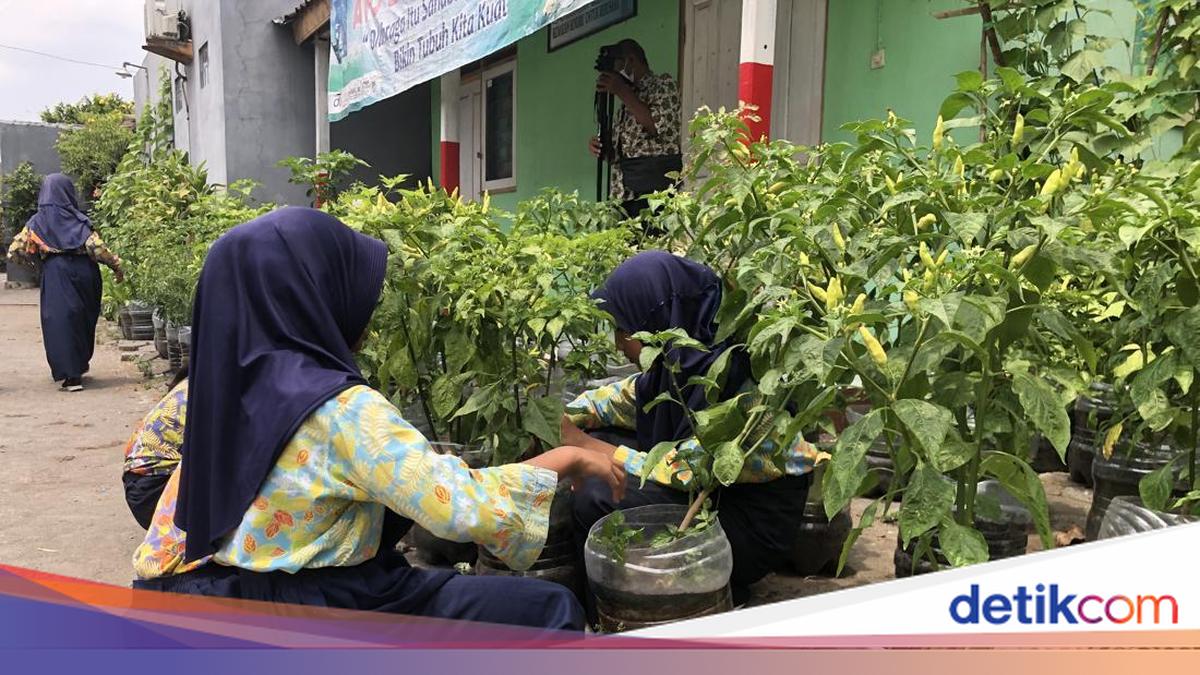
SD Negeri Purwosari in Mlati, Sleman, has adopted a creative approach to introducing the world of agriculture to its students. The school teaches students to plant crops by utilising hundreds of discarded water gallons found on the school premises.
The Headmaster of SD Negeri Purwosari, Zaenuri (42), explained that planting using gallon media was initiated in July 2024. Currently, approximately 500 gallons have been repurposed into plant pots.
“Our school generates a lot of gallon waste every week because there are six classes and one staff room,” Zaenuri explained when met at the school on Wednesday (7/10/2024).
These unused gallons have been transformed into a curriculum diversification programme themed around food security. The objective is to introduce students to various types of vegetables and cultivation techniques.
“We provide agricultural education to the children. This is integrated education; it is not just about agriculture, but we also integrate it with fisheries and livestock,” Zaenuri explained.
“The agricultural system is divided into plots. There are six plots managed by each class. Each plot is the responsibility of the students in that class, guided by their class teachers and parent associations.”
Fertiliser from MBG Waste
Zaenuri stated that the school incurs zero costs for this initiative. The planting medium uses soil from the school environment, and seeds are sown by the students themselves. For fertiliser, the school utilises waste from the MBG (Free Nutritious Meal) programme to create liquid organic fertiliser, mixed with other organic waste generated by the school.
“We use liquid fertiliser from MBG waste, along with other organic waste around us, which we sort. The wet waste is placed in a composter. The composter produces liquid fertiliser, which we harvest periodically and apply by mixing it with water,” he explained.
“Previously, MBG waste was causing problems for us as we had no solution. However, through meetings between the class parent associations, teachers, and guardians, we found a way to utilise this waste.”
Using MBG waste, the school can produce up to 25kg of liquid organic fertiliser per week, which is sufficient to meet the needs of the gallon garden.
“We can produce one bucket a week because we do not only use MBG waste, but also old leaves and rotten fruit from our plants. We also include waste from the school kitchen in the composter,” he added.
Instilling Food Appreciation
This integrated farm programme does more than teach students about the cycles of agriculture, fisheries, and livestock. According to Zaenuri, through cultivation, students are learning to value the food they eat.
“We try to provide comprehensive education from the start. From sowing and making composters to creating homemade insecticides, we cover everything so the learning is complete for the children,” said Zaenuri.
“Children’s awareness of valuing food is increasing. MBG waste is now decreasing, which is our hope—that MBG waste can be absorbed well. However, there is still waste, such as fruit skins, which cannot be consumed. That is what we use for the composter,” he continued.
Generating Profit
While the initial idea for the used gallon garden was for learning and waste management, the vegetable harvests have become abundant over time.
Part of the harvest is used by the school for cooking classes, where each class cooks using their own produce.
“Because we plant in large quantities—over 500 plants—we can harvest up to 5kg every two days, including tomatoes, cucumbers, long beans, and chillies. On average, it is quite high, especially cucumbers which have significant weight,” Zaenuri explained.
The abundant harvest has recently attracted local residents as buyers. Starting with class guardians, culinary vendors near the school, such as ‘pecel lele’ stalls and ‘angkringan’, are now willing to purchase the produce.
“Alhamdulillah, in recent months, we have been harvesting almost every two days. Some of the harvest is used for marketing and it has been selling very well; some orders are even pre-booked,” Zaenuri revealed.
“Because we use an organic system, there is high demand. Not just from parents, but from various businesses like ‘pecel lele’ stalls. They have even ordered tomatoes to be supplied daily, and for chillies, we are actually facing a shortage.”
The revenue from these sales is managed and used for the needs of each class. This includes management and marketing, all of which are handled by the students themselves.
“Alhamdulillah, through repeated cycles, we have reached nearly Rp 1 million. The sales are managed by the students under the guidance of teachers,” Załenuri explained.
“The proceeds return to the class associations and the students, to be used for the next cycle. This covers maintenance and the procurement of future seeds, and any remaining funds are used for the specific needs of each class,” he concluded.
Source: jawawa.id (https://jawawa.id/newsitem/greenery-in-used-gallon-gardens-powered-by-mbg-waste-in-sleman-1791420686)
Originally published by detikJogja (https://www.detik.com/jogja/kota-pelajar/d-8697226/hijaunya-kebun-galon-bekas-pakai-pupuk-sisa-mbg-di-sleman), translated from Indonesian