
Green Waqf Sukuk Seen as Capable of Bridging National Solar Energy Financing Gaps
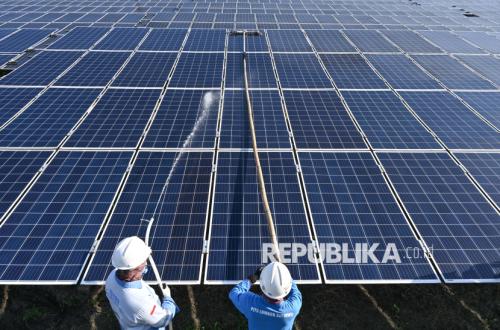
The main challenge in developing national solar energy is no longer merely technology, but financing that can reach the community level. Innovative funding schemes such as Green Waqf Sukuk are seen as having the potential to accelerate the realisation of the 100 gigawatt solar energy development target while also driving the local economy.
That idea emerged during the Focus Group Discussion titled “Green Sukuk for Energy Transition: Innovative Financing Model for the 100 GW Solar Energy Programme” in Jakarta on Tuesday (5/5/2026). The Head of the Postgraduate Programme at the Faculty of Economics, UIII, Luthfi Hamidi, stated that energy transition issues are not solely about a lack of funds, but rather a financing design that has not yet directly reached society. “The problem is not just a lack of funds, but our financing design indeed has not reached communities. This is what creates a large gap,” said Luthfi.
According to him, energy financing schemes to date have still been top-down and relied on APBN-based projects, thus not yet optimally reaching villages, cooperatives, or local communities. He identified three main challenges: a fragmented financing ecosystem, the absence of a measurable national solar energy roadmap, and limitations in technical human resources at the local level.
“We need a more integrated approach, not only from the financing side, but also institutional and capacity at the community level,” said Luthfi.
A representative from MOSAIC, Hidayat Tri Sutardjo, assessed that community involvement in energy ownership can expand economic impacts. “When communities own and manage their own energy, the impact is not only on electricity access, but also on economic movement at the local level,” he said.
In that discussion, sharia blended finance became one of the main approaches discussed, namely the integration of various funding sources from state sukuk, corporate sukuk, to social financial instruments such as zakat and waqf. The potential for zakat is estimated at around Rp327 trillion per year, while waqf is around Rp180 trillion, which is seen as able to help close renewable energy financing gaps.
Director of Sharia Social Financial Services at the National Committee for Sharia Economic and Finance, Dwi Irianti Hadiningdyah, emphasised the importance of integrating sharia financing instruments so that renewable energy projects are more sustainable. “In the future, we can develop blended financing schemes between sukuk and sharia social financial instruments, so that renewable energy project financing can be carried out in a more innovative and sustainable manner,” said Dwi.