
Green Transmission to Connect Energy Across Regions
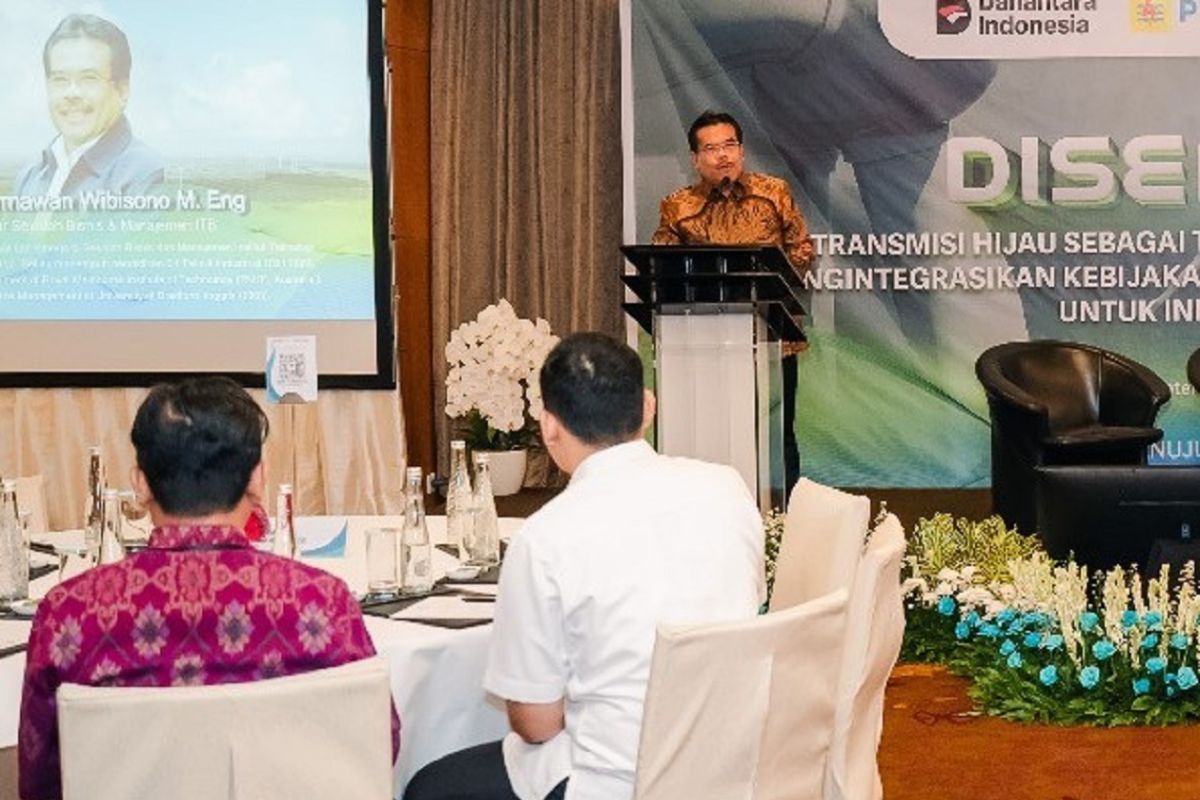
PT PLN states that green transmission is the link between areas rich in renewable energy and regions that need electricity supply. Vice President of Transmission and Distribution Technology and Engineering at PLN, Buyung, said green transmission is seen as an important part of the transformation of the national electricity system. “This green transmission supports connecting energy from areas with high renewable energy potential to load centres,” he said in a statement in Jakarta on Friday. According to him, the challenge of the energy transition does not stop at building physical networks; the electricity system must also be able to handle the characteristics of renewable energy, which differ from conventional power plants. Solar and wind energy, for example, are intermittent because they depend on natural conditions. “Renewable energy is intermittent. Sometimes it is not always available, so the challenge is how we control the system so that the public continues to receive electricity continuously,” he said. Regarding this, Buyung stated that an engineering roadmap is important as a guide for PLN to formulate future technology, innovation, and transmission system strengthening directions. Future grid systems must be more flexible, he continued, and digitalisation can no longer be seen as an addition but as a primary necessity so that the electricity system can read load changes, manage supply variations, and respond to the dynamics of renewable energy. “We cannot just rely on past systems, because the future electricity system must be more controllable and ready to move towards a smart grid,” he said. Buyung referred to the Indonesia Supergrid as a long-term vision that requires a strong master plan. With a more connected system, the energy potential on large islands such as Kalimantan, Sulawesi, Nusa Tenggara, and Sumatera can be utilised more optimally. “The energy potential on large islands must provide maximum benefit for all of Indonesia, especially load centres like Java and Sumatera,” Buyung said. However, he continued, its realisation is not simple and requires technical studies, financing, regulation, technological readiness, and cross-institutional coordination. PLN cannot carry out this transformation alone. Senior Electricity Inspector Nanda Avianto Wicaksono stated that the development of green transmission must be ensured to be not only fast but also safe, reliable, and economical, making stakeholder synchronisation crucial. “From a regulatory perspective, the first step is how to connect all stakeholders, whether business entities, government agencies, academics, or other development institutions,” he said during a dissemination seminar titled ‘Engineering Development Roadmap for Green Transmission in Supporting Accelerated Renewable Energy Development’. He noted that the business structure of the electricity sector will become increasingly complex as new technologies enter the system. Therefore, the regulatory framework must be able to adapt without ignoring the principles of safety and reliability. However, he reminded that the economic aspect must not be neglected. Transmission infrastructure requires large investments. If there is no economic feasibility, projects will struggle to proceed even if they are technically necessary. The Head of the Engineering Roadmap Study Team for Green Transmission, Professor Dermawan Wibisono, added that Indonesia cannot simply set a broad direction for the energy transition and then let the process run without a detailed map. He stated that a roadmap is needed so that targets do not just remain statements but turn into actionable work steps. Dermawan stressed that the government must immediately formulate a human resource development scenario, as Indonesia often declares targets but has not sufficiently prepared the people who will execute them.