
Green Savings Support Mangrove Restoration
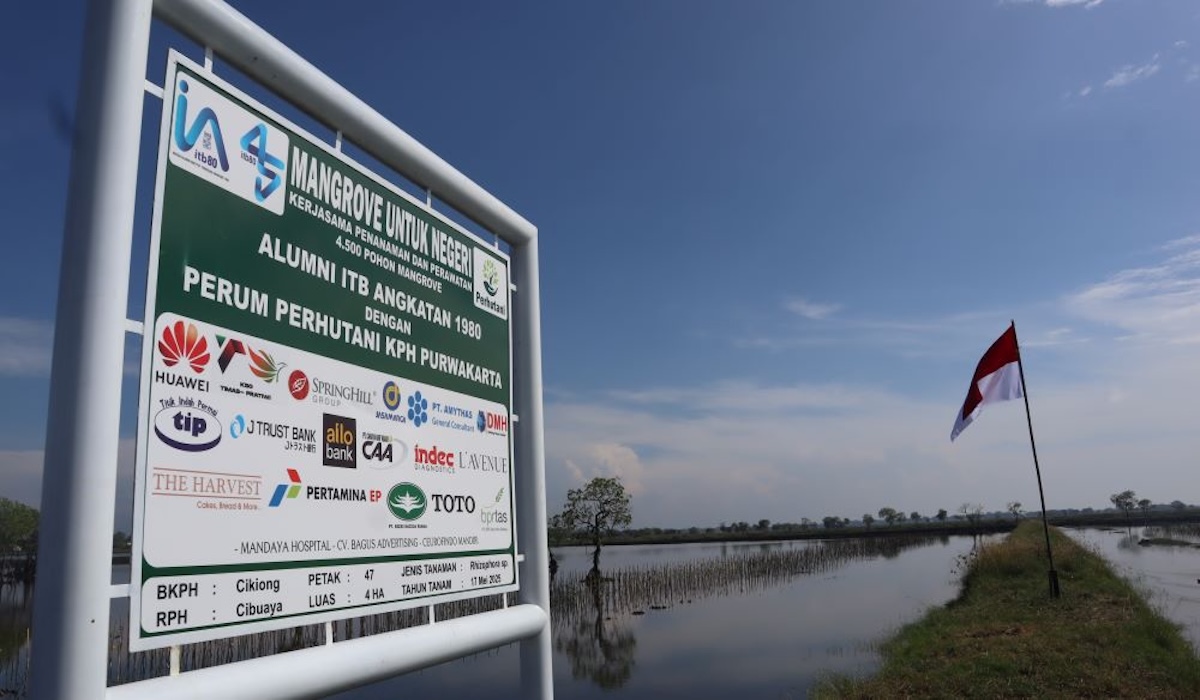
Banking innovations now serve not only as financial management tools but also as funding instruments to support environmental restoration. J Trust Bank’s CEO, Ritsuo Fukadai, stated that sustainability is no longer an add-on to business activities. Through green savings products, the company aims to integrate customer participation into the environmental funding ecosystem. “Through these programmes, sustainability is no longer positioned as an add-on outside business activities but as part of the product ecosystem and customer participation,” Fukadai said on Tuesday (26 May). He added that customers’ simple savings decisions can be converted into tangible contributions to mangrove restoration, marine conservation, and biodiversity protection through sustainable savings products. PT Bank JTrust Indonesia Tbk, or J Trust Bank, developed this approach through two green banking products: TORA Green Savings and Blue Ocean Savings. Both are designed as part of sustainable banking practices that link customer financial activities to measurable social and environmental impacts. Throughout 2025, the TORA Green Savings programme raised over Rp59 million in environmental donations. The funds were directed to support environmental restoration projects in Indonesia, including a partnership with Carbon Ethics for mangrove planting on Harapan Island in the Thousand Islands, valued at approximately Rp17.6 million. He explained that mangroves serve as natural coastal defences, reducing erosion, protecting shorelines from extreme waves, providing habitats for marine species, and acting as effective natural carbon sinks. The mangrove restoration programme includes a three-year monitoring system, regular monitoring and evaluation reports, and an online dashboard for tracking progress. With this mechanism, customer contributions go beyond donations, allowing transparent tracking of long-term developments and impacts. In addition to coastal restoration, J Trust Bank expanded its environmental contributions through Blue Ocean Savings, focusing on marine conservation and biodiversity protection. By end-2025, the programme had raised over Rp73.6 million from corporate contributions and customer participation via approximately 310 accounts across J Trust Bank branches. To amplify the programme’s impact, J Trust Bank partnered with environmental organisations including Members of Nature, Sungai Watch, Divers Clean Action, Konservasi Indonesia, and Pandawara. One initiative in preparation with Members of Nature is a sea turtle adoption and hatchling release programme, scheduled for 2026 in Bali or Kalimantan. The initiative is supported by a budget proposal of approximately Rp35.9 million and will include budget reporting, monitoring and evaluation, and impact reports. This approach is part of strengthening transparent, impact-measured environmental programme governance. Fukadai added that such green banking models demonstrate how everyday financial decisions can address environmental challenges. “This model shows that everyday financial decisions can be part of the solution to environmental challenges,” he added. Through TORA Green Savings and Blue Ocean Savings, J Trust Bank positions savings products as environmental funding instruments. From a single account and savings decision, the public can support mangrove restoration, carbon emission reduction, marine wildlife conservation, and protection of Indonesia’s coastal and marine ecosystems. Ultimately, saving the planet does not always require large-scale actions. Change can grow from simple collective decisions: saving, contributing, and building shared commitments to leave a better environment for future generations.