
Green Ports May Enter Carbon Economic Value Scheme, Ports Could Earn Incentives
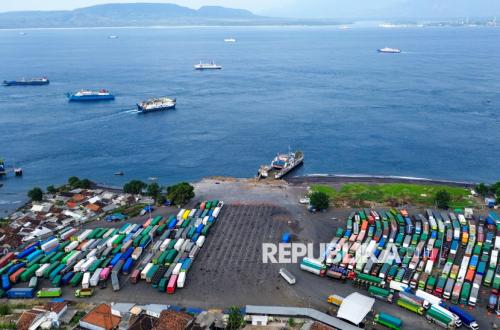
The government, through the Coordinating Ministry for Food Affairs, is studying the possibility of including ports that implement the ‘green port’ concept into the Carbon Economic Value (NEK) scheme. This would allow ports to potentially receive economic incentives for their efforts in reducing carbon emissions within the maritime sector.
“This could serve as an incentive, similar to green building certifications. Green ports may also be integrated into carbon pricing or the Carbon Economic Value scheme. This represents a significant opportunity,” stated Nani Hendiarti, Deputy for Coordination of Food Affordability and Security at the Coordinating Ministry for Food Affairs, in Jakarta on Wednesday (1/7/2026).
She noted that this opportunity is expected to encourage more port operators to adopt ‘Green and Smart Port’ principles, which would not only improve environmental performance but also add value to port competitiveness and the broader business sector.
However, Nani explained that the provision of such incentives cannot be realised yet, as the government is still studying and developing the methodology for Measurement, Reporting, and Verification (MRV). This methodology will serve as the basis for calculating carbon emission reductions within the port sector.
“Regarding when the incentives for green ports will be implemented, it is not yet determined, as we require an MRV methodology. This is something we will develop together in the future,” she said.
According to Nani, the development of this methodology will be conducted alongside relevant ministries and agencies to ensure that emission reductions from the port sector can be calculated accountably before being integrated into the NEK scheme.
The development of this scheme is part of the implementation of Carbon Economic Value (NEK) as regulated under Presidential Regulation Number 110 of 2025.
This instrument supports Indonesia’s targets to reduce greenhouse gas emissions by 31.89 per cent through domestic efforts and 43.20 per cent with international support by 2030, as well as the target of achieving net-zero emissions by 2060 or sooner.
The potential for incentives was discussed during the launch of the Green and Smart Port Initiatives (GSPI) ASRI 2026, which promotes the adoption of environmentally friendly and technology-based ports through assessments of environmental and digitalisation aspects.
The Green and Smart Port programme has been running since 2019. Between 2019 and 2025, 41 ports have undergone assessment, with eight ports meeting the criteria to receive Green and Smart Port certification and awards on 15 July 2026.
Nani stated that the environmental aspect is the primary component of the Green and Smart Port assessment, carrying an 80 per cent weight, while the application of technology and digitalisation, or the ‘smart port’ aspect, carries a 20 per cent weight.
Source: jawawa.id (https://jawawa.id/newsitem/green-ports-may-enter-carbon-economic-value-scheme-ports-could-earn-incentives-1782899621)
Originally published by Republika (https://esgnow.republika.co.id/berita/thhp0d370/green-port-berpeluang-masuk-skema-nilai-ekonomi-karbon-pelabuhan-bisa-raih-insentif), translated from Indonesian