
Green Energy Turns Out to Be a Requirement for Industry to Access International Markets
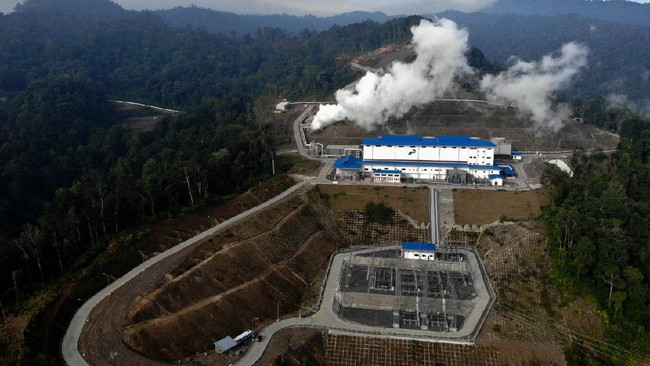
Jakarta, CNBC Indonesia - The Coordinating Ministry for Economic Affairs has affirmed that the utilisation of new renewable energy (EBT) is currently a requirement for domestic industries to enable their products to penetrate global markets. This requirement encourages industries to maintain export competitiveness and market access.
Assistant Deputy for Accelerating Energy Transition at the Coordinating Ministry for Economic Affairs, Farah Heliantina, explained that energy transition is not merely a commitment to the environment. According to her, the use of clean electricity is now also an economic instrument that determines the sustainability of the national industry.
“On the other hand, we have the EU-CEPA and the implementation of the EU’s CBAM, which emphasise that market access and export competitiveness will increasingly be directly linked to the decarbonisation agenda. So, clean electricity is no longer a complementary option but also a market access requirement,” she stated during the Public Discussion on Renewable Energy Zones (REZ) as an Enabling Instrument by INDEF, in Jakarta, on Tuesday (28/4/2026).
Farah revealed that this global market demand aligns with policies such as the Carbon Border Adjustment Mechanism (CBAM) implemented by the European Union. This is seen as a signal that products produced using fossil energy will struggle to engage in larger trade in the future.
“Energy transition needs to be understood not solely as a manifestation of commitment to the living environment but also as a strategic economic instrument that concretely supports industrial development, mobilises investment, and advances the nation in the long term,” she elaborated.
According to her, there are still challenges in Indonesia because around 60% of the national electricity supply still comes from coal. Over the last 10 years, the addition of renewable energy capacity in the country has been deemed very slow compared to neighbouring countries like Vietnam and China.
“The addition of renewable energy capacity in the last decade has only been 0.5 gigawatts per year, and this shows that we are still far behind; of course, compared to China, we are very far indeed, 199 gigawatts per year compared to our 0.5—this gap is enormous,” she clarified.
To address this, the government is opening opportunities for industries to participate in developing 100 Gigawatts (GW) of new renewable energy. This target is expected to encourage the emergence of integrated green industrial zones.
“Two fundamental questions that we all need to answer are who will absorb the electricity produced and how to ensure that supply can reach industrial centres on time,” she stressed.
Source: jawawa.id (https://jawawa.id/newsitem/green-energy-turns-out-to-be-a-requirement-for-industry-to-access-international-markets-1777373701)
Originally published by CNBC Indonesia (https://www.cnbcindonesia.com/news/20260428171302-4-730680/energi-hijau-ternyata-jadi-syarat-industri-akses-pasar-internasional), translated from Indonesian