
Green Economy Seen as Bridge Between Growth and Environment
Economic growth and environmental protection are not necessarily mutually exclusive. The green economy approach is considered capable of reconciling the need to increase economic activity with efforts to maintain environmental carrying capacity.
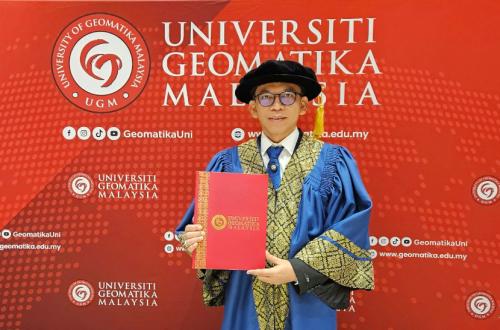
This view was expressed by bureaucately-trained environmental academic Tasdiyanto, who has been appointed as Professor of Practice in Environmental Economics at Universiti Geomatika Malaysia. Tasdiyanto believes Indonesia requires a new approach to pursue economic growth targets while building an environmentally friendly civilisation.
“The Indonesian nation requires new ways to achieve 8 per cent economic growth and become a developed country with an eco-friendly civilisation. Environmental economics must be able to reconcile economic growth interests with environmental sustainability,” Tasdiyanto stated in a release on Sunday (4/10/2026).
According to Tasdiyanto, the concept of a green economy needs to be translated into development policies and practices. Through this approach, increased economic activity will continue to account for sustainability and environmental capacity.
The implementation of a green economy is also seen as requiring the involvement of the education sector. Bureaucratic experience and policy practices can be brought into academic spaces to generate ideas that are applicable to development.
Tasdiyanto’s appointment took place during the 7th International Conference on Social, Technology, Education, Language and Management (ICOSTELM) 2026. The conference brought together academics and practitioners from several Southeast Asian countries.
Vice Chancellor of Universiti Geomatika Malaysia, Mazrin Rohizaq Che Rose, stated that the Professor of Practice is expected to bridge professional and governmental experience with the academic world.
“The Professor of Practice is expected to bring real-world experience from the professional and governmental sectors into the university environment and strengthen international collaboration, particularly between Malaysia and Indonesia,” said Mazrin.
Tasdiyanto possesses extensive government experience in environmental issues and public policy. He previously served as the Secretary General of the National Commission on Human Rights (Komnas HAM) RI from 2017–2021, Expert Staff to the Minister of Environment and Forestry from 2021–2025, and Expert Staff to the Minister of Housing and Residential Areas from 2025–2026. He also served as the Acting Deputy of the President’s Office Staff in 2025.
A graduate of Padjadjaran University, he earned a Doctorate in Environmental Science from Gadjah Mada University with cum laude honours in 2010. Tasdiyanto is a Senior Expert Lecturer (Widyaiswara Ahli Utama) and teaches at several higher education institutions, including the Graduate School of the University of Indonesia.
Sustainable development ideas have also been a focus of Tasdiyanto’s work. He was previously involved in proposals for the relocation of the national capital with environmental considerations, as well as the development of higher education focused on sustainable development.
The President of the ASEAN Academic Association (ASEANACA), Tulus Suryanto, noted that Tasdiyanto’s experience in government and the environmental sector could enrich academic cooperation between Indonesia and Malaysia.
“We are proud that one of Indonesia’s finest sons, with long-standing government experience in the environmental field, has received this academic trust. We hope Dr Tasdiyanto’s experience will provide a real contribution to education and sustainable development,” said Tulus.