
Green Economy Becomes Key to Achieving 8 Per Cent Growth Target
The government has positioned the green economy as one of the main strategies to achieve the national economic growth target of 8% by 2029. However, this target requires greater investment support and a significant increase in export performance.
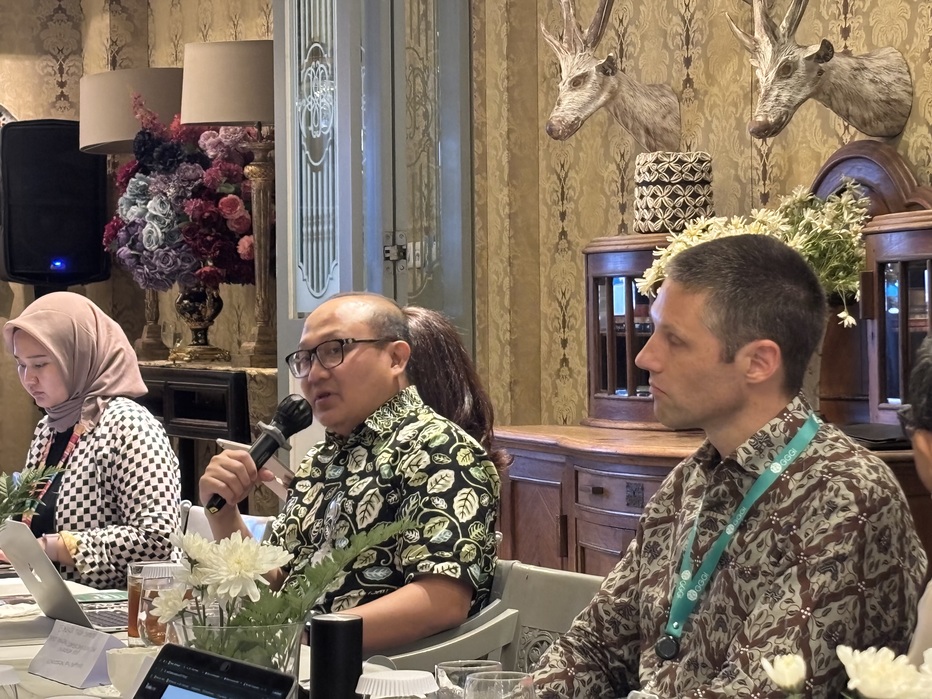
Nizhar Marizi, Director of Environment at the Ministry of National Development Planning/Bappenas, stated that the government has integrated green economy principles into various development planning documents, ranging from the National Medium-Term Development Plan (RPJMN) to the Government Work Plan (RKP).
“To achieve the 8% economic growth target by 2029, the required resources are quite substantial. Consequently, there must be an additional investment of approximately 17% from current investment levels. Furthermore, exports need to grow by more than 11% per year compared to current achievements,” Nizhar said in Jakarta on Tuesday.
According to him, the green economy is not only aimed at driving economic growth but also at ensuring that development proceeds sustainably while suppressing greenhouse gas emissions. Nizhar explained that Indonesia’s long-term development vision includes two aligned objectives: driving Indonesia to become a high-income nation while simultaneously reducing carbon emission intensity.
“We want public income to increase and for Indonesia to become a developed nation. This means that Gross Domestic Product (GDP) must continue to grow. On the other hand, we also have a target to reduce emission intensity. So, GDP rises, but emission levels actually decrease,” he explained.
To realise these objectives, the government is preparing two main pathways for green economic transformation. The first pathway involves decarbonising existing economic sectors, particularly the energy sector, which is one of the largest contributors to emissions.
“The first direction is to transform existing economic activities to become lower in carbon. This is primarily achieved through the decarbonisation of the energy sector,” he clarified.
The second pathway involves creating new sources of economic growth based on Indonesia’s natural wealth and advantages. The government believes that Indonesia’s biodiversity potential can serve as a foundation for developing more sustainable future economic sectors.
“We also want to foster new economic growth centres. This will be done by providing higher added value to Indonesia’s natural wealth, especially its vast and underutilised biodiversity,” he concluded.