
Greater Bandung LRT Assessed as Capable of Reducing Congestion and Shifting Travel Patterns
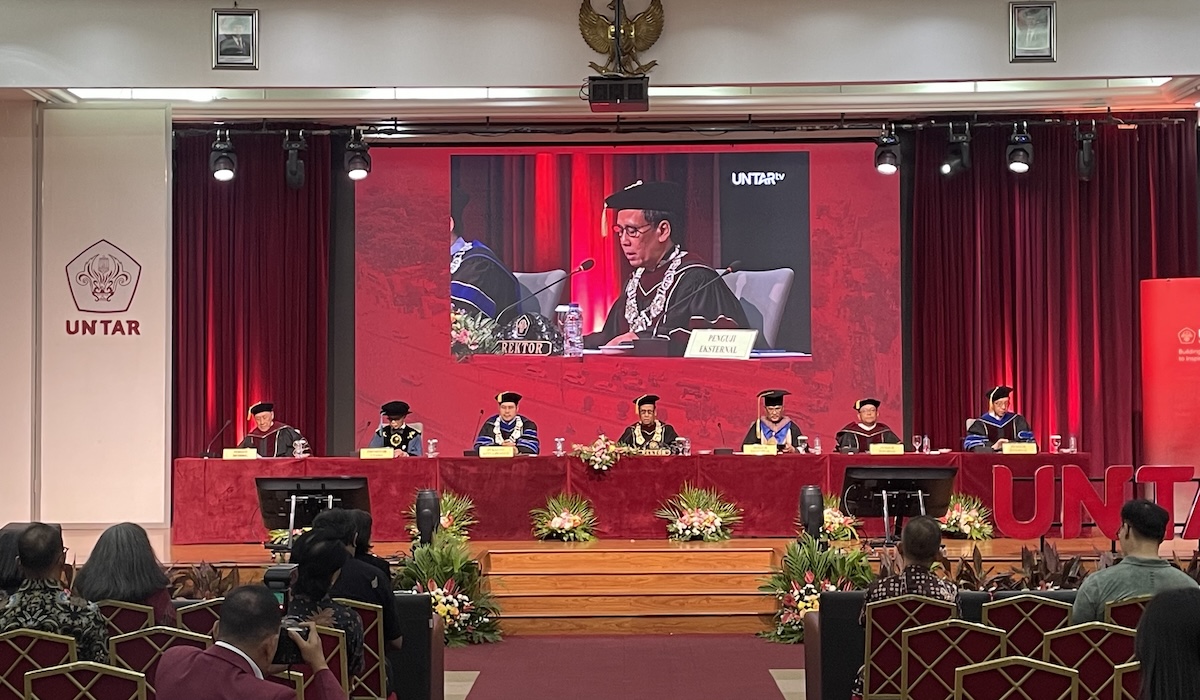
The planned development of Light Rail Transit (LRT) services in Greater Bandung is considered to have significant potential to shift public travel patterns from private vehicles to public transport. This assessment was delivered by Promovenda Tan Lie Ing during her open doctoral examination in Civil Engineering at Tarumanagara University on Thursday (9/7). In her dissertation titled ‘Modelling Mode Choice with the Presence of LRT Services in Greater Bandung’, Tan explained that the high usage of private vehicles has triggered chronic congestion. Narrow roads and numerous intersections cause increasingly long vehicle queues, necessitating a high-quality public transport solution. ‘The use of private vehicles continues to rise, making congestion an increasingly urgent issue. Therefore, comfortable, safe, integrated, and sustainable public transport is a necessity,’ said Tan. Based on her research, the most crucial factor influencing the public’s decision to switch to the LRT is waiting time. Tan emphasised that service quality must include punctuality, high travel frequency, and easy access to stations via a feeder system. She added that the success of the LRT does not solely depend on the rail tracks but also on accessibility. Without proper feeder support, public interest in abandoning private vehicles will remain low. Her research model indicates that people will choose the LRT if reliability and comfort aspects are met. As a recommendation, Tan stressed the importance of intermodal integration, including the implementation of a single-card payment system as adopted in Jakarta. Furthermore, government support through public transport subsidies is considered vital to attract public interest in switching to mass transit. ‘Integrated public transport supported by government policy will be more appealing to the public. This concept is not only relevant for Greater Bandung but can also be applied in other cities across Indonesia,’ she concluded.