
Great Lecturers Are Not Born Overnight, They Grow from the Right Investment
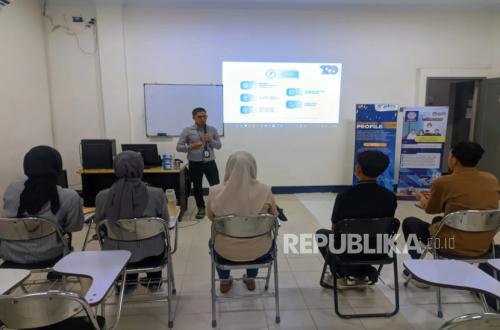
In the midst of rapid technological development and changes in the world of work, one important question needs to be asked: how can a campus produce quality graduates if its lecturers are not given room to continuously develop? Often, when discussing the quality of higher education, attention immediately turns to facilities, buildings, laboratories, or various institutional achievements. Yet, there is one factor that is the heart of the entire educational process: the lecturer. Lecturers are not merely teachers who appear in classrooms every week. They are mentors, researchers, innovators, and the main drivers of the implementation of the Tri Dharma Perguruan Tinggi (Three Pillars of Higher Education). Therefore, lecturer development should not be seen merely as an administrative obligation, but as a long-term investment that determines the future of the institution. Imagine a campus as a ship. The curriculum, facilities, and technology may be sophisticated equipment. However, without a crew that continuously improves its skills and knowledge, the ship will struggle to sail against the changing times. The same applies in the world of higher education. Currently, technological development is occurring very rapidly. Artificial intelligence, digital transformation, and shifting industry demands require lecturers to keep learning and adapting. Material that is relevant today may no longer be sufficient a few years from now. For this reason, lecturers need opportunities to participate in training, certification, research, and other competency development activities. How can students be prepared for the future if their educators are not given the chance to continuously update their knowledge? Lecturer development is not only about teaching ability. The capacity to produce quality scientific work is an equally important aspect. Scientific publications are not just numbers in a performance report, but a tangible contribution to the advancement of knowledge and solutions to various societal problems. Through the support provided by the Research and Community Service Institute (LPPM), lecturers can continuously improve their academic capacity through workshops, research grants, publication assistance, and various other development programmes. However, lecturer development will not run optimally without institutional support. Appreciation for achievements, opportunities to grow, and a healthy academic culture are important factors that encourage lecturers to keep working and innovating. Universitas Bina Sarana Informatika (UBSI) Kampus Tasikmalaya, known as the Digital Creative Campus, understands that the quality of education cannot be separated from the quality of its lecturers. Therefore, lecturer development is one of the key foundations in creating an excellent academic environment that is adaptive to the changing times. In the end, the best investment a higher education institution can make is not solely in technology, buildings, or modern facilities. The greatest investment always lies in its people. Because lecturers who continue to grow will produce higher quality learning. Quality learning will produce competent graduates. And competent graduates will be tangible proof that investment in lecturers is an investment that is never misguided. With a commitment to continuously supporting lecturer development, Universitas BSI Kampus Tasikmalaya strives to create an educational ecosystem capable of producing a superior, professional generation ready to compete at the global level.