
GREAT Institute: Precise Rice Production Mitigation Remains Essential
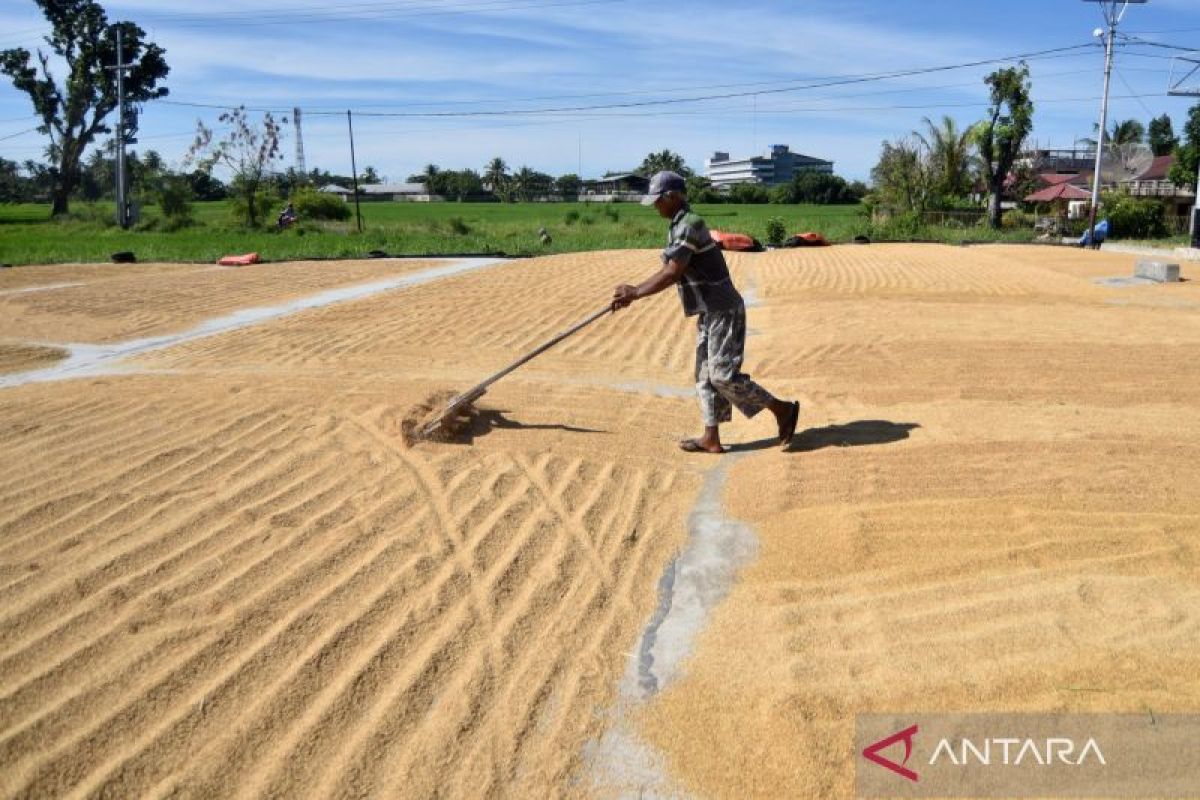
Jakarta (ANTARA) - The GREAT Institute has warned that the current national rice surplus is shadowed by the threat of El Niño, which risks causing shocks to rice production; therefore, precision in rice production mitigation remains essential.
“Precise mitigation in rice production is still required, especially in anticipating the varying impacts of drought across different regions,” said GREAT Institute economist Hastuti in a statement in Jakarta on Monday.
The GREAT Institute assesses that while the national food position is currently stronger than during the 2023–2024 El Niño episode, national aggregate figures may mask production vulnerabilities that differ significantly between regions.
BPS (Statistics Indonesia) data records national rice production for 2025 at approximately 34.7 million tonnes, exceeding the domestic rice consumption projection of 31.2 million tonnes by the National Food Agency (Bapanas). This indicates a rice surplus of more than 3.5 million tonnes during that period.
Throughout 2025, the government has not conducted general rice imports, and for 2026, the government still projects that no general rice imports will be necessary.
“Our rice production and reserves are indeed still within the safe category,” she stated during the GREAT Mid-Year Economic Outlook 2026: Rebuilding Confidence, Growing Optimism.
An analysis by the GREAT Institute regarding the 2023-2024 El Niño showed that six provinces—Jambi, Central Kalimantan, South Kalimantan, North Kalimantan, Maluku, and North Maluku—experienced production contractions exceeding 10 per cent.
In this group of provinces, the decline in production stemmed more from a reduction in harvested area rather than productivity per hectare.
In fact, productivity in three provinces actually increased. This pattern indicates that risks may arise when farmers delay or forgo planting, or when the area of paddy fields with adequate water decreases.
Meanwhile, major production centres such as Central Java, East Java, and West Java experienced much larger volume losses on a national scale, even though their percentage decreases were milder.
During the 2023-2024 episode, Central Java alone lost approximately 736,000 tonnes compared to the baseline period, more than double the combined losses of the six provinces that experienced contractions of over 10 per cent.
The GREAT Institute emphasises that these findings are relevant to current conditions. Based on BMKG (Meteorology, Climatology, and Geophysical Agency) monitoring for the August 2026 period, low rainfall now dominates more than 90 per cent of Indonesia’s territory. This El Niño episode is also projected to persist until early 2027.
“We are already aware of the intensity of the El Niño risk this year, and we cannot eliminate that risk. Our focus now must be directed towards the readiness of irrigation infrastructure and the distribution of agricultural production inputs across all regions of Indonesia. Precision in execution is becoming increasingly important, especially for regions entering the next planting period,” she said.
The government has taken several concrete steps, including the acceleration of the construction, improvement, rehabilitation, operation, and maintenance of irrigation networks through Presidential Instruction Number 2 of 2025.
Additionally, pumpisation programmes to assist in irrigating paddy fields facing water shortages, as well as the national allocation of subsidised fertiliser for the 2026 planting season, are currently being implemented.
Alongside the ongoing climate phenomenon, GREAT also emphasised that the government needs to anticipate rice prices at the consumer level.
Although climate threats are not the only factor affecting rice price stability, the government must still deploy both technical and non-technical instruments to ensure that as the impact of El Niño is felt, consumers remain protected from excessive price spikes.
“We urge the government to also focus on rice price stability. An increase in rice prices as climate risks intensify could shift household budgets towards food, reducing spending space for other necessities,” said Hastuti, who is also a Lecturer in Economics and Environmental Resources at IPB.