
Grave of Artist Djaduk Ferianto's Father-in-Law Damaged by Cemetery Caretaker
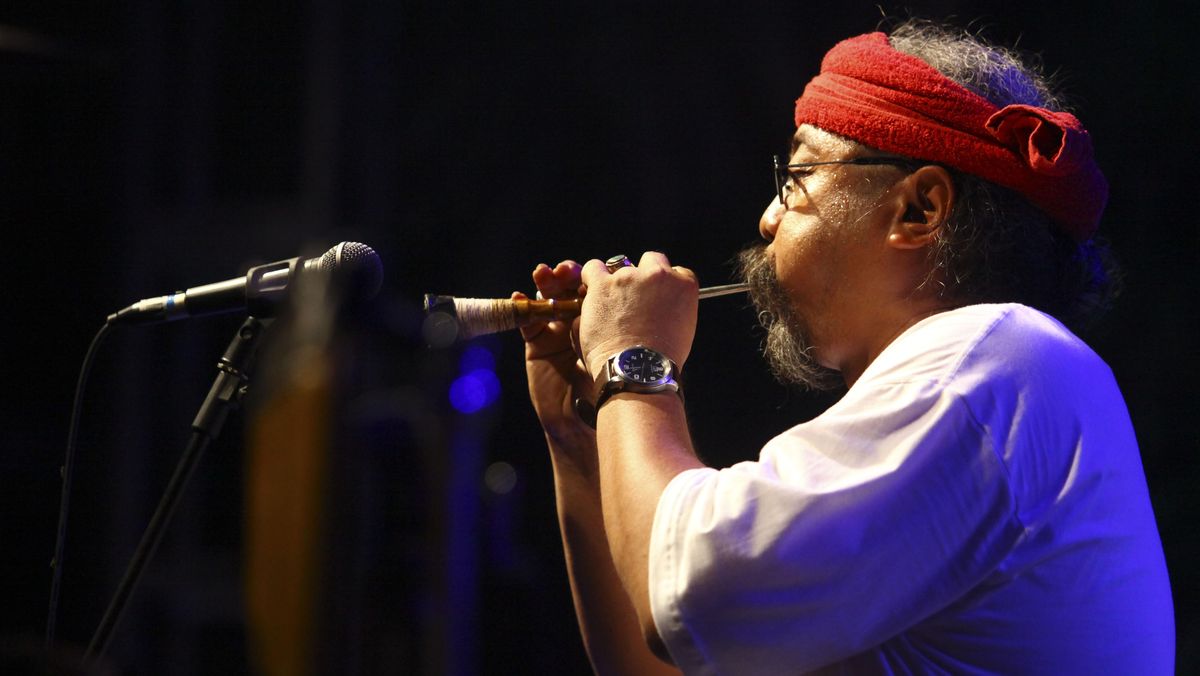
The grave of the late renowned artist Djaduk Ferianto’s father-in-law, located in the Pakuncen area of Wirobrajan, Yogyakarta, was vandalised by the caretaker of the burial ground.
The act of vandalism was discovered by Bernadetta Petra, the wife of the late Djaduk, on Tuesday morning (11/8). Petra said that when she went to pay her respects, she found her father’s grave already damaged.
“I was shocked because the headstone had been broken off,” Petra said when contacted on Wednesday (12/8).
After searching for information about the caretaker’s whereabouts, Petra returned to her father’s grave and met the grave cleaner.
“The cleaner, whom I always give money to after I finish, always says the money is for the caretaker. He always asks for a share for the caretaker. Then I asked where the caretaker was. At home, so I still gave it anyway,” Petra said.
Because she could not obtain the caretaker’s address, Petra then visited the local sub-district office to ask about the condition of her father’s grave. However, she said, the burial complex turned out not to be an asset of the Yogyakarta City Government.
“The sub-district office asked which block and number, but I could not answer because there is none. There really is no legality data,” she said.
“So it turns out it is not under the city government, but directly under the caretaker,” Petra continued.
Petra said there are two burial complexes in Pakuncen. Her father’s grave is to the west of the Kuncen Mosque and is referred to by residents as the old cemetery. Petra’s father died and was buried there in 1971.
“Indeed, there has never been a rental fee there. When other cemeteries in Jogja have rental fees, that place does not,” she added.
Petra eventually reported the information she had gathered to the Wirobrajan Police. Shortly afterwards, the duty officer informed her that the caretaker was already at the cemetery.
Petra then went to the location accompanied by four to five police officers. There, she heard a direct confession from the caretaker, who admitted to damaging the headstone of Petra’s father’s grave.
“I went there and met the caretaker, a woman, who said, ‘If I had not done this to the grave, you would not have looked for me, would you?’” Petra said, quoting the caretaker.
Petra admitted she was confused and asked what the statement meant. According to her, the caretaker was apparently upset because Petra had never given her anything.
In fact, Petra said she had never met the caretaker. She only visited her father’s grave on certain occasions, such as Tuesday morning, which coincided with her birthday.
Petra also said she had only recently started visiting in the morning. Usually, she is busy working, while on Sundays her time clashes with church activities.
“Then she also said that people visit at that hour because it is already hot in the afternoon, and they do not want to be a bother. Then I said, fine, how much is my debt now? If it is considered a debt, how much do I owe?” she said.
Petra claimed the caretaker answered ‘up to you’ and did not mention a specific amount. The caretaker also said that the use of the grave was not subject to a rental fee.
Accompanied by several police officers, Petra then asked for the grave to be restored to its original condition. She also offered a monthly subscription service to the caretaker, although the amount had not been determined.
Petra then transferred Rp500,000, which she considered as a debt to the caretaker. That amount did not include the cost of repairing the headstone.
“She still asked for money to fix the grave. Why should I bear the cost of repairing it when you are the one who damaged it?” she said.
Petra said her father’s grave was the first to be vandalised by the caretaker. However, according to her, the caretaker said there had been a grave that was dismantled because the heirs did not give her money.
“The case was like mine. There were people who visited but never gave money. So my mistake to her was that I never gave her money,” she said.
The latest information Petra received on Wednesday (12/8) was that her father’s headstone had been repaired. Nevertheless, she regretted the method used by the caretaker. According to her, the matter should have been resolved through better communication.
She hopes this incident will help clarify regulations regarding burial land, including the rules for its use.
Police claim the matter was resolved through mediation
Separately, Wirobrajan Police Chief Kompol Arif Darmawan said the matter had been resolved through mediation. Petra and the caretaker, identified by the initial S, reportedly agreed to a peaceful resolution after meeting on Wednesday afternoon.
“It is done, the mediation is complete, and everyone has made an agreement, ending in peace, all is well. The headstone has also been returned, reinstalled, repaired, and restored to its original condition,” Arif said when contacted.
According to Arif, both parties agreed to the payment of ‘cleanliness money’ as part of the resolution. The cleanliness money has also been paid by Petra, and the agreement was then recorded in the mediation results.
Arif explained that the headstone of Petra’s father’s grave had indeed been removed by the caretaker. However, according to him, the action was taken because the caretaker wanted to meet the heirs.
“It was just a communication problem,” he said.
Regarding the status of the burial land, Arif admitted he did not know for certain who owned it. However, the management of the old cemetery in the Pakuncen area is carried out by local residents from generation to generation.
Arif said this management differs from the Pakuncen cemetery complex under the Yogyakarta City Government. Meanwhile, the caretaker with the initial S has managed the cemetery for decades. The task was inherited from the previous generation.
Arif said that giving money to cemetery managers has long been a custom among visitors. The money is used for cleanliness and maintenance of the cemetery grounds.
“They leave money for cleanliness as they wish,” he said.
According to Arif, Petra herself has always given money to the people who help clean the grave. However, she had never met the caretaker directly.
“So perhaps the people around who help clean it were given around Rp10,000. But the specific caretaker never received it, they never met,” he added.