
Grape Farmers in Buleleng Encouraged to Scale Up Through Harvest Processing
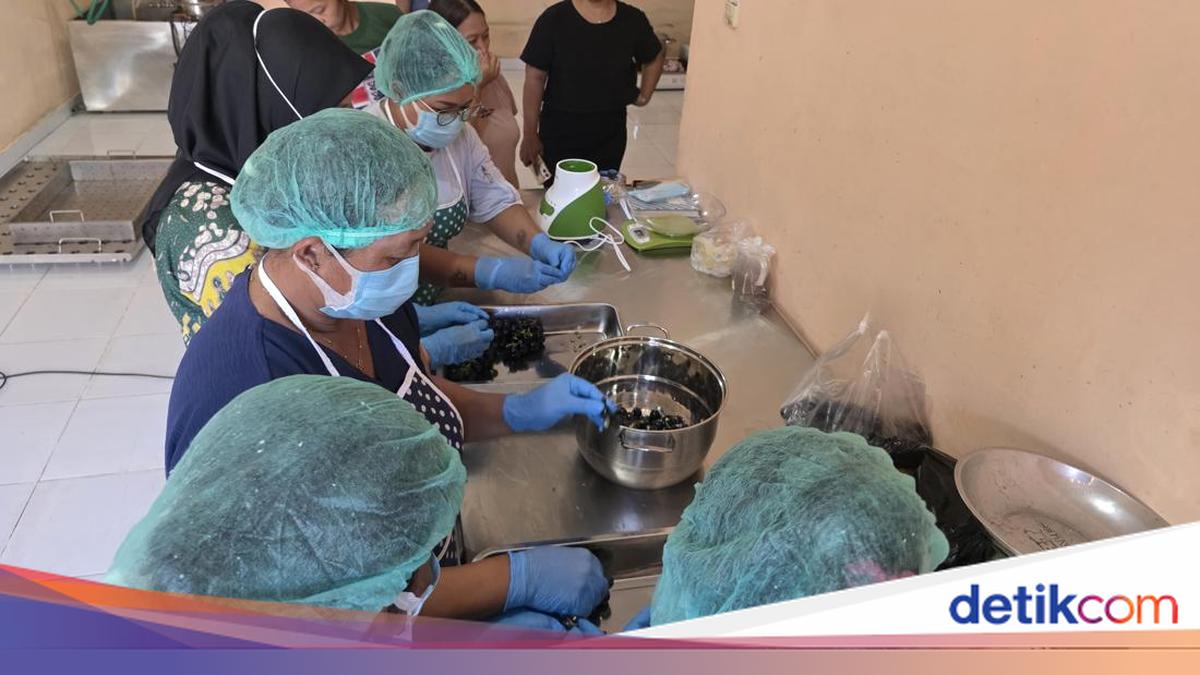
Grape farmers in Banjar Village, Banjar District, Buleleng, face a classic problem every time the peak harvest arrives. An abundance of production causes the price of local grapes to plummet to between Rp 3,000 and Rp 5,000 per kilogram. Frequently, fruit that is not absorbed by the market ends up rotting and is left on the trees.
This condition has drawn the attention of the Bestari Scientech Team from Ganesha University of Education (Undiksha). Led by Prof. I Wayan Mudiarsa, the Undiksha team is conducting socialisation and training for grape farmers in Banjar Village.
The programme does not only target increased production but also seeks to break farmers’ dependence on the sale of fresh fruit. Through the ‘Living Lab’ concept, farmers are mentored in everything from cultivation and post-harvest handling to product processing and marketing strategies.
Representing the Undiksha Team, Uzlifatul Hasan and Hasanah stated that the assistance is comprehensive, covering the entire supply chain from upstream to downstream. Farmers are encouraged to improve grape quality while simultaneously processing part of the harvest into products with higher economic value.
“We are striving for this programme to impact the community in Banjar Village, particularly the grape farmers. We are also prepared to provide regular assistance to ensure the programme runs at maximum capacity,” she said.
In this programme, Undiksha is collaborating with several strategic partners, including Bekul Bali and the Buleleng Regency Government through the Department of Agriculture.
For farmers, the issue of pricing remains the greatest challenge. Made Budiasa, a grape farmer in Banjar Village, noted that prices usually crash when production surges during the peak harvest.
According to him, the price of local grapes under certain conditions only ranges from Rp 3,000 to Rp 5,000 per kilogram. This price is even insufficient to cover the cost of harvesting. As a result, some fruit is forced to rot on the trees.
“When prices drop, farmers sometimes do not harvest because the picking costs alone are not worth it,” he revealed.
The problem becomes even more severe during the harvest period from December to January. High rainfall causes fruit quality to decline more rapidly, making it increasingly difficult for the market to absorb the produce.
Therefore, post-harvest training is one of the solutions offered by Undiksha. Grapes that were previously at risk of being wasted are now being directed to be processed into grape juice, dodol (traditional sweet), and various local snacks.
Budiasa hopes that the assistance will not stop at training. With better processing and marketing, farmers are expected to have an alternative source of income when fresh fruit prices fall.
“Through this continuous assistance programme, we are optimistic that we can increase the selling value of the harvest, maintain income stability, and encourage the progress of the agricultural sector here,” he expressed.