
Grand Harvest: West Kalimantan Regional Police Professional and Security Division Reaffirms Commitment to Supporting Food Security
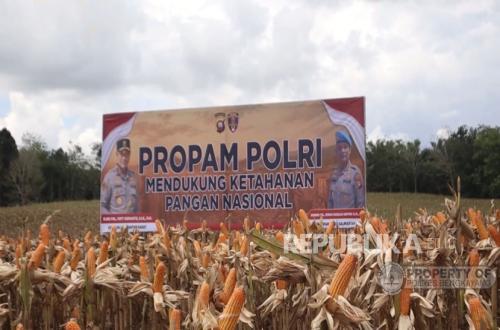
The Professional and Security Division (Bidpropiment) of the West Kalimantan Regional Police, alongside the Bengkayang Police, has demonstrated a tangible commitment to supporting national food security through the simultaneous Grand Corn Harvest for the second quarter of 2026. This programme is part of an effort to support the government’s broader vision of achieving ‘Asta Cita’, specifically focusing on strengthening the food sector and empowering community economies.
The grand harvest took place on Saturday (16/05/2026) on Jalan Raya Dawar, Panda Hamlet, Lembang Village, Sanggau Ledo District, Bengkayang Regency. The event proceeded in an orderly, safe, and conducive manner, involving elements of the TNI-Polri (Indonesian National Armed Forces and National Police), local government, farmer groups, and local community leaders.
The total area of corn land harvested reached 21.1 hectares, spread across the jurisdictions of the sub-district police units under the Bengkayang Police. Of this total, 13.8 hectares consist of pilot plots owned by the West Kalimantan Regional Police Bidpropam, while the remainder comprises community farmland, including a 2.5-hectare plot belonging to local resident Kornelius Toding.
Kompol Heriani, the Head of Administrative and Logistics Sub-division of the West Kalimantan Regional Police Bidpropam, stated that the utilisation of productive land is a concrete form of synergy between the Police, local government, and the community to strengthen the national agricultural sector. He noted that corn is a strategic commodity that plays a vital role in maintaining food stability and increasing the welfare of farmers.
“This spirit of cross-sectoral cooperation is expected to serve as a means of economic empowerment while simultaneously maintaining regional security stability,” said Kompol Heriani. He added that the West Kalimantan Regional Police Bidpropam supports the optimisation of idle land into highly productive, economically valuable land as a concrete step towards strengthening regional food security and creating opportunities to increase community income.