
Gradual Savings and Safe Fund Management: The Two Pillars of Indonesia's Hajj Sustainability
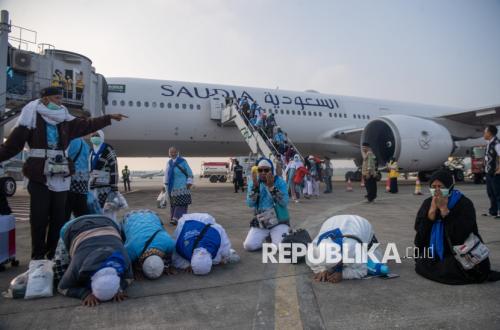
It never crossed the mind of Nur Risiyati, a 54-year-old teacher at SMPN 2 Gedongwuni in Pekalongan Regency, Central Java, to perform the Hajj this year. The main encouragement came from her mother, who gave her advice shortly before passing away. “The waiting time for Hajj is long now; you should register first. Once you are registered, you can wait for several years,” her mother advised, as recounted by Nur Risiyati at the Yacoub Baik Algodandi 2 Hotel in the Syisyah area of Makkah, Saudi Arabia.
Her mother compared registering for Hajj to buying a car. According to her, cars will always be available at dealerships, but Hajj quotas are not necessarily available every year, and on average, people must wait a long time for their turn. “Ultimately, my husband and I were moved to register for Hajj. I registered in December 2012,” said Risiyati, who teaches Indonesian language. She explained that at the time, they saved up and secured a Hajj portion with an estimated departure in 2024. Due to the expansion of the Grand Mosque and the Covid-19 pandemic, her departure had to be postponed. “I was worried because I am getting older,” she said.
A glimmer of hope appeared when, at the end of 2025, her name appeared on the list of pilgrims scheduled to depart in 2026. However, she was confused because the official summons did not arrive. “I was overjoyed because almost every day, every month, I checked my Hajj portion and saw my name would depart in 2026, but the summons did not come. After it was officially confirmed, I was so happy. My feelings were truly indescribable,” she said. Following this, she resolved to settle the Hajj Travel Cost (Bipih), amounting to IDR 54,193,806. After the initial registration fee of IDR 25 million was deposited in 2012, she only needed to pay off around IDR 29 million. She was aware that this was not the total operational cost of the pilgrimage, as the Hajj Operational Cost (BPIH) reached IDR 87,409,366. “Alhamdulillah, I received a subsidy from the government through BPKH,” Risiyati stated.
As a civil servant, she is grateful that both she and her husband could pay off the cost, thanks to the saving habits they had practised since registering 14 years ago. “Alhamdulillah, we could settle it using our savings. As civil servants, we set aside money little by little in savings,” she explained. “Alhamdulillah, thanks to the Hajj Financial Management Agency, there is this subsidy from the government. When we think about it, with IDR 54 million, the facilities might not have been this adequate—like the good hotel, daily nutritious meals, suitcases, and so on. We have never lacked for anything,” she said. She advised prospective pilgrims not to think they must pay the Hajj costs all at once, recommending they save little by little. “By saving, Insya Allah the burden can be lightened. You only need to think about buying souvenirs,” she said. Risiyati also urged prospective pilgrims to save extra money to meet their needs while in the Holy Land. “We should save extra for daily allowances, buying souvenirs, and events back home such as thanksgiving ceremonies and farewell gatherings. When saving, we need to account for these other things as well,” she concluded.