
Grab Cuts Emissions by Over 211,000 Tonnes, Here's Its Strategy
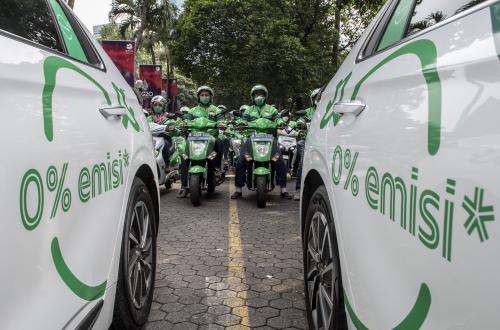
Global pressure on businesses to reduce carbon emissions is mounting. At the same time, transportation and digital service companies are being required not only to pursue business growth but also to demonstrate real contributions to the sustainability agenda. Grab reported that the use of low-emission vehicles, the development of an electric fleet, and various carbon reduction programmes implemented throughout 2025 have helped slash greenhouse gas emissions on a significant scale. This achievement is detailed in the Grab ESG Report 2025, which covers the company’s environmental, social, and governance performance across its operational region. Based on the report, the share of distance travelled by low-emission vehicles on the Grab Southeast Asia platform increased from 7 per cent in 2024 to 9 per cent in 2025. This increase is claimed to have contributed to a reduction of more than 211,000 tonnes of greenhouse gas emissions. Besides reducing emissions from transport activities, Grab also reported having avoided and removed more than 772,000 tonnes of carbon dioxide equivalent through verified carbon credit projects, the protection of natural ecosystems, and the planting of over 210,000 trees. During the same period, the company recorded that more than 10,000 tonnes of single-use packaging waste was successfully reduced, reused, or recycled. Grab Indonesia Director of Digital & Sustainability, Rivana Mezaya, stated that emission reduction has become one of the company’s main focuses in recent years. She sees the development of electric vehicles as an important instrument in supporting the decarbonisation of the transport sector while reducing dependence on fossil fuels. ‘Grab continues to strengthen the electric vehicle ecosystem in Indonesia and supports the government in achieving its carbon neutrality target by 2040,’ Rivana said. The 2025 ESG Report shows that Indonesia is one of the primary markets for Grab’s electric vehicle development in the Southeast Asian region. By the end of 2025, Grab was operating more than 14,000 GrabElectric fleet units consisting of two-wheeled and four-wheeled vehicles in 10 cities: Greater Jakarta, Bandung, Yogyakarta, Solo, Semarang, Surabaya, Bali, Makassar, Medan, and Palembang. Of this total, more than 11,000 units are electric motorcycles operating through partnerships with several manufacturers such as Electrum, Smoot Motor, Kymco, Viar, and Alva. Meanwhile, more than 3,000 electric cars are operated through partnerships with BYD, Aion, and Maxus to serve the GrabCar Executive, Premium, and Plus services. The electric fleet expansion is also accompanied by the provision of supporting infrastructure. Grab is collaborating with several partners to provide around 1,500 battery swap points and charging facilities to support electric vehicle operations in various regions.