
GPEI Highlights Decline in Bali Exports, SMEs Tending Towards Trading Imported Goods
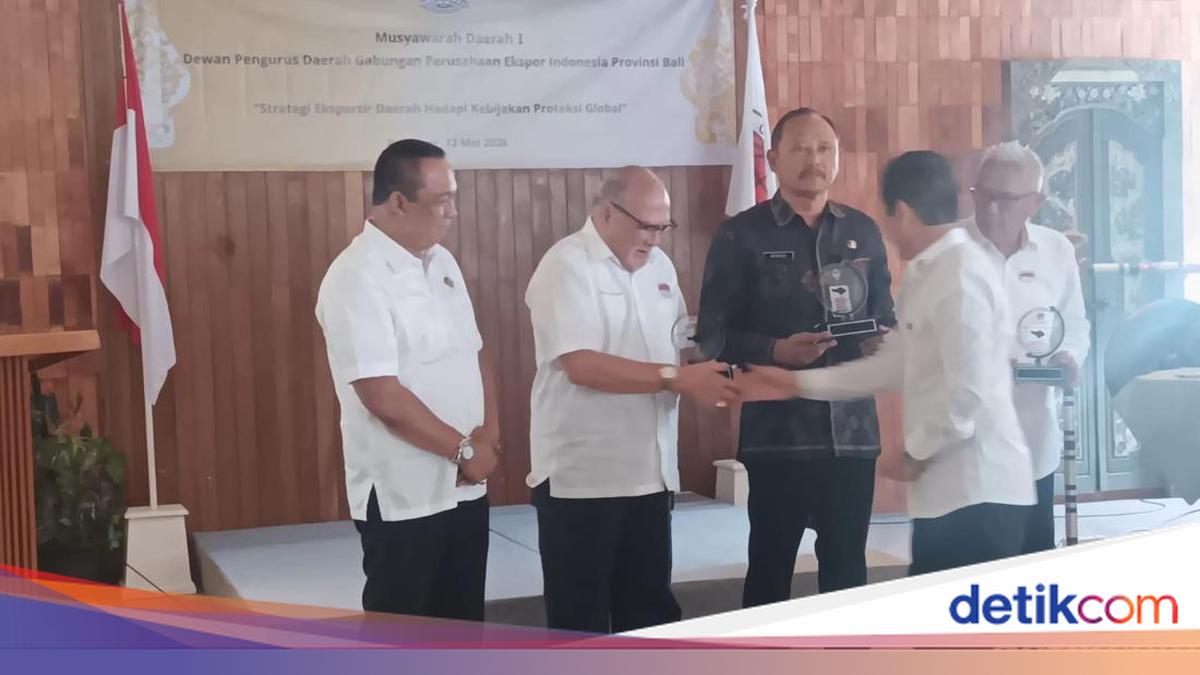
The Indonesian Exporters Association (GPEI) Bali has highlighted the recent decline in Bali’s exports. This situation is influenced by geopolitical conditions causing high logistics costs and a shift in the role of SMEs, which are now more inclined to become traders of imported goods rather than local producers.
Chairman of GPEI Bali for the 2026-2031 period, Anak Agung Ngurah Aditnya Pradnyana Sunu, explained that based on data from BPS Bali, Bali’s exports have experienced a year-on-year decline of up to 17 per cent. The decline is dominated by the weakening markets in the United States and Germany, particularly in the marine products sector.
According to him, the high logistics costs are one of the main factors causing the export decline amid uncertain global geopolitical conditions.
“Why did it drop then? Because logistics costs have skyrocketed. So, we’re looking for a correction again, to provide a new balance,” he said after the First Regional Deliberation of GPEI Province Bali on Tuesday (12/5/2026).
In addition to the export decline, Aditya also highlighted the high import figures following the export numbers. According to him, many SMEs currently prefer to become traders of imported goods rather than producing their own goods as producers.
“Most SMEs now do not become small industries or producer SMEs, but become trader SMEs. They receive cheap goods from China and then resell them to gain added value,” he explained.
He assessed that this condition occurs because domestic production costs are still more expensive compared to importing finished goods from China.
According to him, the situation would be different if more SMEs acted as producers because the impact on economic circulation and job creation would be greater.
“If they produce themselves, then the supply chain is clear, the raw materials, involving employment, the raw materials hopefully can also be sourced domestically, and then when sold, it becomes full, pure foreign exchange for the country,” he explained.
From this condition, Aditya emphasised the importance of thoroughly mapping the downstream ecosystem so that the domestic industry becomes more competitive and production raw material needs can be met domestically.
“If raw materials can indeed be supported by the domestic industry, I am confident we can be competitive to compete internationally. And of course, technology and information,” he concluded.