
Govt to review MK ruling separating free meals from education budget
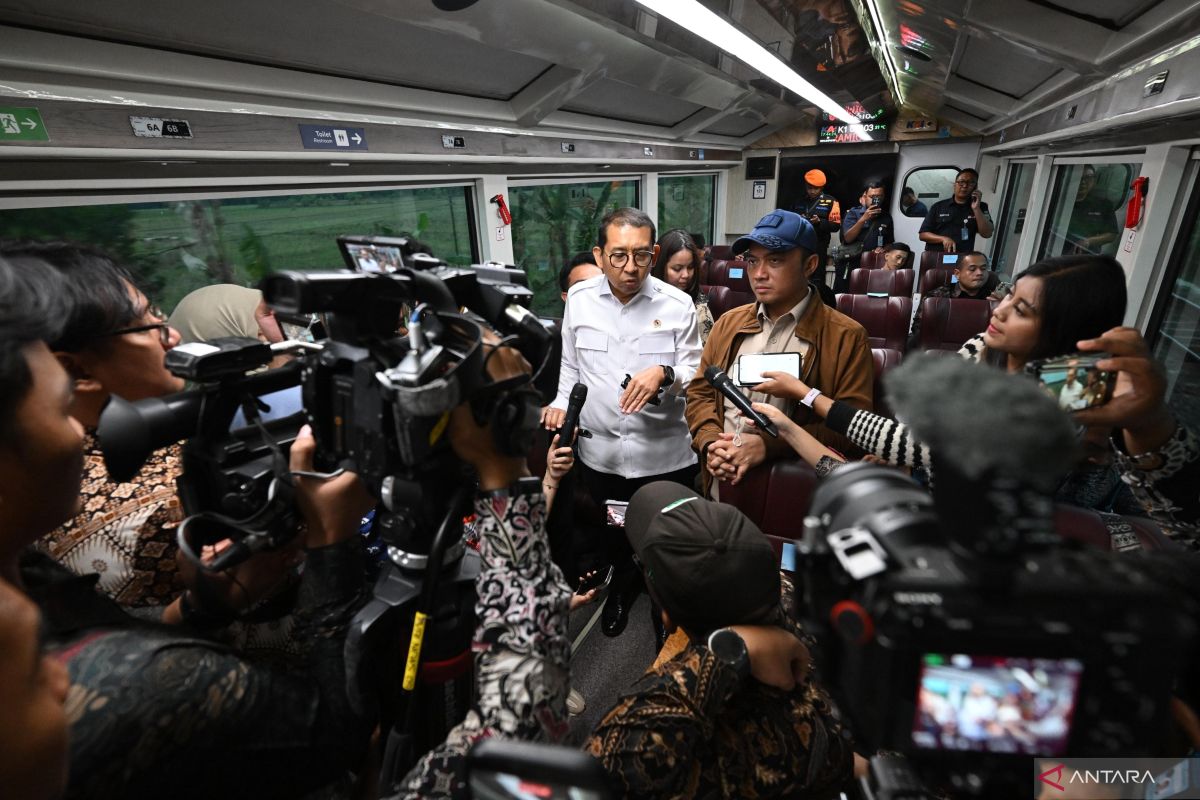
Speaking to journalists aboard the Nusantara Explorer train en route to Jakarta on Thursday evening (July 30), Minister of State Secretary and Presidential spokesperson Prasetyo Hadi confirmed that the administration respects the court’s verdict and will deliberate on its implementation alongside lawmakers.
“We respect whatever the Constitutional Court’s decision is. We will study it, because when it comes to budget issues, we are not alone—we also prepare the budget together with our colleagues in the DPR (House of Representatives). So, please allow us time,” he said.
Prasetyo noted that he had not yet received an official copy of the verdict as he was accompanying President Prabowo Subianto on a working visit across Central Java.
The Constitutional Court partially granted a judicial review regarding the budget structure of the MBG program during a plenary session in Jakarta on Thursday (July 30).
The court ruled that the MBG program budget must be separated from the mandatory 20 percent education allocation within the State Revenue and Expenditure Budget (APBN), mandating full implementation no later than the 2028 fiscal year.
Granting a maximum transition period of two years, the court required the government to establish an independent budget line for the feeding program outside of education funds in the 2028 APBN.
“Free nutritious meals (MBG) is not a primary component of education and must be separated from the education budget,” the Constitutional Court declared in its decision, noting that the program falls more appropriately under health, nutrition and social protection.
While the court prohibited budget consolidation for future fiscal years, it declared that the utilization of education funds for MBG under the current 2026 State Budget remains valid for the sake of single-use legal certainty (einmalig).
If MBG funding remains within the education operational domain under the 2027 State Budget, such policy is justified only on the condition that it does not reduce or erode the core 20 percent minimum education budget allocation.
The lawsuit was filed by civil society representatives, practitioners and teacher organizations—including the Taman Belajar Nusantara Foundation and the Save Indonesian Education Coalition—under cases No. 40, 52, and 55/PUU-XXIV/2026.
The petitioners challenged Article 22, Paragraph (3) of Law No. 17 of 2025 concerning the 2026 State Budget, arguing that routing MBG funding through the National Nutrition Agency (BGN) absorbed approximately Rp223.5 trillion (approximately US$12.34 billion), or nearly one-third of the total national education budget of Rp769.1 trillion (US$42.47 billion).
Plaintiffs argued that such an allocation narrowed the fiscal room needed to address critical educational priorities, including honorary teacher compensation, school infrastructure improvements and rising student dropout rates.
Related news: Prabowo orders BGN to review Rp15,000 MBG meal budget
Related news: Indonesia targets efficiency in Free Nutritious Meals program
Translator: Genta Tenri Mawangi, Yashinta Difa