
Govt allocates US$294.1 million to develop modern agriculture in Papua
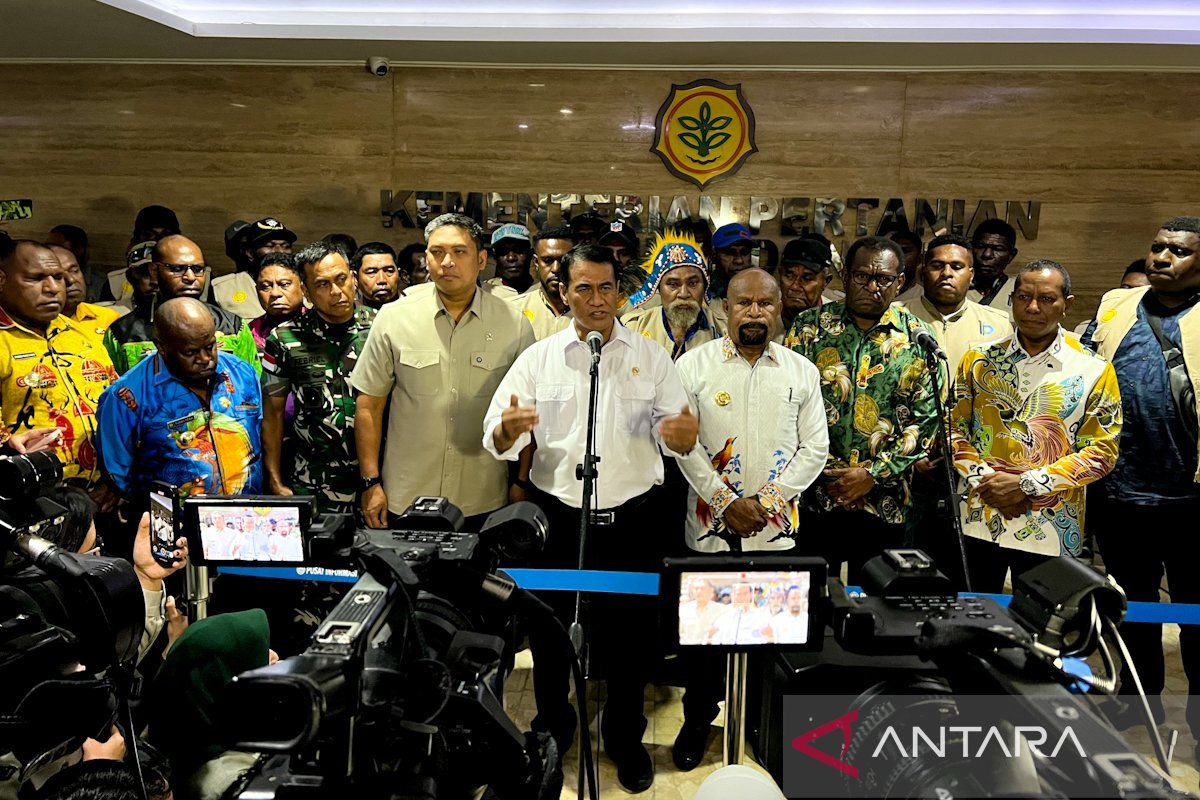
The massive funding injection is part of the central government’s structural efforts to promote regional food self-sufficiency and improve the welfare of the Papuan people.
“This is the highest agricultural sector budget in history,” Amran said here on Thursday (June 11), noting that the unprecedented budget was orchestrated under the direct mandate of President Prabowo Subianto as a strategic initiative to bridge regional development gaps.
He revealed that the record-breaking budget was carved out through aggressive internal optimization and the “refocusing” of the ministry’s existing budget.
According to him, the government is fully committed to accelerating agricultural modernization in the region by providing robust production facilities, structural infrastructure, and the development of superior commodities tailored to the needs of the local communities.
The financial blueprint splits the deployment across two fiscal years: over Rp2 trillion (US$117.6 million) was disbursed in 2025, with an escalation to roughly Rp3.2 trillion (US$188.2 million) allocated for 2026.
Related news: Indonesia targets food self-sufficiency in Papua within three years
The funding announcement follows an expansive coordination summit in Jakarta, drawing over 200 Papuan stakeholders—including governors, district heads, agricultural extension workers, and local farming representatives.
The central government aims for Papua—alongside Kalimantan, Sumatra, and Java—to achieve total food and energy self-sufficiency as a long-term measure to control national inflation.
“God willing, we will continue this program. We want Papua, Kalimantan, Sumatra, and Java to be self-sufficient in food and energy in the future, so that inflation can be controlled,” Amran explained.
Furthermore, agricultural development in Papua is specifically targeted to reduce food price disparities, including eliminating the high price volatility of rice in several remote interior regions.
The targeted agricultural commodities to be developed include rice, corn, coffee, cocoa, nutmeg, sago, sweet potatoes, and cassava—carefully chosen based on the geographic and soil characteristics of each specific district.
Related news: Prabowo orders village-level food barns to boost food security
Translator: Muhammad Harianto, Yashinta Difa