
Govt: 100 GWp Solar Project Could Create 5.52 Million Jobs
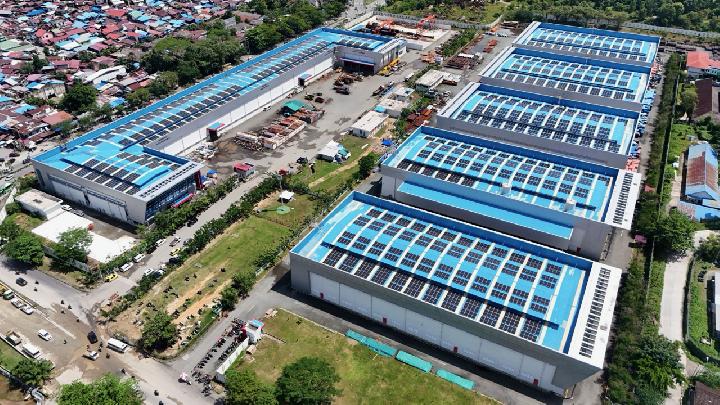
Govt: 100 GWp Solar Project Could Create 5.52 Million Jobs
Reporter
August 31, 2026 | 10:00 pm
TEMPO.CO, Jakarta - Indonesian Government Communications Agency (Bakom) Head Muhammad Qodari stated that the 100-gigawatt peak (GWp) Solar Power Plant (PLTS) program represents a government step toward building energy independence while strengthening the national economy.
In a statement in Jakarta on Monday, August 31, Qodari said the program is projected to require an investment of around Rp1,140 trillion and has the potential to create approximately 5.52 million jobs.
“The launch of the 100 Gigawatt Peak (GWp) Solar Power Plant (PLTS) program is not just a target setting. It is a concrete step towards developing a new, stronger, more independent, and sustainable energy source for Indonesia,” Qodari said.
He noted that implementation began with the launch of the 100 GWp solar program by President Prabowo Subianto on Tuesday, August 25, 2026, starting with the construction of 14 solar installations across six provinces with a combined capacity of 5.3 GWp.
The program launch was centered at the Gilimanuk Solar Power Plant in Jembrana Regency, Bali. “This shows that the government is not stopping at the discourse of energy independence. We are starting to build it in a concrete, gradual, and measurable way,” he said.
Qodari explained that the 100 GWp solar power plant program forms part of broader efforts to bolster national energy security while reducing reliance on fossil fuels. By tapping into Indonesia’s abundant solar potential, he added, the government hopes national energy needs can increasingly be met using domestic resources.
“However, for the government, the transition to clean energy is not only about reducing emissions. Beyond that, the energy transition must bring benefits that can be directly felt by the community and provide added value to the national economy,” he said.
Data from the Ministry of Energy and Mineral Resources (ESDM) indicates that the 100 GWp solar program could generate savings of up to Rp73.9 trillion annually, cut emissions by roughly 140 million metric tons of CO2, and create around 5.52 million jobs.
“Therefore, the development of the 100 Gigawatt Peak Solar Power Plant (PLTS) will not stop at the power plant. We want to build a national solar energy ecosystem that grows from upstream to downstream,” Qodari said.
He added that solar power utilization will also expand into frontier, outermost, and underdeveloped (3T) regions while supporting productive local economic activities.
According to Qodari, the estimated Rp1,140 trillion investment required for the 100 GWp development will also unlock major opportunities for domestic industries. “There will be new needs, new investments, new jobs, and ultimately, new economic strength,” he said.
Qodari emphasized that developing 100 GWp of solar capacity aligns directly with government priorities to establish energy self-sufficiency while bolstering national economic performance.
“This is the spirit we want to build: more independent energy, a stronger economy, and broader development benefits,” he said.
He stated that launching the initial phase demonstrates the government’s commitment to delivering on large-scale renewable infrastructure. “The 100 Gigawatt Peak solar power plant is a big step. And today, that big step has begun,” Qodari said.
Read: Why South Korea Is Keen to Invest in Indonesia’s 100 GW Solar Power
Click here to get the latest news updates from Tempo on Google News