
Governor Sherly Targets 100% Electrification for North Maluku by 2027
North Maluku Governor Sherly Tjoanda is targeting full electricity access for the province by 2027, noting that 43 villages currently remain without power. Sherly highlighted progress in regional electricity infrastructure, with the number of unelectrified villages steadily decreasing since the beginning of last year.
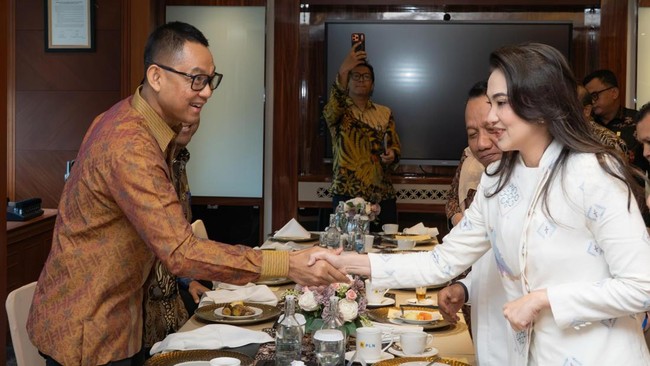
She made the statement while attending the Alignment Forum for the Acceleration of the Sustainable Village Electricity Programme in Jakarta on Monday (13/7/2026). The event was also attended by the Ministry of Energy and Mineral Resources’ Acting Director General of Electricity Tri Winarno, President Director of PT PLN (Persero) Darmawan Prasodjo, as well as representatives from the Attorney General’s Office, the Development and Finance Comptroller (BPKP), and the Ministry of Agrarian Affairs and Spatial Planning.
“When I was inaugurated in early 2025, there were still 70 villages in North Maluku without electricity. By June 2026, that number had dropped to 43. This means we are moving in the right direction, but our work is not yet finished,” she stated.
The reduction in the number of dark villages serves as crucial capital for the local government to pursue full electrification next year. The current focus is on resolving field obstacles to support power distribution by PLN to the remote islands.
“Therefore, our target is clear: all villages in North Maluku must have 100% electricity access by 2027,” Sherly asserted. To achieve this, she is committed to facilitating the readiness of basic supporting infrastructure. Preparing access roads, bridges, and land acquisition for electrical substations is a priority to ensure the construction process carried out by technical teams can proceed without hindrance.
“The Provincial Government will continue to oversee this acceleration by ensuring the readiness of road access, bridges, and land, as well as strengthening cross-sector coordination so that every obstacle in the field can be resolved more quickly,” she continued. The implementation of the Village Electricity Programme also involves oversight from law enforcement agencies and relevant ministries to guarantee budget transparency.
This initiative is expected to stimulate the grassroots economy through digitalisation and the development of MSMEs in villages newly receiving electricity. “For us, electricity is not just about turning on lights. It opens up learning spaces for children, empowers businesses, drives the village economy, improves health services, and provides equal opportunities for all citizens,” she concluded.