
Governor Sherly: Nickel Downstreaming Strengthens Local Economy
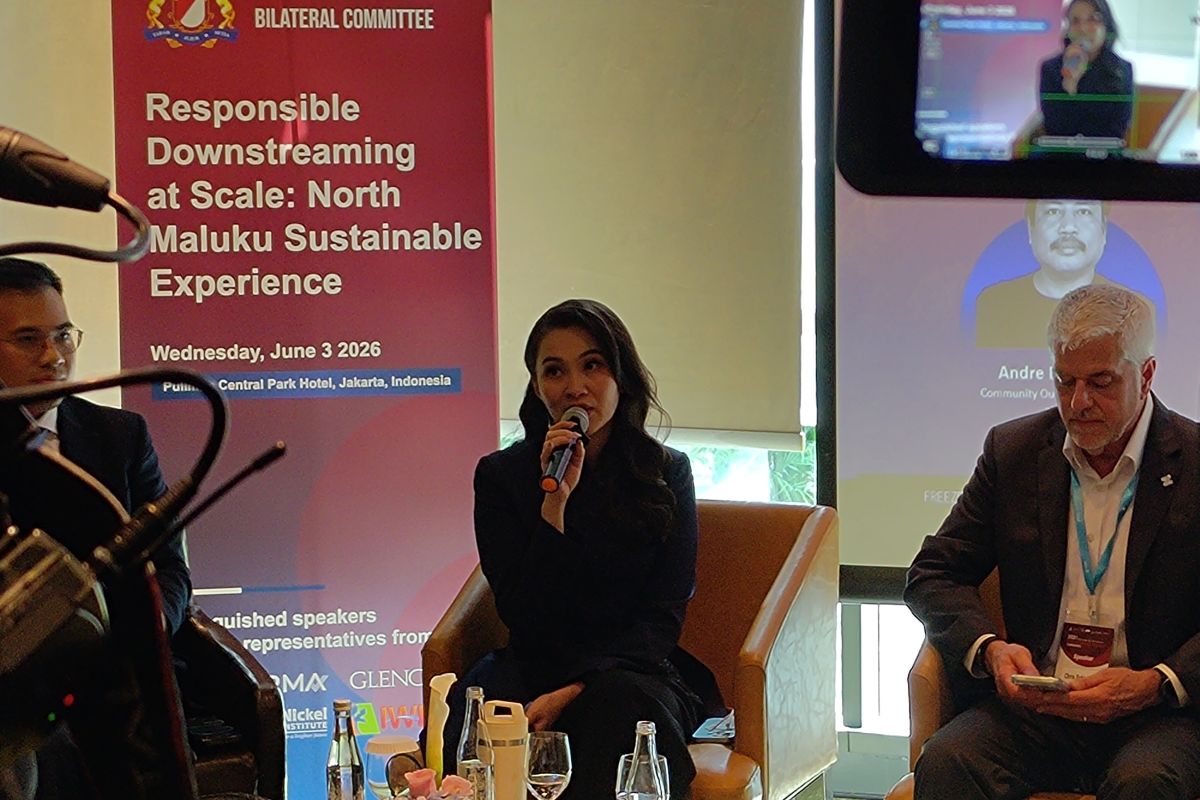
Jakarta (ANTARA) - North Maluku Governor Sherly Tjoanda stated that nickel downstreaming has transformed North Maluku from a mere natural resource producer into one of Indonesia’s high-growth industrial regions. “Economic growth last year reached 34 per cent year-on-year, and in the first quarter of this year, it stood at 19.6 per cent,” Sherly said during a discussion titled “Responsible Downstreaming at Scale: Lessons from North Maluku” in Jakarta on Wednesday.
According to the Governor, the development of the nickel downstreaming industry has driven investment, created jobs, built industrial infrastructure, and connected North Maluku to the global supply chains for electric vehicles and stainless steel. She explained that North Maluku has become a national centre for nickel downstreaming through the development of industrial estates such as the Indonesia Weda Bay Industrial Park (IWIP) in Central Halmahera, which is integrated from mining to nickel processing for stainless steel raw materials and electric vehicle batteries.
“Downstreaming has significantly transformed the economy of North Maluku,” she remarked. She noted that North Maluku currently contributes approximately one-seventh of global nickel production and serves as a vital component in the world’s critical mineral supply chain.
Sherly assessed that the next stage of downstream development must focus on strengthening economic benefits for the local population. “The next phase must focus on broader benefits for the community,” she said.
The North Maluku Provincial Government, she continued, is encouraging more local MSMEs (Micro, Small, and Medium Enterprises) to enter the industrial supply chain, ranging from catering, logistics, and maintenance services to laundry services and the provision of occupational safety equipment.
Furthermore, the local government is strengthening the agricultural and fisheries sectors to ensure that the food requirements of the industrial zones can be met by local farmers and fishermen. Sherly mentioned that the food consumption needs of the industrial zones in North Maluku reach approximately IDR 100 billion per month, or about IDR 1.2 trillion per year, yet most of the supply still originates from outside the region. Currently, only about 20 per cent of the industrial zones’ consumption needs are met by local production.
Consequently, the local government is preparing to strengthen agricultural and fisheries infrastructure to gradually increase local production capacity. “The hope is that the needs for chicken, meat, eggs, and even rice can eventually be produced locally,” said Sherly.
Regarding human resources, the local government is also strengthening vocational education and polytechnics so that local residents can fill more technical and managerial positions within the downstream industries. Sherly stated that they are currently in discussions with several universities, including the Bogor Agricultural Institute (IPB), to develop vocational education in the fields of metallurgy, electrical engineering, and technical studies. She expressed hope that the future growth of the downstream industry will further strengthen the economy of local communities, including farmers, fishermen, and MSME owners in North Maluku.