
Governor: Huma Betang Card introduced to meet basic needs of the public
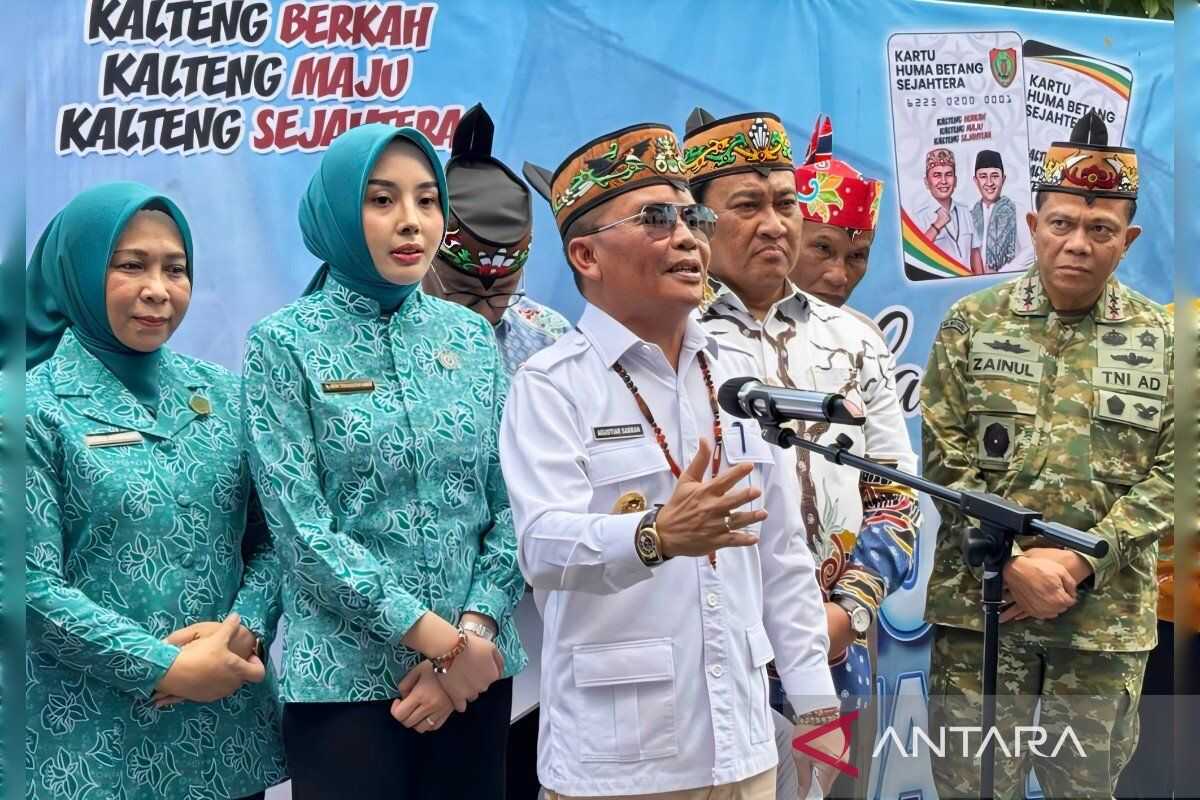
Palangka Raya (ANTARA) — Central Kalimantan Governor Agustiar Sabran has stated that the introduction of the Kartu Huma Betang Sejahtera (KHBS) represents the provincial government’s strong commitment to meeting the basic needs of the public.
“With this card, we want to ensure the welfare of Central Kalimantan’s people, particularly the underprivileged and those in remote areas,” he said in Palangka Raya on Saturday.
The social assistance delivered through the Huma Betang Card covers various sectors, ranging from food, education and health to economic empowerment and other areas, all integrated into a single programme.
Agustiar noted that despite a significant decline in the region’s fiscal position in 2026 — with Central Kalimantan’s regional budget recorded at approximately Rp5 trillion, down from over Rp10 trillion in 2025 — the government remains committed to prioritising development programmes with direct impact on the community.
“Even amid budget efficiency measures, we remain committed to prioritising development programmes that have a direct impact on the public. The Kartu Huma Betang Sejahtera is a central pillar in realising the vision and mission that I share with Deputy Governor Edy Pratowo,” he said.
In its initial phase, social assistance under the Huma Betang Card comprises food aid and cash transfers. The food package, valued at Rp150,000, includes 5 kg of premium rice, 1 litre of cooking oil and 1 kg of sugar, alongside a cash transfer of Rp250,000. Distribution is being carried out through Bulog and Bank Kalteng.
The number of Beneficiary Families (KPM) currently stands at 279,434, spread across 13 regencies and one city in Central Kalimantan.
Acting Central Kalimantan Provincial Secretary Leonard S. Ampung said distribution of the Huma Betang Card targets those most in need, particularly underprivileged families and communities in remote areas, in accordance with prevailing regulations. The primary data source is the National Social and Economic Unified Database (DTSEN), which is updated quarterly based on data from the Ministry of Social Affairs.
Card distribution involves Huma Betang Sejahtera Volunteers comprising Sub-district Social Welfare Workers (TKSK), Community Social Workers (PSM), Family Hope Programme (PKH) staff and Village Facilitators.
“The target is for all beneficiary families to have received this card by the end of February 2026,” he said.