
Government's 8 Cost-Saving Policies, from WFH to Optimisation of Free Meals Programme
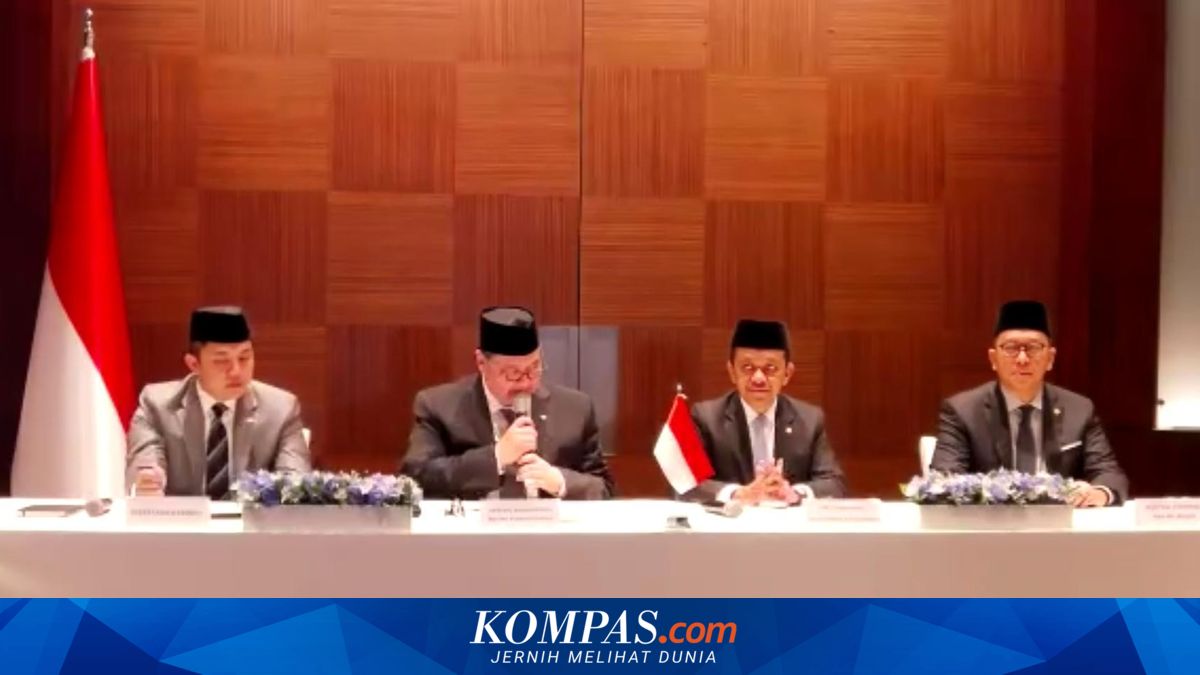
JAKARTA, KOMPAS.com - The government has launched an efficiency policy package titled “8 pillars of national work culture transformation” in response to global dynamics and efforts to maintain economic stability.
Coordinating Minister for Economic Affairs Airlangga Hartarto emphasised that these policies are aimed at promoting efficiency, productivity, and safeguarding national economic resilience amid global pressures.
“It is necessary to emphasise to the public that the national economy remains stable with strong fundamentals,” Airlangga stated during the online press conference on Government Policies in Response to the Current Geopolitical Situation on Tuesday (31/3/2026).
The government is implementing work from home (WFH) for civil servants (ASN) every Friday. This policy applies to central and regional agencies to encourage efficiency and digitalisation of government administration. The policy takes effect every Friday starting 1 April 2026.
The government is also encouraging the private sector to implement WFH through a circular from the Minister of Manpower, with adjustments according to the characteristics of each industry.
Several sectors will continue normal operations, such as public services (health, security, cleanliness) and strategic sectors (industry, energy, food, transportation, logistics, and finance).
The use of official vehicles is limited to 50 per cent, except for operational needs. Civil servants are encouraged to switch to public transportation to reduce energy consumption.
Airlangga also urged the public to participate in energy efficiency by adopting energy-saving habits in daily activities both at home and in the workplace.
Business travel is being significantly reduced, by up to 50 per cent for domestic trips and 70 per cent for overseas trips, as part of state expenditure efficiency.
Furthermore, the government is promoting the optimisation of the free school meals programme, directing it towards providing fresh meals for five days a week.
Airlangga noted that this policy still considers exceptions, such as for dormitories, 3T (frontier, outermost, and disadvantaged) areas, and regions with high stunting rates.
According to him, the potential savings from this initiative amount to Rp20 trillion.
Teaching and learning activities will continue to be conducted in-person or face-to-face for five full days a week for primary and secondary education levels, without distance learning.
“For higher education, semesters 4 and above will adjust according to the circular,” he explained.