
Government Yet to Collect Excise on Sweetened Drinks – Why?
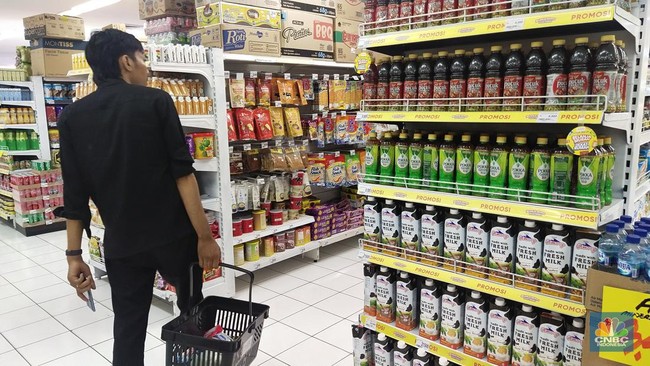
Jakarta, CNBC Indonesia – The government has, to date, no plans to execute the excise duty on packaged sweetened beverages (MBDK), even though the target has been set in the 2026 state budget (APBN) as well as the 2027 draft budget.
In the 2026 budget target, the figure reaches Rp 7.6 trillion, whilst for 2027 the target has been set at only Rp 1.6 trillion.
“Regarding the plan to impose excise on MBDK, it was indeed planned for this year with a target of Rp 7.6 trillion, but it has not yet been implemented. Next year it is around Rp 1.6 trillion,” said the Acting Director General of Economic and Fiscal Strategy (DJSEF) at the Ministry of Finance, Ferry Ardiyanto, during a meeting with the House of Representatives’ Budget Committee (Banggar), quoted on Monday (7/9/2026).
Ferry explained that the MBDK excise collection has not been executed because there has been no direct instruction from Finance Minister Purbaya Yudhi Sadewa to collect duty on this new excisable good.
“We are indeed still awaiting coordination and instructions from the Finance Minister, because this relates to the salt, sugar and fat content listed in these MBDK products,” said Ferry.
Nevertheless, Ferry assured that DJSEF, together with the Directorate General of Customs and Excise (DJBC), will continue to coordinate in order to assess the condition of society so that when the excise collection is eventually carried out, it will not significantly disrupt economic activity.
“Together with the implementing agency DJBC, we will evaluate and explore matters relating to this plan to impose excise on MBDK,” Ferry stressed.
Previously, Purbaya has stated on several occasions that new taxation levies will only be implemented if he can achieve economic growth above 6%.
“That means the economy must grow above 6%,” Purbaya asserted.
The MBDK excise was in fact already agreed upon by the government and the House of Representatives in the 2026 state budget. The excise is being imposed in order to control sugar consumption for health reasons and to increase state revenue.