
Government Vows to Strengthen Collaboration for National Nutrition Programme Success
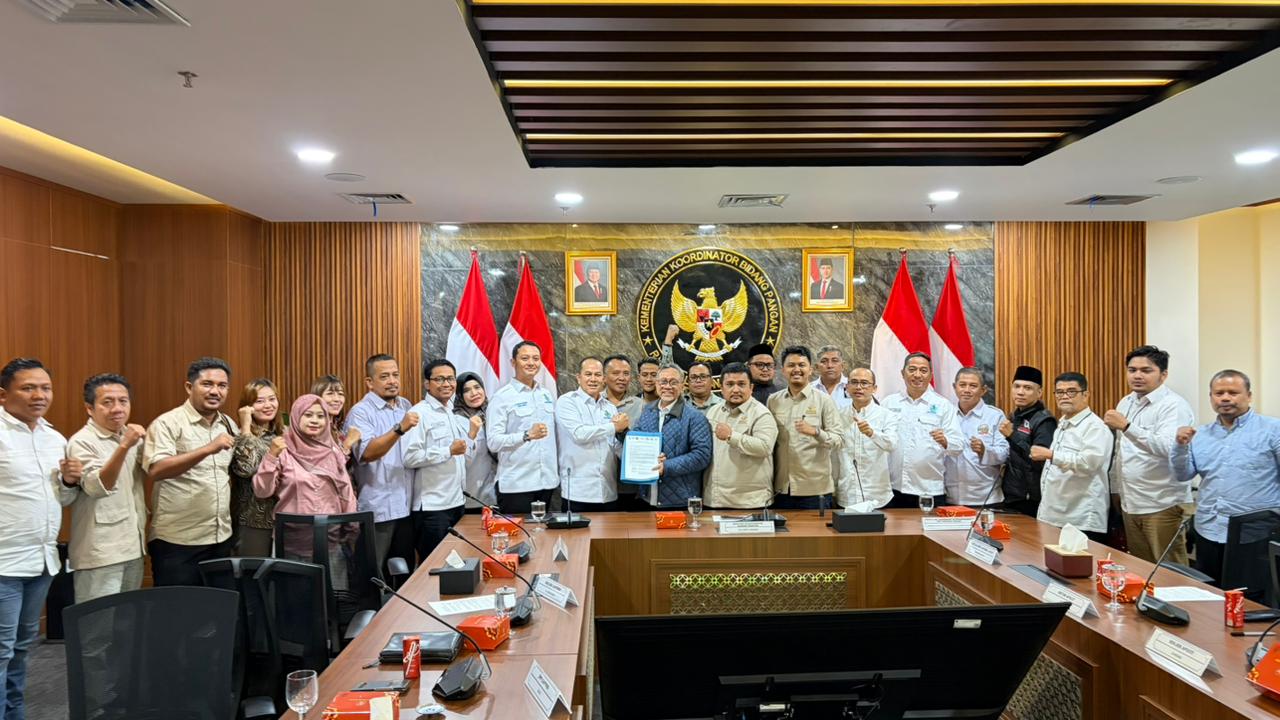
The Coordinating Minister for Food Affairs and Chairman of the Free Nutritious Meal (MBG) Task Force, Zulkifli Hasan, has ensured that the government will follow up on various aspirations and grievances expressed by implementation partners of the MBG programme.
Receiving an audience with the MBG Partner Presidium at the Coordinating Ministry for Food Affairs Office in Jakarta on Thursday (25/6), Zulkifli stated that he understands the anxieties felt by partners who have invested and contributed to the success of this national strategic programme.
“I am aware of the partners’ concerns. All reports will be checked and reviewed. Partners are asked to be patient as we are also establishing communication with the new Head of the National Nutrition Agency (BuGN),” said Zulkifli.
He also ensured that the MBG Partner Presidium would be involved in coordination forums alongside the National Nutrition Agency (BGN) and relevant stakeholders to discuss various issues arising in the field.
The audience was attended by several organisations under the MBG Partner Presidium, including the Indonesian Nutritious Food Entrepreneurs Association (Gapembi), the Golden Generation Kitchen Partners Association (HMD GEMAS), the Food and Nutrition Association for Disadvantaged, Frontier, and Outermost Regions (APGI3T), the United Society Volunteers (REL MBG), the National Nutrition Agency Programme Monitoring Alliance (APPBGN), and the Nahdlatul Ulama (PBNU) Executive Board.
During the meeting, partners raised several aspirations, ranging from the need for involvement in policy formulation, evaluation of moratoriums, legal protection, and business certainty, to strengthening communication between the BGN and programme implementers in the regions.
The General Chair of Gapembi, Alven Stony, stated that partner associations need to be involved in meetings, discussions, and policy formulation alongside the BGN. According to him, the involvement of these associations will serve as an effective communication bridge between the BGN and field partners, while also helping to resolve various implementation obstacles.
Alven also reminded that the presence of partners has contributed significantly to the state. “Initially, the BGN planned to build kitchens at a cost of approximately Rp4 trillion per unit using the state budget. However, because that scheme did not proceed, the presence of partners has helped the state save a massive budget. If multiplied by the target of 27,820 kitchens, the potential savings reach around Rp111.28 trillion,” he said.
Meanwhile, the General Chair of APGI3T, Herwil Junaidi, noted that the MBG programme has a significant economic impact, both in urban areas and in disadvantaged, frontier, and outermost (3T) regions.
Nevertheless, several Nutrition Fulfilment Service Units (SPPG) in remote areas are experiencing operational delays due to new policies that have not been fully matched by field implementation readiness. “We hope that the policies issued do not hinder the acceleration of programme implementation in 3T regions. These areas require special attention and treatment,” said Herwil.
Representing PBNU, M Khoiron and Ai Rahmawati expressed that PBNU is committed to developing 1,000 SPPG points within pesantren (Islamic boarding school) environments, based on a Memorandum of Understanding (MoU) with the BGN witnessed by President Prabowo Subianto.
However, to date, only about 214 pesantren kitchens are operational, while more than 130 other points still face various obstacles in the realisation process.
Furthermore, volunteers and programme monitoring organisations highlighted the impact of policies causing operational activities to cease during holiday periods, limited communication with the BGN, and the lack of an independent monitoring mechanism and clear procedures regarding the suspension of kitchen operations.
Despite these challenges, the MBG Partner Presidium reaffirmed its commitment to continue supporting the MBG Programme through strengthening the quality of nutritional services, empowering local economies, and increasing budget efficiency. They hope that the aspirations presented can be addressed promptly so that the implementation of the MBG Programme can run more effectively and support the realisation of the 2045 Indonesian Golden Generation.
Source: jawawa.id (https://jawawa.id/newsitem/government-vows-to-strengthen-collaboration-for-national-nutrition-programme-success-1782402672)
Originally published by Media Indonesia (https://mediaindonesia.com/humaniora/904463/pemerintah-perkuat-kolaborasi-demi-sukseskan-program-gizi-nasional), translated from Indonesian