
Government Urges Public Relations Departments to Move Beyond Passive Roles
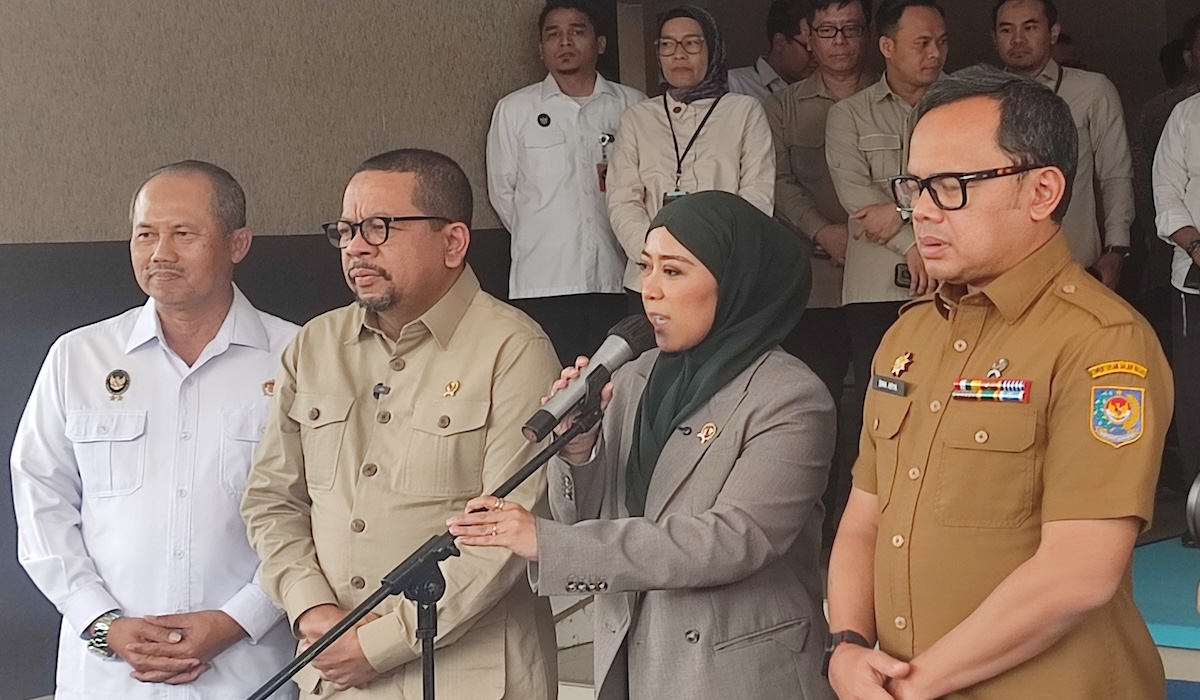
The government is encouraging public relations departments within ministries, agencies, and regional governments to be more proactive in occupying the public information space amidst the heavy flow of information and massive use of social media. Public relations officers are being asked not only to react to negative information but to routinely communicate programmes, achievements, and the real-world impacts of policies to the public.
The Head of the Government Communications Agency, Muhammad Qodari, stated that the government can no longer wait for information to develop before providing explanations to the public. According to him, communication must be an inherent part of the implementation of every government programme.
“In this current era, with such a heavy flow of information and the existence of social media, the government truly cannot wait. There must be a routine schedule and a communication agenda that ensures information spaces are continuously filled with various types of information regarding government activities and programmes,” said Qodari at Graha Marinir, Jakarta, on Tuesday (1/9).
He emphasised that programme communication holds the same level of importance as the programme itself. Consistent delivery of information is deemed necessary so that the public understands government programmes, thereby strengthening support for policies.
“Programme communication must be carried out so that support for programmes becomes better and the results are more optimal,” he added.
Qodari noted that the Public Relations Coordination Body (Bakohumas) plays a vital role in orchestrating government communications. This coordination requires the involvement of public relations units from ministries, agencies, and regional governments, which collectively number more than 8,000 entities nationwide.
He stated that government communication should not stop at merely reporting activities. Programmes must be demonstrated through their impact on people’s lives so that policies do not appear as something abstract.
He described that government programmes need to have a ‘face’—namely, the citizens who directly feel the benefits of the policies. In this way, information regarding programmes will not merely consist of bureaucratic agendas but will show the changes occurring within society.
The push to make government communication more active was also voiced by the Deputy Minister of Home Affairs, Bima Arya Sugiarto. He assessed that the government’s extensive public relations network must be optimised, including positioning public relations as a two-way bridge between the government and the public.
“The government possesses a very complete public relations network. Naturally, that complete network must be ensured to work at maximum capacity,” said Bima.
According to Bima, public relations should not only convey government policies to the public. Public relations officers also need to monitor public discourse to capture issues, responses, and community needs that can serve as input for the government.
Furthermore, Bima encouraged public relations to highlight more good news and inspiring stories from various regions. This effort is considered important to ensure that the digital space is not dominated by negative content.
“This is so that our cyberspace, and today’s algorithms, are not filled with DFK (Disinformation, Slander, and Hate). It should not just be reactive or a counter to negative things, but should also include good news and inspiring elements,” he said.
Meanwhile, the Deputy for Coordination of Communication and Information at the Coordinating Ministry for Political and Security Affairs, Air Marshal Eko Dono Indarto, stated that the Bakohumas forum serves as a momentum to strengthen the coordination of working relationships between the central and regional governments.
He stated that the government will increase the synchronisation of public relations activities so that policy communication can be more coordinated. Cooperation will also be strengthened with the media so that reporting on government programmes can provide better support for policy implementation.
“Today, we can gather as a single commitment for all of us, as we have long wanted to hear about our shared issues,” said Elam.
The Minister of Communication and Digital, Meutya Hafid, stated that the Bakohumas communication forum is expected not to end as a one-off event. The government, she said, has agreed to endeavour to ensure that similar forums can be held regularly every year as a space for both communication and evaluation.
Meutya assessed that the forum is important for identifying problems in government communication, including instances where the delivery of information is deemed slow, unclear, or fails to respond quickly to public needs.
“This also serves as a forum for us to evaluate ourselves,” said Meutya.