
Government Urges Danantara to Accelerate Investment as Downstreaming Push Intensifies
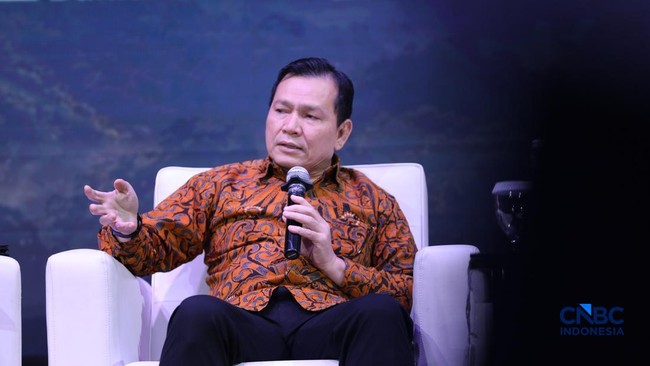
Jakarta, CNBC Indonesia - Deputy for Energy and Mineral Resources at the Coordinating Ministry for Economic Affairs, Elen Setiadi, said his office is encouraging the Daya Anagata Nusantara Investment Management Agency (BPI Danantara) to accelerate investment in downstreaming projects. This effort is being undertaken as a step to balance supply and demand for mining commodities.
“So this balance is what we need to create while accelerating efforts to encourage, among other things, Danantara’s task — how we can push Danantara to make investments,” Elen said during the MINDialogue 2026 event titled “Commodities for the Nation: Strategy for Strengthening Mineral Reserves for Indonesia’s Economic Stability and Sovereignty” on Thursday (13/8/2026).
He cited coal reserves in South Sumatra, which amount to approximately 1 billion tonnes. To utilise these reserves, the coal is processed into dimethyl ether (DME) as a substitute for liquefied petroleum gas (LPG).
“The push for DME has been completed. It now just remains for Danantara to finalise the investment mechanism. If that is in place and the product exists, we can develop it further — instead of selling gas, we can even replace LPG,” Elen explained.
Danantara is currently accelerating the implementation of national strategic downstreaming projects as part of efforts to increase the added value of natural resources, strengthen domestic industry, and create employment.
A total of 26 downstreaming projects with a combined investment value of Rp225 trillion are underway and are projected to absorb 37,833 workers. The projects are being implemented in two phases. The first phase, which began with a groundbreaking on 6 February 2026, comprises six priority projects across 13 locations with an investment value of Rp109 trillion and the potential to absorb 11,456 workers.
Meanwhile, the second phase, which began with a groundbreaking on 29 April 2026, covers 10 priority projects across 13 locations with an investment value of Rp116 trillion and is estimated to absorb 26,377 workers. These projects span various strategic commodities, from the mining sector — including the construction of aluminium, stainless steel, and copper smelters — to the energy and food sectors through the development of bio-avtur facilities, bioethanol, palm oil processing, coconut industry, and integrated chicken farming.
On the same occasion, Chief Technology Officer of Danantara Indonesia, Sigit Puji Santosa, outlined that the main challenge in mineral downstreaming is technology. He noted that incoming partners have not focused on technology transfer, but rather only want to take raw materials.
“Therefore, the technology process remains the first challenge. However, the technology gap is no longer significant for some minerals, but the widest gap is in minerals used for semiconductors. For certain specialised minerals, the gap is indeed quite large, because only the most advanced countries can handle them,” Sigit detailed.
To address this, Danantara is pursuing strategic partnerships with universities to build research and development centres.
This move is also supported by President Prabowo, who has gathered 2,600 university rectors and deans to offer 31 to 40 industrialisation projects from Danantara. According to Sigit, this is being done so that universities can identify their respective strengths to be invited to collaborate.