
Government Urged to Use Diplomatic Channels to Protect Indonesian Students in Azerbaijan
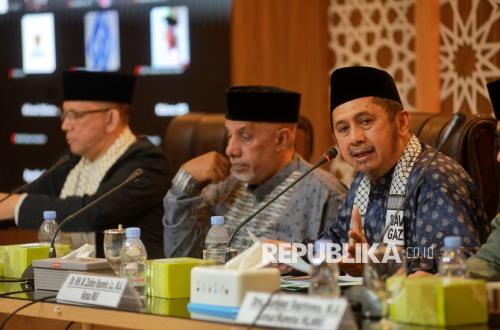
JAKARTA — The Forum for Communication of National Islamic Organisations (Forkomnas) has urged Muslim women students in Azerbaijan to remain steadfast in wearing the hijab despite rules banning headscarves in educational institutions. It has also called on the Indonesian government to use diplomatic channels to defend Muslim women’s right to practise their faith.
KH Muhammad Zaitun Rasmin, chairman of Wahdah Islamiyah and a Forkomnas member, urged Indonesian students affected by the rules not to remove their hijabs, even if this meant being unable to attend lessons.
“We urge them to remain steadfast and try not to remove their hijabs, even if they temporarily have to stop studying,” Zaitun told Republika.co.id at a joint Forkomnas press conference at the Hidayatullah Central Da’wah Office in East Jakarta on Saturday (17 October 2026).
Zaitun also called for solidarity among all Muslim women students in Azerbaijan, including those who do not wear the hijab, as well as male students and pupils. He said they could demonstrate together against a policy he described as restricting religious freedom.
“If necessary, they should go on strike to apply pressure, because this is a very clear-cut issue,” he said.
Zaitun said Indonesia’s experience of hijab bans in schools during the 1980s could serve as a lesson. He said the persistence of schoolgirls who continued wearing the hijab eventually helped open up opportunities for Muslim women to wear it in educational institutions.
“When the hijab was banned in some Indonesian schools in the 1980s, the students who held firm — praise be to God — were expelled. Ten, then 100,000 wore it. Eventually, it was allowed everywhere. And now it is permitted not only in schools, but also in institutions such as the National Police and the military,” Zaitun said.
Meanwhile, KH Ahmad Kusyairi Suhail, chairman of the central board of the Indonesian Association of Preachers (PP IKADI), urged the Indonesian government to approach Azerbaijan through diplomatic channels.
He said Indonesian representatives, including the Indonesian Embassy, should pursue dialogue to find a solution for affected pupils and students.
“The embassy representatives should make an approach and see whether some form of exemption might be possible, especially by using diplomatic channels,” Kusyairi said.
He said such engagement was important to prevent the hijab ban from escalating into a bigger issue, and expressed hope that the Azerbaijani government would reconsider its policy.
“This is what we hope for. In our earlier statement, we also hoped that officials in Indonesia would engage through diplomatic channels to raise this issue, so it does not become a bigger problem. We hope Azerbaijan can change its position,” he said.
Earlier, an Indonesian student in Baku told Republika that the ban on the hijab in Azerbaijan’s educational institutions had affected pupils, including those with Indonesian backgrounds.
According to the source, implementation of the rule had been planned for some time. Schools began gathering parents on 20 September 2026 to inform them that the policy would be enforced.
“Only on 20 September 2026 did schools gather the students’ parents to implement the rule,” the student told Republika by phone from Jakarta on Friday (16 October 2026).
The student said the new academic year began on 15 September 2026. Since then, girls arriving in class wearing the hijab had been told either to remove it or leave the classroom.
“There are only two choices: follow the rule and remove the hijab, or not go to school,” the student said.
The source said the policy applied in state schools from primary through secondary level. Teachers were also bound by the ban, limiting their ability to accommodate girls who wished to continue wearing the hijab.
The situation has left some parents facing a dilemma between upholding their children’s beliefs and ensuring they can continue their education. Families with sufficient means can transfer their children to private schools, although the source feared the policy might eventually be extended to private educational institutions and universities.
Azerbaijan has a predominantly Muslim population, but its government is known for its secular political orientation. The policy has drawn attention because it is seen as directly affecting Muslim girls’ ability to practise their faith while pursuing an education.
Source: jawawa.id (https://jawawa.id/newsitem/government-urged-to-use-diplomatic-channels-to-protect-indonesian-students-in-azerbaijan-1792237823)
Originally published by Republika (https://news.republika.co.id/berita/tn1s37393/pemerintah-diminta-pakai-jalur-diplomatik-jamin-mahasiswi-ri-di-azerbaijan), translated from Indonesian