
Government Urged to Strengthen Cross-Sector Coordination to Tackle Forest and Land Fires
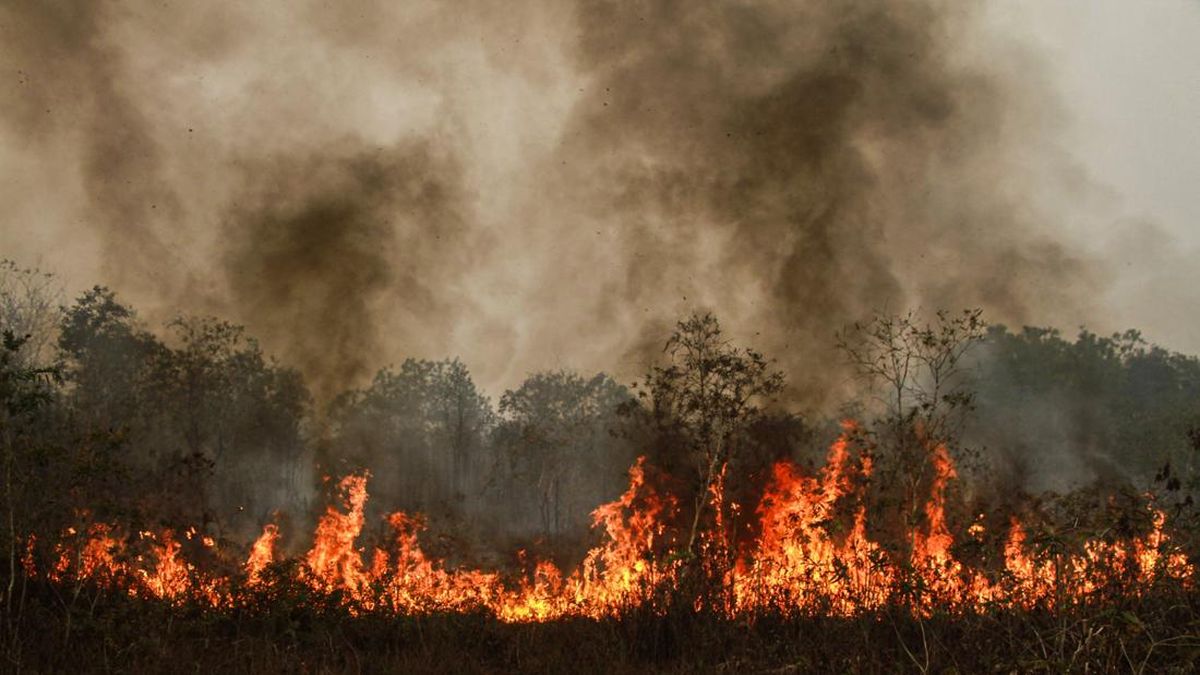
The Indonesian Forum for the Environment (WALHI) has highlighted the importance of shared responsibility across sectors in tackling forest and land fires, from prevention and land monitoring to law enforcement against parties found to have committed violations.
WALHI Forest and Plantation Campaigner Umi Ma’rufah said efforts to address forest and land fires could not rely on a single agency. The central and regional governments, law enforcement officers and companies holding concessions must each fulfil their obligations to prevent fires and take action against violations, she said.
“The President needs to ensure that ministries and agencies work in an integrated way, follow up reports seriously and set measurable prevention targets,” Umi said in a statement on Monday (19 October).
Umi said monitoring of fire-prone land needed to be strengthened, particularly in plantation areas and company concessions. The government must ensure that permit holders meet their fire-prevention obligations, including providing firefighting equipment and facilities.
“Monitoring should be carried out regularly, especially at concessions with a high level of risk or a history of fires,” she said.
Umi also referred to Presidential Instruction No. 3/2020, which sets out the division of responsibilities among ministries, agencies, the Indonesian Military (TNI), the National Police and regional heads to strengthen fire prevention, suppression and law enforcement.
The instruction focuses on strengthening prevention and law enforcement in efforts to tackle forest and land fires. Its implementation requires coordination among agencies, from the central government to regional administrations across Indonesia.
Under the regulation, ministers and heads of state agencies with responsibilities related to tackling forest and land fires include the Coordinating Minister for Political, Legal and Security Affairs; the home affairs, forestry, environment, foreign affairs and finance ministers; and the head of the National Development Planning Agency (Bappenas).
They also include the health, social affairs, public works, housing and settlements, transport, communications and digital affairs, agriculture, and villages and underdeveloped regions ministers; the agrarian affairs and spatial planning minister, who also heads the National Land Agency; and the minister for state-owned enterprises.
Other officials named are the Cabinet Secretary, the Attorney General, the TNI commander, the National Police chief, the head of the National Disaster Mitigation Agency (BNPB), the head of the Meteorology, Climatology and Geophysics Agency (BMKG), the head of the Geospatial Information Agency, and the heads of the National Institute of Aeronautics and Space, the National Search and Rescue Agency, and the Agency for the Assessment and Application of Technology.
At regional level, governors serve as commanders of provincial task forces for tackling forest and land fires and are required to allocate funding for the response in their regional budgets (APBD). They are also responsible for drafting regional regulations, sanctioning businesses that breach the rules and reporting progress to the home affairs minister, the environment and forestry minister, and BNPB.
Regents and mayors, meanwhile, are responsible for leading fire-response operations as task-force commanders in their respective areas. They must also ensure that funding is available in regional budgets, draft regional regulations and sanction forestry and agricultural businesses that fail to meet their fire-response obligations.
Source: jawawa.id (https://jawawa.id/newsitem/government-urged-to-strengthen-cross-sector-coordination-to-tackle-forest-and-land-fires-1792432225)
Originally published by CNN Indonesia (https://www.cnnindonesia.com/nasional/20261019212047-20-1417275/pemerintah-diminta-perkuat-koordinasi-lintas-sektoral-atasi-karhutla), translated from Indonesian