
Government Urged to Provide Stimulus for the Middle Class
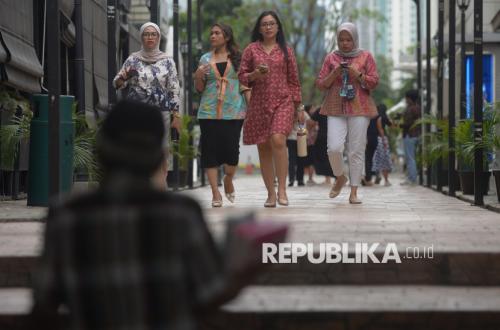
The increase in the price of non-subsidised Pertamax fuel is considered to have the potential to suppress the purchasing power of the middle class. This condition is feared to drive changes in consumption patterns and a shift of users to subsidised fuel. Abra Talattov, Head of the Center of Food, Energy, and Sustainable Development at the Institute for Development of Economics and Finance (Indef), said the surge in Pertamax prices, which reached more than 30 percent, has increased the expenditure burden on middle-class households, especially for daily mobility needs. “The middle class is the main consumer of Pertamax. When they have to pay Rp16,250 per litre from the previous price of Rp12,300, there is a spending surge of 32.1 percent for daily mobility. This forces them to dig deeper into their pockets and automatically cuts the budget allocation for other basic needs,” Abra said in an online discussion titled “Purchasing Power Depressed, Economic Resilience at Stake” on Sunday (14/6/2026). According to Abra, the impact of the Pertamax price increase on national inflation is indeed not as great as if the government raised the price of Pertalite or Diesel. However, the pressure felt by middle-class households, especially in urban areas and buffer zones, is much greater because this group is the main user of non-subsidised fuel. National data shows the average public expenditure on transport reaches 12.46 percent of total income. In several metropolitan buffer zones, this figure is even higher due to the high daily mobility of workers. Depok City is recorded as having the highest portion of transport expenditure in Indonesia, reaching 16.3 percent of total household expenditure. Bekasi City, Surabaya, and several other agglomeration areas also record relatively high ratios. Conversely, DKI Jakarta has a lower transport expenditure ratio thanks to better availability and integration of public transport. Abra explained that before the latest price increase, the use of non-subsidised fuel showed a positive trend. Daily sales of Pertamax last year grew by 20.6 percent, while Pertamax Turbo increased by 76.6 percent. According to him, this trend was driven by increased public awareness of fuel quality, improved purchasing power post-pandemic, and the desire to avoid long queues at subsidised fuel filling stations. However, the significant price increase risks reversing this trend. Abra cited the example of 2022, when the price of Pertamax rose from Rp13,000 to Rp14,500 per litre, the daily sales volume of Pertamax temporarily dropped by 7.89 percent due to consumers switching to Pertalite. Therefore, Indef is urging the government to prepare special policies to maintain the purchasing power of the middle class, which has been considered to be in a vulnerable position. This group is not a recipient of regular social assistance but is very sensitive to energy price increases because their income is relatively close to the minimum wage. One of the proposals put forward is an increase in public transport service subsidies or Public Service Obligation (PSO). The central government is deemed necessary to assist local governments, especially buffer zones such as Depok and Bekasi, to expand services and keep public transport fares affordable. “So I think it is necessary to intervene by providing assistance to local governments, especially local governments that do not have the regional budget capacity to increase PSO,” said Abra. In addition, Abra also proposed providing direct stimulus for low- to middle-income formal workers, such as the Wage Subsidy Assistance (BSU), which the government previously implemented when facing economic pressures. “The central government provides stimulus to the middle group, especially workers whose income or salary is close to the regional minimum wage. This could be given as in previous years, for example, wage assistance or other types of subsidies that they have not enjoyed so far because they are not categorised as poor,” said Abra.