
Government Urged to Find Middle Ground on Industrial Gas Price Hikes
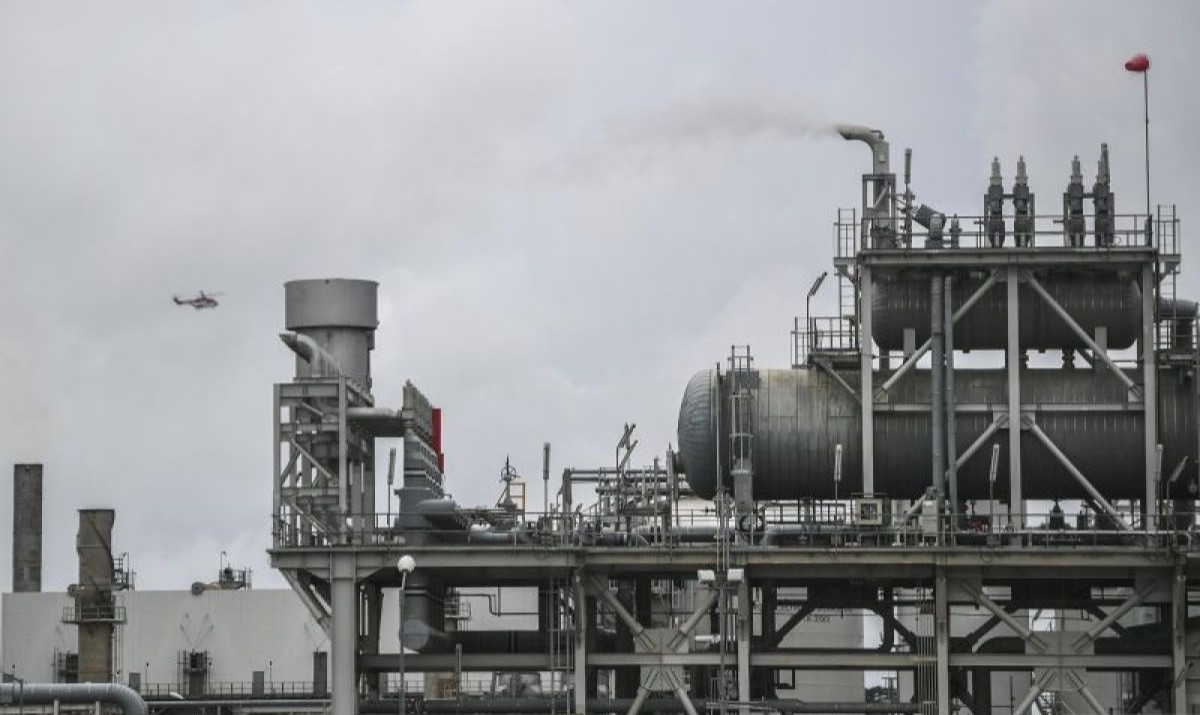
An economist from the Institute for Development of Economics and Finance (Indef), Abra Talattov, is urging the government to find a middle ground in addressing the rise in liquefied natural gas (LNG) prices affecting some industrial customers. The solution is deemed necessary to maintain industrial competitiveness while ensuring the sustainability of the national gas supply chain. Abra stated that the LNG price increase must be viewed objectively, as it is inseparable from the dynamics of the global energy market and the declining domestic pipeline gas supply in recent years.
“The increase in LNG prices for industrial consumers did not occur in a vacuum. There is significant pressure from the global energy market due to the geopolitical crisis, which has increased upstream LNG acquisition costs,” Abra said in a statement in Jakarta on Thursday.
According to Abra, pipeline gas supply for industrial needs has continued to decline. In 2024, the supply was recorded at approximately 479 BBTUD, dropping by 16 percent to around 400 BBTUD in 2025. This decline is not only due to the natural depletion of gas production but also related to government allocation policies that prioritise the electricity sector over industry. “As a result, the gap between pipeline gas supply and industrial demand is widening. In this situation, LNG becomes an alternative to maintain energy supply for the industrial sector,” Abra explained.
He noted that LNG has a longer supply chain compared to conventional pipeline gas. LNG must go through production, liquefaction, shipping, storage, and regasification processes, whereas pipeline gas typically only involves production, transmission, and distribution stages. Although LNG serves as an alternative supply, Abra warned that the impact of rising LNG prices on industry must be a government concern. Increased energy costs can raise production expenses, lower factory utilisation, reduce industrial competitiveness, and potentially affect employment.
Abra also assessed that the position of gas distribution business entities needs to be understood proportionally. He stated that midstream and commercial gas players do not have full discretion in determining prices, as various price components are already within the government’s regulatory corridor. “The increase in industrial gas prices is not only happening in Indonesia but is part of regional and global energy market pressures. Therefore, resolving the issue of industrial gas prices must accommodate the entire gas value chain,” he said.
He encouraged the government to formulate a solution involving all stakeholders in the gas supply chain, from upstream producers, infrastructure providers, and national gas aggregators to midstream players and end-user industries. Several steps the government can take, according to Abra, include optimising domestic LNG prices at the upstream level, accelerating the reallocation of gas supply for domestic needs, reviewing LNG export swap schemes, thoroughly evaluating the Specific Natural Gas Price (HGBT) policy, preparing temporary mitigation schemes for affected industries, and encouraging the diversification of industrial energy sources. He also assessed that Indonesia needs an integrated national gas infrastructure roadmap until 2035, covering the construction of the Kalimantan-Java backbone pipeline, strengthening inter-regional connectivity, developing LNG terminals and regasification facilities, and optimising existing pipeline networks.
Previously, Minister of Energy and Mineral Resources Bahlil Lahadalia stated that the government is seeking a middle ground with stakeholders to address the impact of rising industrial gas prices. “We are looking for a way to mediate this, so that industries are not burdened with high gas prices,” Bahlil said in Jakarta on Thursday. “I have held meetings with them, with associations, and with labour representatives. Now I am in technical meetings with Pertamina to find an ideal figure so that our industries can survive.”
Bahlil noted that the price increase is likely affecting industrial gas users who do not receive the HGBT facility. “There is a gas price increase in several non-HGBT industries. Because there are two types of gas, the HGBT, which is essentially subsidised by the state, and the non-HGBT, which is the general price,” he said. Bahlil explained that several wells, particularly in West Java, are experiencing a decline in production. To cover the supply shortfall, industries are seeking new sources through LNG from other regions, causing logistics costs to influence the final industrial gas price.