
Government Urged to Explain Halal Certification Mandate Delay in Detail
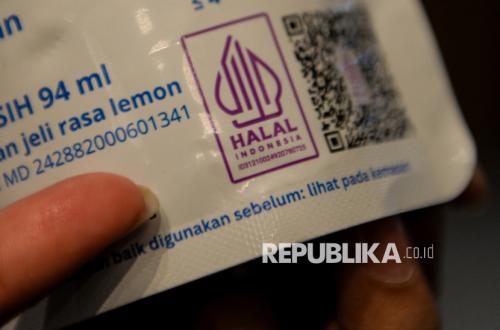
JAKARTA — Handi Risza, deputy head of the Center for Sharia Economic Development (CSED) at the Institute for Development of Economics and Finance (Indef), said the government must provide a comprehensive explanation for delaying implementation of mandatory halal certification. He said the two-year postponement should prompt a serious evaluation, as the public has the right to ask how far the government had prepared to implement a policy that had already been planned.
“The government must not impose a requirement only for the infrastructure, assistance, budget and certification capacity to prove inadequate as the implementation deadline approaches,” Handi told Republika in Jakarta on Saturday (17 October 2026).
If the problem is businesses’ readiness, particularly that of MSMEs, the solution is not simply to push back the deadline but to improve the system’s overall readiness, Handi said. He said he did not want delays to become a recurring pattern that weakens legal certainty and erodes businesses’ confidence.
“The government must openly explain what is not ready, who is affected, the basis for the postponement, and the concrete targets that must be achieved over those two years,” he added.
At the same time, Handi said halal policy must not pursue formal compliance without taking businesses’ capacity into account. He warned that MSMEs should not be burdened with disproportionate costs, procedures and bureaucracy as a result of the policy.
“What we should demand is not merely that the requirement be imposed immediately without exceptions, but that the government have a clear, measurable and accountable roadmap. The timetable may be flexible, but commitment to the policy’s objectives must not weaken,” Handi said.
Handi identified four main challenges to implementing mandatory halal certification. The first is the readiness and capacity of MSMEs.
Small businesses face constraints in capital, knowledge, administration and access to assistance, he said. The government must ensure that halal certification does not become an obstacle to MSMEs’ growth and competitiveness.
“Free certification assistance must be properly targeted, the process must be simple, and support must genuinely reach micro-enterprises, including those in remote areas,” he added.
The second challenge is the capacity of the halal certification ecosystem. Handi urged the government to ensure sufficient numbers of halal product process assistants, halal auditors, halal inspection bodies and necessary laboratories, as well as integrated administrative services.
“The issue is not just the number of certificates issued, but also the speed, quality, consistency and affordability of the certification process,” he said.
The third challenge is coordination and regulatory certainty. Handi said implementation must involve multiple ministries and agencies, local governments, the Halal Product Assurance Agency (BPJPH), businesses and other relevant institutions. Weak coordination, he said, could leave businesses facing overlapping procedures and inconsistent information.
“The government must build a single, accessible service system, with a clear division of responsibilities and service standards,” Handi said.
The fourth challenge is ensuring that the policy does not stop at administrative compliance. In Handi’s view, halal certification should form part of a broader strategy to develop the national halal industry.
“Indonesia must be more than a market for halal products; it must also become a producer, exporter and centre of innovation for halal products that can compete in global markets,” he said.
Source: jawawa.id (https://jawawa.id/newsitem/government-urged-to-explain-halal-certification-mandate-delay-in-detail-1792500684)
Originally published by Republika (https://halalhub.republika.co.id/berita/tn7fa8490/pemerintah-ditagih-penjelasan-konkret-terkait-penundaan-kewajiban-sertifikasi-halal), translated from Indonesian