
Government urged to establish child protection system during forest fires
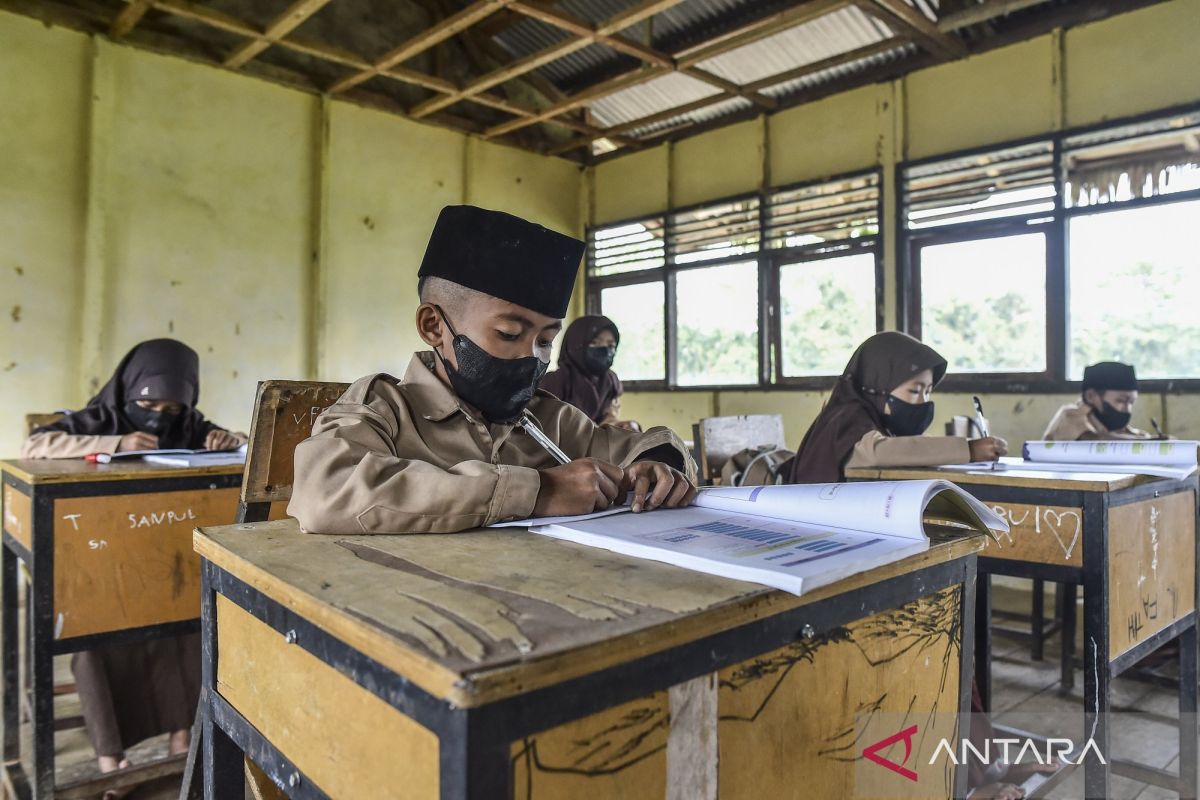
What we must build is a system that ensures children remain protected in any situation.
Jakarta (ANTARA) - The Indonesian Commission for Child Protection (KPAPI) is urging central and regional governments to establish a unified protection system to ensure children remain safe in all circumstances, including during forest and land fires (karhutla).
“We must not become accustomed to children living in a cycle where there is smoke, schools are closed, the smoke clears, schools reopen, and then the smoke returns. What we must build is a system that keeps children protected regardless of the situation,” said KPAI Vice Chairman Jasra Putra when contacted in Jakarta on Monday.
According to him, the issue of forest fires should not be viewed solely as a matter of fire hotspots and the total area of burnt land.
Forest fires are also a test of the state’s ability to ensure that children remain healthy, safe, and able to access education and public services amidst uncertain conditions.
“We cannot treat forest fires as incidents that are only addressed once the smoke has become thick. This uncertainty should instead drive local governments to be more prepared. Children must not be left waiting for the situation to worsen before they are protected,” said Jasra Putra.
“Local governments should not wait until air quality reaches extreme conditions before making decisions,” he added.
He suggested that the government should have several scenarios that can be immediately activated based on developments in air quality, wind direction, hotspots, visibility, health reports, and field conditions.
“We must shift from a reactive pattern to an anticipatory one. Do not wait for children to begin experiencing widespread respiratory issues before we act. Do not wait until schools are no longer viable before considering alternative learning methods,” he said.
KPAI is encouraging local governments to build an integrated early warning system.
Data from BMKG (Meteorology, Climatology, and Geophysical Agency), BPBD (Regional Disaster Management Agency), Health Offices, Education Offices, educational institutions, and village/sub-district governments must be connected so that child protection decisions can be made based on actual conditions.
“Community health centres (Puskesmas) and health facilities must be prepared to handle the increase in respiratory complaints, including the availability of medicine, healthcare personnel, service rooms, and referral mechanisms,” he said.
Thirdly, local governments are requested to create adaptive education protocols.
“When air quality deteriorates, schools must have clear options: reducing outdoor activities, altering school hours, implementing distance learning, or taking other steps according to the level of risk,” he said.
Fourthly, the right of children to basic services must be guaranteed to continue even when schools implement distance learning.
“The decision to learn from home must not shift the burden of protection onto the family. When children learn from home, the state must not feel its duty is complete. Instead, it must be ensured that children have a safe learning space, internet access, parental guidance, nutritious food, healthcare, and a home environment that is also protected from smoke exposure,” said Jasra Putra.