
Government Urged to Enact Museum Law and Revise Cultural Heritage Law
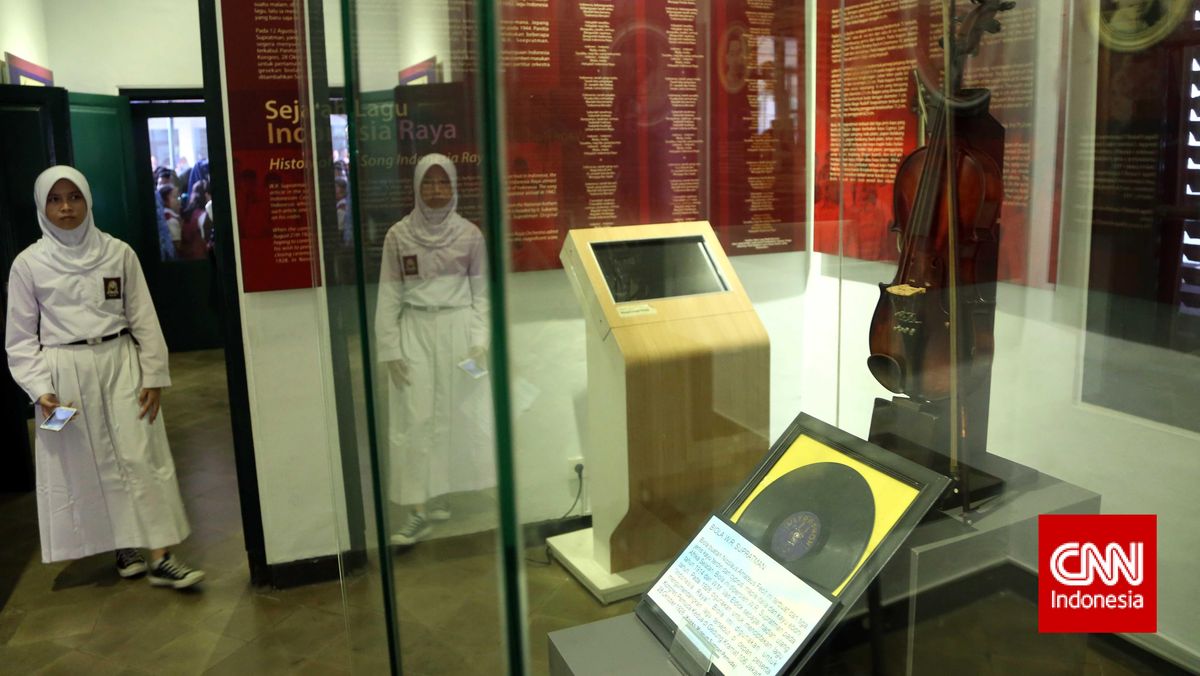
The Chairman of the Indonesian Museum Association (AMI), Putu Supadma Rudana, has stated that regulatory aspects represent the biggest challenge for Indonesian museums amid global conditions that could potentially affect identity and the younger generation. The establishment of a Museum Law and the revision of the Cultural Heritage Law are deemed urgent.
He argued that culture must be placed as the foundation of national development, as mandated by the constitution. According to him, the idea of culture has been the spirit within the Preamble of the 1945 Constitution of the Republic of Indonesia and is reinforced in Article 32 of the 1945 Constitution, which affirms the state’s obligation to advance Indonesia’s national culture.
“The essence of nation-building must be built from culture. Museums are institutions that house, study, care for, and convey the wealth of that civilisation to the next generation. Therefore, museums hold a very strategic position,” Putu said during a Public Hearing Meeting (RDPU) with Commission X of the Indonesian House of Representatives (DPR RI) via a written statement on Thursday (4/6).
Putu revealed that Indonesia currently has 516 museums, of which 373 are registered and approximately 289 have undergone standardisation and evaluation. He noted that the return of the Directorate of History and Museums following the formation of the Ministry of Culture in 2024 is an important momentum to strengthen national museum governance.
However, he cautioned that the majority of museums in Indonesia are currently managed by private entities, foundations, and individuals who have been facing various challenges, ranging from limited funding to a lack of supporting facilities and infrastructure. “Many figures and members of the public have donated their energy, thoughts, and even their wealth to build museums so that the nation’s artefacts and cultural works do not entirely go abroad and can continue to be enjoyed by the nation’s children. Museums are built not for profit, but for benefit and civilisation,” he stated.
Putu suggested that museums need to be reinterpreted in the context of modern Indonesia. A museum is not merely a place for storing historical objects or a symbol of the past, but a living institution that plays a role in building the nation’s character. “A museum is not a place that is alienated or abandoned. A museum is the noble achievement of a nation. A museum is the nation’s pillar, the highest house of culture, the eternal home of civilisation, a home of inspiration, a home of the archipelago’s noble narratives, and a home of the nation’s noble heritage,” he said.
Putu assessed that strengthening museums is increasingly important amid the challenges of a national identity and personality crisis. Quoting the thoughts of Indonesia’s first President Soekarno, he noted that Indonesia has struggled to realise political sovereignty and economic self-reliance, yet nation-building with a cultural personality still needs continuous strengthening. “A great nation must make culture the locomotive for building identity and national life. In various developed countries, culture is the driver of various development sectors,” he stated.
Therefore, AMI is pushing to revive the national movement ‘Let’s Visit Museums First’. He argued that museums should be the initial destination when people visit an area so they can understand the local history, noble values, artefacts, and cultural identity before enjoying other tourist destinations.
Putu further stated that the regulatory aspect is currently the biggest challenge for Indonesian museology because there is no Museum Law. Indonesia already has Law Number 11 of 2010 on Cultural Heritage, Law Number 5 of 2017 on the Advancement of Culture, as well as various government and ministerial regulations related to museology. According to him, the position of museums in these two laws remains very limited. In the Cultural Heritage Law, museums are mentioned in a limited way and positioned more as storage places, while in the Cultural Advancement Law, museums are not yet placed as strategic institutions with a central role in the protection and development of national culture.
“The home is not yet there. We have regulations on cultural heritage and the advancement of culture, but we do not yet have a Museum Law. Therefore, strengthening regulations is an urgent need,” he said.
Putu also highlighted the importance of strengthening regulations to support the repatriation of Indonesian artefacts and cultural objects that are currently still abroad. The existence of a Museum Law will strengthen Indonesia’s position in fighting for the return of the nation’s cultural heritage. “Cultural heritage and national artefacts have irreplaceable value that cannot be compensated with money. Therefore, the protection of collections must be a serious concern in strengthening future regulations,” he stated.
Besides pushing for the issuance of a Museum Law, AMI also proposed revisions to Law Number 11 of 2010 on Cultural Heritage and Law Number 5 of 2017 on the Advancement of Culture to solidify the position of museums as strategic cultural institutions. Furthermore, AMI is also advocating for the establishment of a body specifically handling museums, cultural heritage, and the advancement of culture to strengthen national policy coordination.
Source: jawawa.id (https://jawawa.id/newsitem/government-urged-to-enact-museum-law-and-revise-cultural-heritage-law-1780599040)
Originally published by CNN Indonesia (https://www.cnnindonesia.com/nasional/20260604222329-20-1365520/pemerintah-diminta-buat-uu-permuseuman-hingga-revisi-uu-cagar-budaya), translated from Indonesian