
Government Urged to Dialogue with Local Governments on Employee Expenditure
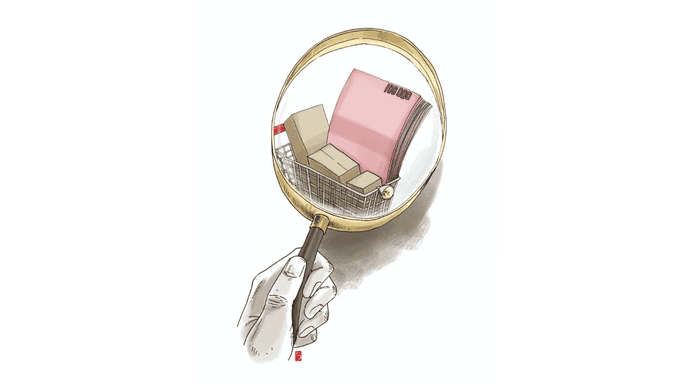
The central government is urged to resume dialogue with regional governments regarding the implementation of a maximum 30% employee expenditure from the Regional Revenue and Expenditure Budget (APBD). This is necessary to ensure that regional governments can comply with the provisions of Law No. 1/2022 on Financial Relations between the Central Government and Regional Governments (HKPD), which will take effect next year.
Executive Director of the Committee for Monitoring the Implementation of Regional Autonomy (KPPOD), Herman N. Suparman, stated that since the HKPD Law was enacted in 2022, regional governments appear not to have prepared for the 30% maximum employee expenditure stipulation from the APBD.
“Over the last 4-5 years, regional governments have not undergone a transition process to align their employee expenditures with the HKPD Law mandate,” he said when contacted on Monday (6/4).
In that period, he added, regional governments have been actively adding employees, both civil servants (PNS) and Government Employees with Work Agreements (PPPK). This is seen as impacting their readiness to implement the stipulated employee expenditure obligation.
However, since 2022, regional governments have had time to transition or adjust their employee policies. According to Herman, the regional governments’ continued addition of staff is linked to needs and the political psychological impact calculations by regional heads.
Nevertheless, Herman does not entirely blame the regional governments. The central government’s budget efficiency policies, which have led to cuts in Transfers to Regions (TKD), have also contributed to the decisions made by regional governments.
These TKD cuts have left regional governments facing two choices: prioritising development or maintaining and adding employees. Both options automatically sacrifice one of the available choices. This is because 90% of regional governments heavily rely on funds transferred from the central government.
“With this fiscal limitation, regional governments are faced with two choices. First, they prioritise development spending, but on the other hand, they must rationalise employees, or they prioritise employees and sacrifice development; those are their current choices,” Herman explained.
Therefore, dialogue between the central government and regional governments is needed. This is also viewed as crucial because many PPPK employees in regional governments work in essential sectors such as education and health. If the maximum 30% employee expenditure policy from the APBD is implemented, public services in those two sectors are feared to be affected.
“For that reason, in our view, heading towards implementation next year, there should already be dialogue between the central government and the regions. We at KPPOD encourage an asymmetric approach, meaning that interventions are needed differently according to each region’s context and needs,” Herman clarified.
“The central government needs to conduct assessments of regional needs and related personnel so as not to disrupt public services. If they truly comply with the HKPD Law, if a region does not implement the 30% employee expenditure, there will be sanctions. The sanctions could range from delaying transfers to regions to cutting TKD,” he continued.
In addition, regional governments are also urged to begin mapping priority programmes. This way, Herman said, regional governments can adjust development and employee policies to their fiscal capacity. Moreover, the HKPD Law also requires regional governments to allocate at least 40% of the APBD for infrastructure.
“In the HKPD Law, what regional governments must pay attention to is infrastructure expenditure, at least 40% of the APBD; that also needs to be considered by regional governments besides employee expenditure,” Herman concluded.
Source: jawawa.id (https://jawawa.id/newsitem/government-urged-to-dialogue-with-local-governments-on-employee-expenditure-1775631156)
Originally published by Media Indonesia (https://mediaindonesia.com/politik-dan-hukum/876647/pemerintah-didorong-berdialog-dengan-pemda-soal-belanja-pegawai), translated from Indonesian