
Government Urged to Clarify Aircraft Fare Ceiling Regulations
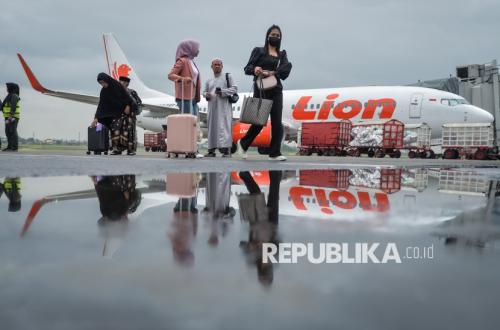
Rising airline operational costs are driving the need for certainty in aircraft ticket fare regulations to keep them under control. Clarity on upper and lower limits is deemed essential to maintain a balance between industry sustainability and consumer protection.
DPR Commission VII member Bambang Haryo Soekartono believes the government must promptly establish adaptive fare regulations in response to cost dynamics, including increases in aviation fuel prices.
According to Bambang, with incentives such as VAT and exemptions from import duties on spare parts, fare increases should be kept within reasonable bounds. “If we calculate that, the aircraft fare increase won’t be too large, only around one or two percent. That’s if we want fairness,” said Bambang in Jakarta on Tuesday (28/4/2026).
He assessed that fare certainty would provide clear direction for industry players while safeguarding public purchasing power. Without firm regulations, there is potential for uneven price surges across various flight routes.
“Now we still don’t know what the government’s upper limit is. So it’s as if it’s unclear. This isn’t right,” he stated.
Bambang added that the tourism sector heavily relies on affordable air transport. Therefore, fare stability is a crucial factor in maintaining tourist movement and regional economic activities.
“Tourism can run well if transportation is properly controlled,” said Bambang.
He also urged that fare policy formulation be done comprehensively, involving stakeholders including consumer protection agencies, to produce a transparent and accountable scheme.
On the other hand, Bambang appreciated the government’s policy of keeping subsidised fuel prices stable, which helps contain transportation cost pressures.
Strengthening fare regulations is expected to create business certainty for airlines, ensure affordability for the public, and support sustainable tourism sector recovery.