
Government Urged to Build Two-Layer Economic Defence
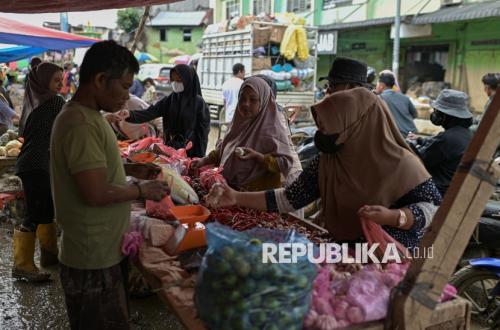
Amid ongoing global pressures on the world economy, House of Representatives member Azis Subekti from the Gerindra Party has reminded that the primary measure of Indonesia’s economic resilience is not solely determined by the rupiah’s exchange rate against the US dollar, but by the state’s ability to maintain public purchasing power and welfare. According to Azis, too much public debate focuses on rupiah exchange rate fluctuations, while the issues most felt by the people lie in the prices of daily basic necessities. “Most Indonesians do not monitor exchange rate movements every day. They look at the price of chillies, the price of rice, transport costs, cooking oil prices, and other household needs. That is where a nation’s economic strength is truly tested,” said Azis Subekti on Thursday. He stressed that while the weakening of the rupiah needs to be watched, it becomes a serious problem when the impact spreads to the people’s kitchens through rising basic commodity prices. “The weakening of the rupiah only becomes a major threat when it successfully reaches the people’s dining table. Therefore, our main focus is not just maintaining exchange rate stability, but ensuring the people’s basic needs remain affordable,” he said. Azis explained that world economic history shows many countries have been able to continue growing despite facing currency pressures. Japan, South Korea, and China, he noted, have proven that national economic strength is ultimately determined by production capacity, technological mastery, job creation, and the ability to keep inflation in check. Referring to Statistics Indonesia data for May 2026, annual inflation was recorded at 3.08 percent, still within a relatively manageable range. However, Azis highlighted the fact that the largest contributor to inflation came from the food, beverages, and tobacco group, which recorded inflation of 4.94 percent with a 1.43 percent contribution to national inflation. “We see that nearly half of inflationary pressure comes from the people’s basic needs. This sends a very clear message that the main battleground for our economic struggle currently is food stability,” he explained. He noted that a number of commodities experienced quite significant increases in May 2026, including red chillies which rose 25.64 percent, tomatoes 9.82 percent, shallots 6.65 percent, and cooking oil 2.87 percent. According to Azis, the surge in these commodity prices cannot be solely attributed to the rupiah exchange rate. Many other factors are more dominant, ranging from distribution problems, weather, long supply chains, high logistics costs, to production imbalances between regions.