
Government urged to accelerate distribution of El Niño-resistant seeds
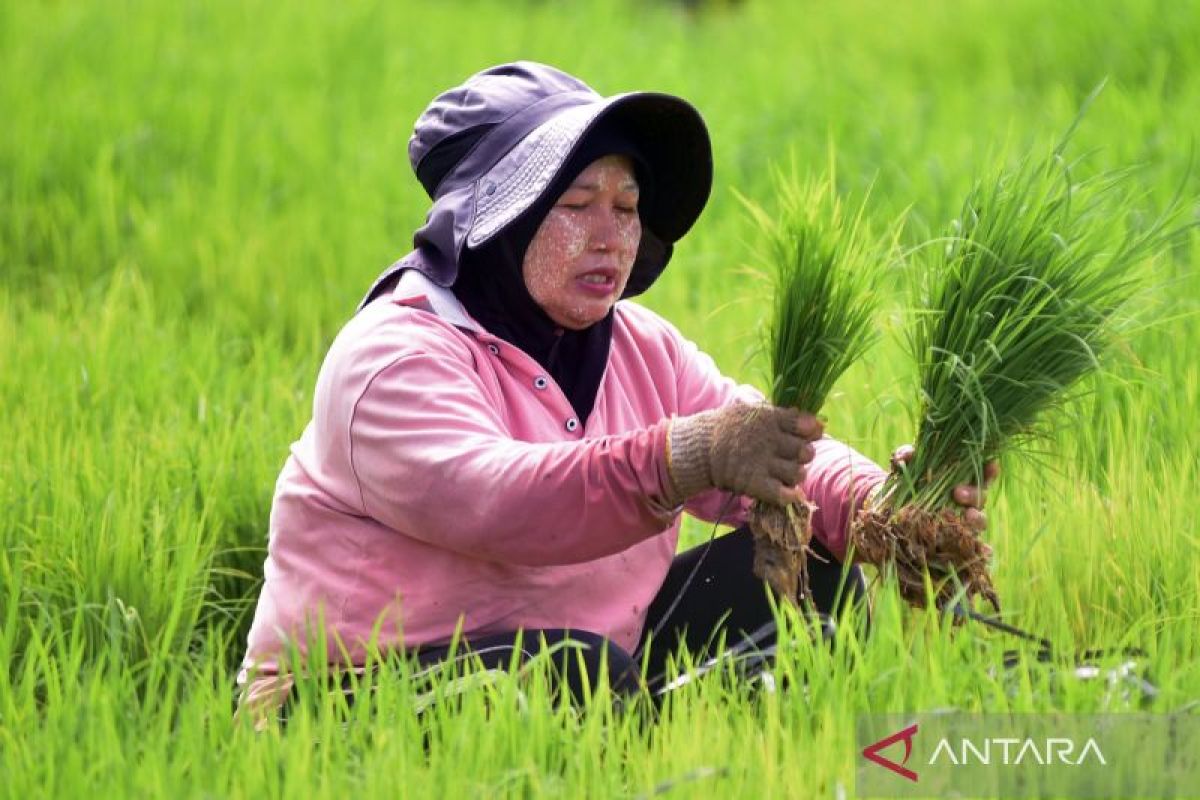
Jakarta (ANTARA) - Eliza Mardian, a researcher at the Centre of Reform on Economics (CORE) Indonesia, is urging the government to accelerate the distribution and use of drought-resistant seeds and superior varieties to suppress the risk of crop failure caused by the potential ‘El Niño Godzilla’.
Eliza stated that varieties of rice, maize, and soybeans that are more water-efficient or have shorter harvest cycles can help farmers face prolonged droughts while simultaneously reducing the risk of production declines.
“The use of drought-resistant seeds and superior varieties is also necessary. Rice, maize, and soybean varieties that are more water-efficient or quick-harvesting can reduce the risk of crop failure by 10–15 per cent,” Eliza told ANTARA in Jakarta on Friday.
According to her, the accelerated distribution and adoption of superior seeds must be accompanied by intensive agricultural extension services so that farmers can optimally apply cultivation technologies according to the conditions of their respective regions.
She assessed that the use of appropriate varieties serves as an important complement to the strengthening of water infrastructure, as drought can disrupt plant growth during critical phases.
Eliza noted that rice is the commodity most vulnerable to the impacts of El Niño because it requires large amounts of water, particularly during the flowering and grain-filling stages.
“Rice is very vulnerable because it needs a lot of water, especially during the flowering and grain-filling phases. Rain-fed paddy fields and simple irrigation systems are the most affected by drought,” she said.
In addition to rice, maize is also quite vulnerable to drought, particularly during the flowering phase, even though its water requirements are not as high as rice.
According to her, many maize crops are cultivated on dry land or during the dry season, thus still requiring appropriate mitigation strategies through variety selection and good water management.
Meanwhile, horticultural crops are considered relatively easier to manage in terms of water needs through pumpisation. However, these commodities still face the risk of increased pest and disease attacks during the dry season.
Eliza believes the government needs to strengthen a combination of policies involving the provision of superior seeds, extension services, water management, and rapid responses to pest and disease disturbances.
She noted that national food production targets can still be achieved if mitigation is carried out effectively and efficiently through an appropriate policy mix.
She cited China as an example, which was able to record an increase in production during the 2023 El Niño despite a decrease in harvested area, supported by increased productivity, land management, and responsive pest and disease control.
“Production targets can still be achieved as long as mitigation is performed effectively and efficiently. Therefore, it all depends on the policy mix adopted,” she stated.
Eliza added that policies to face El Niño cannot rely on a single instrument but must combine seed readiness, water management, extension services, and land management to ensure food production remains stable.
Meanwhile, Minister of Agriculture Andi Amran Sulaiman previously stated that the use of adaptive superior varieties is one of the strategies to maintain food production amidst the threats of drought and climate change.
According to Amran, farmers can utilise short-duration and drought-tolerant varieties, such as the Inpago 4–13, Inpari 38–46, Situbagendit, Situpatenggang, Padjadjaran, and Cakrabuana groups, to maintain production during the dry season.
The government is also encouraging the use of short-duration varieties, water-saving technologies, and more efficient planting pattern arrangements to reduce the impact of El Niño on the agricultural sector.
The Secretary-General of the Ministry of Agriculture, Suwandi, stated that accelerated planting is being continuously encouraged by striving to ensure the interval between harvest and replanting is no more than 14 days, in order to increase the planting index and food production.
Source: jawawa.id (https://jawawa.id/newsitem/government-urged-to-accelerate-distribution-of-el-nino-resistant-seeds-1781870093)
Originally published by Antara (Indonesian) (https://www.antaranews.com/berita/5614959/pemerintah-diminta-percepat-distribusi-benih-tahan-risiko-el-nino), translated from Indonesian