
Government Unveils New Strategies to Propel Economy in Second Half
The Indonesian government is deploying a new set of strategies to drive economic growth in the second half of the year, following a strong performance in the first semester. The Central Statistics Agency (BPS) recorded that the economy grew by 5.29% year-on-year in the second quarter of 2026, bringing cumulative growth for the first half to 5.45%, the highest first-semester figure in five years. The economy has now grown above 5% for five consecutive quarters.
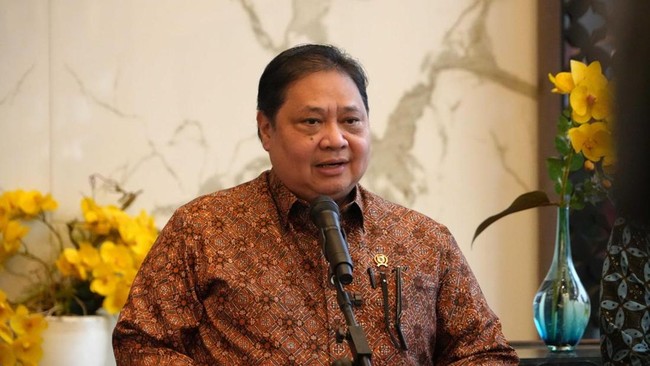
Coordinating Minister for Economic Affairs Airlangga Hartarto stated that this performance demonstrates domestic resilience amid global pressures, including geopolitical conflicts and a world economic slowdown. The International Monetary Fund (IMF) projects global growth of only 3% this year. “Amidst significant global pressures, the Indonesian economy continues to grow strongly and consistently above 5%. This shows our domestic economic foundations are solid and the Government’s policies are effective,” Airlangga said at a press conference in Jakarta on Wednesday.
Regionally, all areas recorded positive growth. Bali and Nusa Tenggara led with 6.10% growth, supported by a tourism recovery. Java remained the main engine of the national economy, growing 5.65% and contributing 56.47% to gross domestic product (GDP). By business field, the processing industry grew 4.52%, driven by the food and beverage and base metals and electronics industries, which expanded by 8.04%. The accommodation and food service sector accelerated sharply, growing 10.60% alongside the expansion of the Free Nutritious Meals (MBG) programme and rising hotel occupancy. The construction sector also grew strongly at 6.68%, supported by accelerated government capital spending and industrial estate development.
Airlangga emphasised that the growth has tangibly improved public welfare. The number of people in poverty fell to 7.45 million in March 2026, or 8.07% of the population, the lowest level ever recorded. Employment reached 148.19 million people, with 522,000 new jobs created between February and May 2026. The Open Unemployment Rate fell to 4.65%, with the proportion of formal workers continuing to rise. “Good growth is growth that creates jobs and reduces poverty. In this first semester, both occurred simultaneously, and the jobs created are of increasing quality,” Airlangga noted.
Entering the second half, the Government sees positive signals from recent indicators. July inflation was controlled at 2.88% year-on-year, the Manufacturing PMI returned to expansionary territory at 50.2, and the Consumer Confidence Index remained optimistic at 117.8. Investment realisation in the first half reached Rp1,010.3 trillion, a 7.2% increase year-on-year, with over half occurring outside Java. Downstream sector investments reached Rp300.1 trillion, absorbing around 1.45 million direct workers. Market confidence remains strong, with S&P Global affirming Indonesia’s BBB rating with a stable outlook.
To maintain momentum, the government has prepared a Rp26.34 trillion stimulus package for the second half. This includes food aid for 33.24 million beneficiaries, a 30% discount on train and sea transport fares, port service fee exemptions, and VAT borne by the government for economy class flight tickets. Internship and vocational training programmes for young workers will also be expanded. In the energy sector, the government has guaranteed no fuel price hikes until the end of 2026, despite the average Indonesian Crude Price reaching US$90.46 per barrel in the first half, well above state budget assumptions. “The government’s principle is clear: people’s purchasing power must not be eroded. Therefore, we are maintaining fuel prices, stabilising food prices, and channelling stimulus appropriately,” Airlangga asserted.