
Government Unveils Eight Stimulus Policies to Safeguard Indonesia's Economic Growth
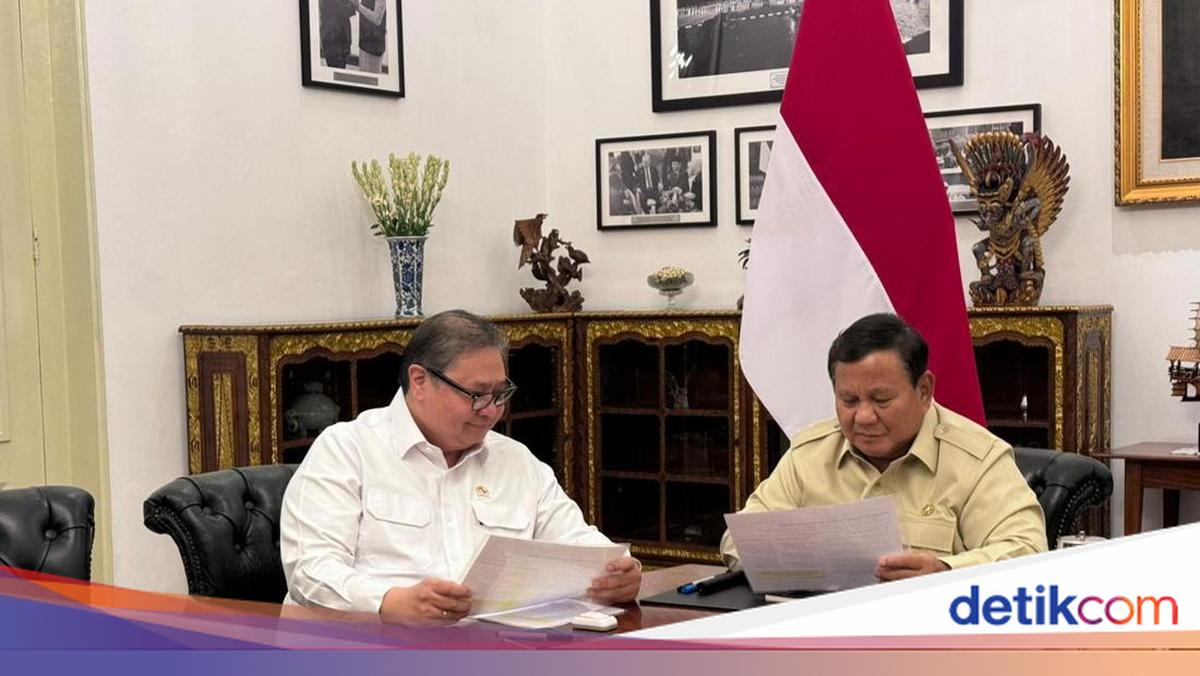
The government has announced eight economic stimulus policies for the second quarter and second semester of 2026. This proactive step is taken to mitigate the risks of global uncertainty while maintaining the momentum of national economic growth. Coordinating Minister for Economic Affairs Airlangga Hartarto stated that the launch of this stimulus is a direct follow-up to the directive of President Prabowo Subianto. “In accordance with the directive of President Prabowo Subianto, on this occasion we are announcing the economic stimulus for the second semester. Most of it has been conveyed after the limited coordination meeting and some is further direction from the President,” Airlangga said at a press conference in Jakarta, Monday (22/6/2026). Airlangga detailed that the eight policies are divided into three main pillars. In the first pillar, which focuses on consumption and the business sector, the government has set a tax incentive for writers in the form of a special Final Income Tax (PPh Final) rate on royalties of 1.5 percent. Still within the same pillar, the government is providing transport discounts to boost public mobility during school holidays, Christmas holidays, and New Year holidays. The discounts include a 30 percent reduction on train tickets and Pelni ship tickets, free port service tariffs for ASDP, and a 100 percent Government-borne VAT (DPT) subsidy for scheduled domestic economy class flight tickets. For the industrial sector, the government is exempting import duty, or setting a zero percent rate, on LPG imports for the petrochemical and plastic raw material industries. This measure is taken to reduce production costs and prevent a surge in consumer goods prices in the market. Moving to the second pillar, which targets middle-class employment, the government is preparing the second phase of the National Internship Programme in July 2026. This programme, with a budget allocation of Rp 4.14 trillion, targets 150,000 recent university graduates. Additionally, Rp 2.12 trillion has been allocated for vocational training. This programme is prioritised for 220,000 vocational high school (SMK) graduates to make them job-ready, as well as providing new skills protection for 50,000 workers affected by layoffs (PHK). In the third pillar, the government is committed to maintaining the purchasing power of the lower-income segment and food stability. This is realised through the distribution of 10 kilogrammes (kg) of Rice Assistance to 33.24 million beneficiary families for three consecutive months starting July 2026, with a budget of Rp 17.54 trillion. Lastly, the government is rolling out the Soybean Price and Food Supply Stabilisation Assistance (SPHP). Through this policy, tofu and tempeh artisans will receive a maximum subsidy of Rp 2,000 per kg for a quota of 250,000 tonnes in the first phase. “So, the total stimulus issued by the government for this second semester is valued at approximately Rp 26.34 trillion. It consists of transport incentive stimulus of around Rp 2.04 trillion, internship and vocational training budgets of around Rp 6.26 trillion, and food assistance of Rp 18.04 trillion,” Airlangga concluded.