
Government to Use Weather Modification to Combat Forest and Land Fires
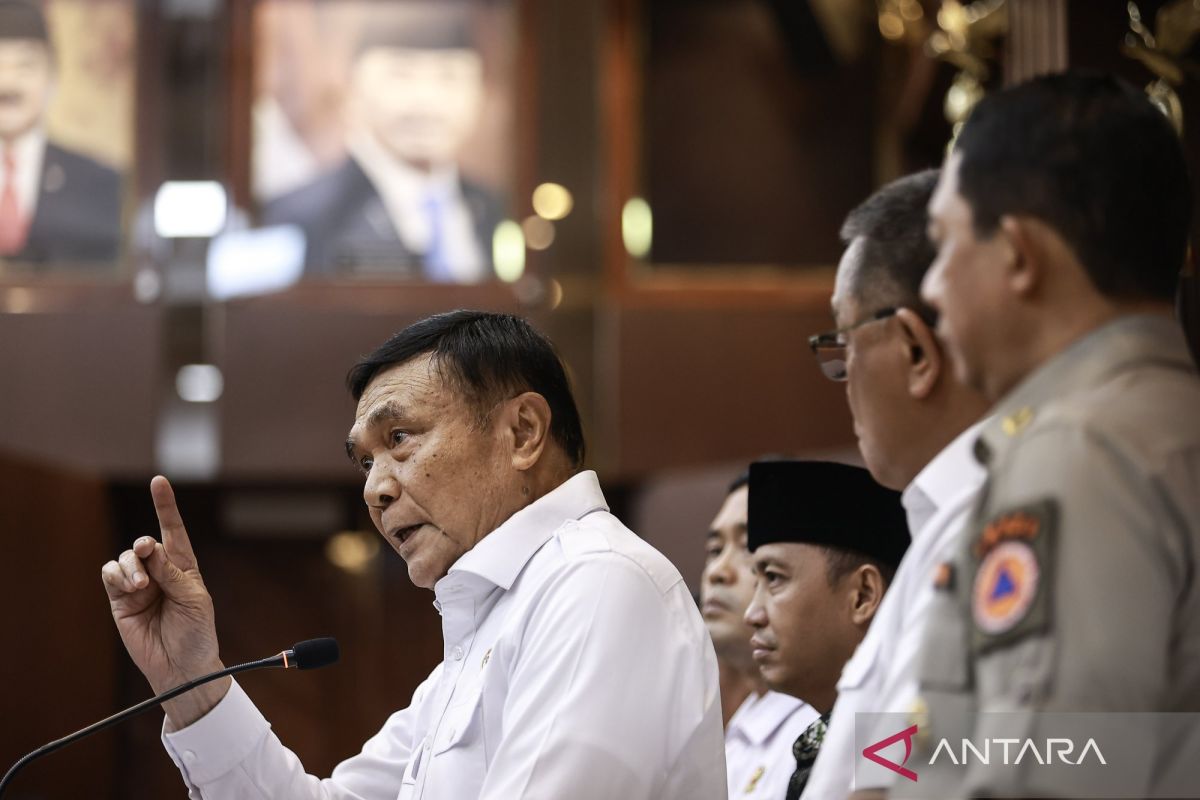
Jakarta (ANTARA) - Coordinating Minister for Political and Security Affairs Djamari Chaniago said the government is working to extinguish forest and land fires through weather modification operations.
The effort, according to Djamari, is worth pursuing because it is considered the most effective way to put out fires burning across vast areas.
“But there is one condition we must face, namely we have to find rain clouds. As long as we cannot find those rain clouds, we will not be able to create artificial rain,” Djamari said during a press conference at the Coordinating Ministry for Political and Security Affairs building in Jakarta on Monday.
To create artificial rain, officers must fly aircraft and disperse a salt-like substance into rain clouds.
The salt substance then triggers a condensation process in the clouds so that they can release a sufficiently large amount of water.
So far, Djamari continued, his team has not seen any rain clouds in the sky over the fire locations. Nevertheless, he believes rain clouds will appear in the near future.
When rain clouds appear, he will order his staff to carry out weather modification operations at the fire sites.
“Based on current estimates, in the coming weeks up to 18 August there are three or four days when rain clouds are likely to be present,” he said.
The government is currently working to extinguish fires that have burned 107,000 hectares of land across Indonesia.
Furthermore, Djamari said the forest and land fires are caused by drought and the El Niño phenomenon currently occurring.
“We are facing a strong El Niño, which has been in effect and is now starting to take hold until early September or early October,” he said.
He explained that the 107,000 hectares of land are spread across several areas categorised as fire-prone and non-fire-prone.
Fire-prone areas are spread across six provinces: Jambi, South Sumatra, West Kalimantan, Central Kalimantan, South Kalimantan, and Riau.
So far, he continued, his team has deployed several helicopter units to extinguish the fires from the air.
“We have deployed around 43 helicopters as of today, plus fixed-wing aircraft ranging from 10 to 15 depending on the need,” Djamari said.
In addition, his team has also deployed ground-based firefighting efforts using flexible tanks or temporary water storage containers.
With these tools, the government can store large amounts of water to be channelled to the fire locations.
Besides deploying firefighting equipment, Djamari will also strengthen coordination with regional governments and relevant agencies to ensure there are no remaining hotspots at the fire sites.
With these efforts, he is confident that hotspots in the disaster areas can be extinguished in the near future.