
Government to Trial New CNG Gas Cylinders to Curb LPG Imports
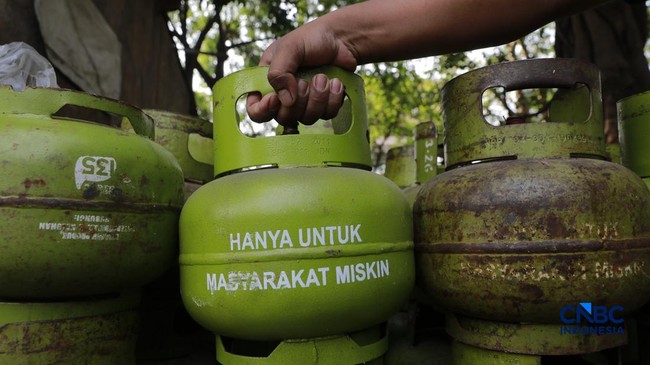
Karawang, CNBC Indonesia – Coordinating Minister for Downstreaming and Energy Transition and Energy and Mineral Resources Minister Bahlil Lahadalia said the government is preparing to use compressed natural gas (CNG) as a substitute to reduce imports of liquefied petroleum gas (LPG). Indonesia still imports 7–8 million tonnes of LPG a year to meet domestic demand.
The conversion policy is being driven by high household LPG consumption, which exceeds 8.5 million tonnes annually, while domestic production capacity is only around 1.8 million tonnes.
Bahlil said the government is currently trialling 3-kilogramme CNG cylinders for household use. The cylinders are being tested by the Centre for Oil and Gas Testing (Lemigas) and the Directorate General of Oil and Gas. The tests are intended to assess CNG as an alternative energy source based on C1 and C2 gases, which are abundant in Indonesia.
“CNG is already in use and works on a principle that is much the same as the city gas network. Some restaurants and hotels use CNG, at prices 30% to 40% lower. This energy uses C1 and C2 gases, which are abundant in our country, making it an appropriate strategy for developing an import-substitution product,” Bahlil said at the inauguration of the LPG refinery in Cilamaya, Karawang, West Java, on Thursday (15 October 2026).
The government says Indonesia’s heavy reliance on imported LPG directly affects the energy subsidy allocation in the state budget. When the Indonesia Crude Price (ICP) is US$70 a barrel, LPG subsidies amount to Rp87 trillion a year. That figure rises to nearly Rp100 trillion annually when the average ICP reaches around US$90–US$100 a barrel.
“The 3kg cylinder is currently being trialled, while 12kg cylinders are already in use. If this innovation can be mass-produced, we can reduce our dependence on imports of 8 million tonnes a year by using domestic supplies,” Bahlil said.
Alongside the CNG trial, the government is working to increase LPG supplies from domestic refineries through cooperation between state-owned PT Pertamina (Persero) and PT Energi Nusantara Perkasa. The Cilamaya refinery can produce around 160 tonnes a day, enough to meet 10%–12% of total LPG consumption in Jakarta and West Java, which ranges from 1,000 to 1,500 tonnes a day.
“According to my figures, consumption in Jakarta and West Java is 1,000–1,500 tonnes a day. With the new refinery producing 160 tonnes a day, around 10% to 12% of LPG demand in West Java and Jakarta can now be met independently from this refinery,” he said.
Source: jawawa.id (https://jawawa.id/newsitem/government-to-trial-new-cng-gas-cylinders-to-curb-lpg-imports-1792075849)
Originally published by CNBC Indonesia (https://www.cnbcindonesia.com/news/20261015195834-4-776626/strategi-tekan-impor-lpg-pemerintah-mau-uji-coba-tabung-gas-cng-baru), translated from Indonesian