
Government to Strengthen Integrated Nickel Downstreaming to Build Battery Industry
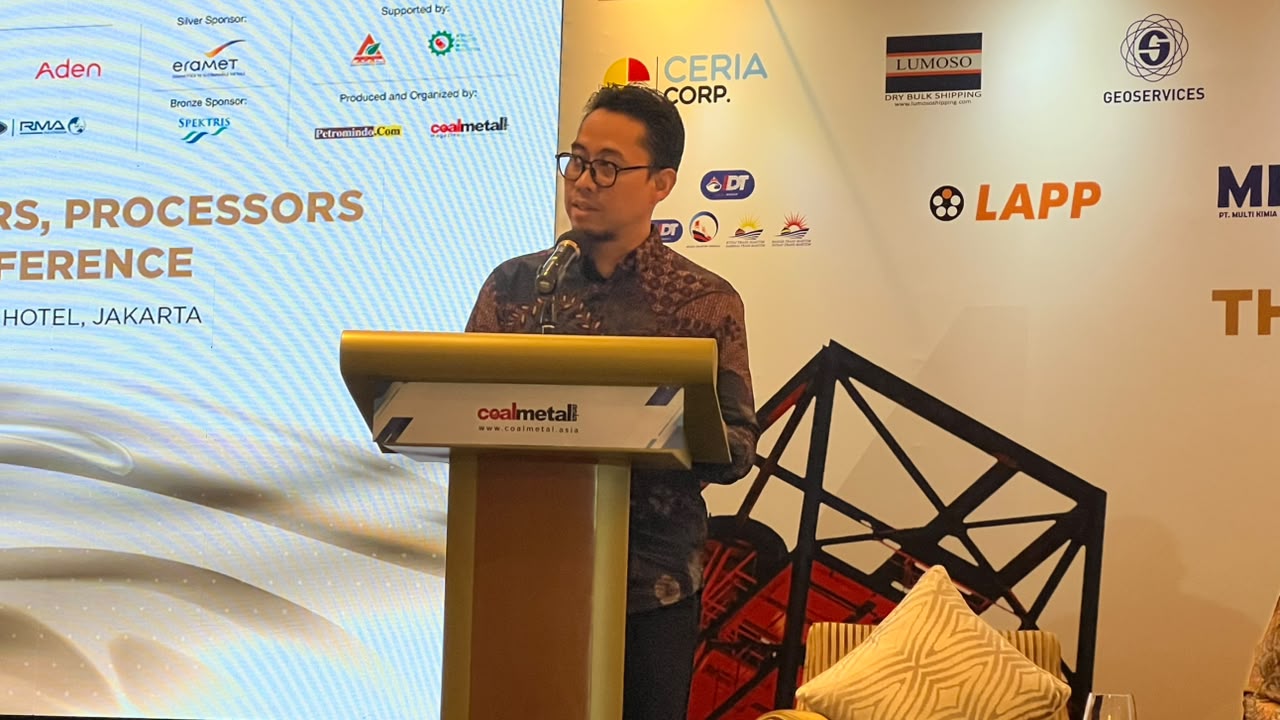
NIKEL.CO.ID, JAKARTA — The government is encouraging Indonesia’s nickel industry to enter a new phase of industrial deepening by expanding investment into electric-vehicle batteries, battery energy storage systems (BESS), advanced materials, manufacturing and recycling.
Rizwan Aryadi Ramdan, Director of Mineral and Coal Downstream Industry at the Ministry of Investment and Downstreaming/BKPM, said future nickel downstreaming could not rely solely on the construction of smelters and refining facilities. The government wants to strengthen industrial integration so Indonesia can produce higher value-added goods.
Rizwan made the remarks while opening the 5th Nickel Producers, Processors and Buyers Conference, organised by Petromindo at the Shangri-La Hotel in Jakarta on Wednesday (4 November 2026).
He said the development of the nickel-processing industry in recent years had increased investment, expanded industrial capacity and created new centres of economic growth. However, changes in the global nickel market called for a more strategic approach to industrial development.
“The next phase of Indonesia’s nickel downstreaming journey will be determined not only by the scale of investment, but also by its quality,” Rizwan said.
He added that deeper industrial integration and the ability to generate sustainable added value would be important factors in shaping the next phase of downstream investment.
Rizwan said Indonesia had built up its mineral-processing industry through the development of smelters and refining facilities. The government’s current priority was to extend the value chain into electric-vehicle batteries, BESS and other high-value-added manufacturing.
“The current priority is to expand development into electric-vehicle batteries, battery energy storage systems, or BESS, as well as other high-value-added manufacturing,” he said.
This development is also intended to strengthen an integrated electric-vehicle ecosystem in Indonesia. The industrial chain covers nickel mining, refining, battery-material production, battery cells, electric vehicles, charging infrastructure and recycling.
According to Rizwan, building processing facilities is not the ultimate goal of downstreaming. The government aims to establish an industrial ecosystem that can compete internationally while producing goods with greater added value.
“The government also recognises that building processing facilities is not the ultimate goal of downstream industry. Our long-term ambition is to develop an industrial ecosystem that can compete internationally and produce higher value-added goods,” he said.
To support this industrial deepening, Rizwan emphasised the importance of stronger integration, technological development, higher productivity and improved global competitiveness for downstream products.
He also urged industry players and investors to broaden their investments beyond physical facilities to include human-resource development, research and innovation capabilities, and domestic suppliers.
“Across all these activities, we encourage companies to invest not only in physical facilities, but also in human resources, research and innovation capabilities, and the development of domestic suppliers,” Rizwan said.
Downstream industry investment in Indonesia totalled more than US$29 billion in January–September 2026, up 11.3% from the same period a year earlier. It accounted for 31.2% of total national investment, which reached around US$96 billion.
The mineral sector, particularly nickel and bauxite, remained one of the main contributors to downstream investment. Some 78% of that investment was realised outside Java, while foreign direct investment accounted for nearly 75%.
Rizwan said these results provided a foundation for moving the industry into its next phase. The government wants to ensure downstream investment not only increases production capacity but also strengthens Indonesia’s position in global value chains.
Going forward, nickel industry development will also need to address the security of raw-material supplies, production-cost efficiency, technology adoption, and compliance with environmental, social and governance (ESG) considerations. By deepening the value chain, the government hopes Indonesia’s nickel industry will become more commercially competitive and technologically advanced, while delivering broader economic benefits to the public.
Source: jawawa.id (https://jawawa.id/newsitem/government-to-strengthen-integrated-nickel-downstreaming-to-build-battery-industry-1793872222)
Originally published by nikel.co.id (https://nikel.co.id/2026/11/05/pemerintah-akan-perkuat-hilirisasi-nikel-terintigrasi-untuk-bangun-industri-baterai-kendaraan-listrik/), translated from Indonesian