
Government to Seek Solution After 2026 OSN Prizes Come Under Scrutiny
The Ministry of Primary and Secondary Education (Kemendikdasmen) is currently seeking a scheme to increase the value of prizes for high-achieving students who win various national talent competitions.
This responds to public criticism concerning the prizes received by winners of the 2026 National Science Olympiad (OSN). Many regretted that the prize amounts were considered too small for high-achieving students, with their value said to have declined from the previous year.
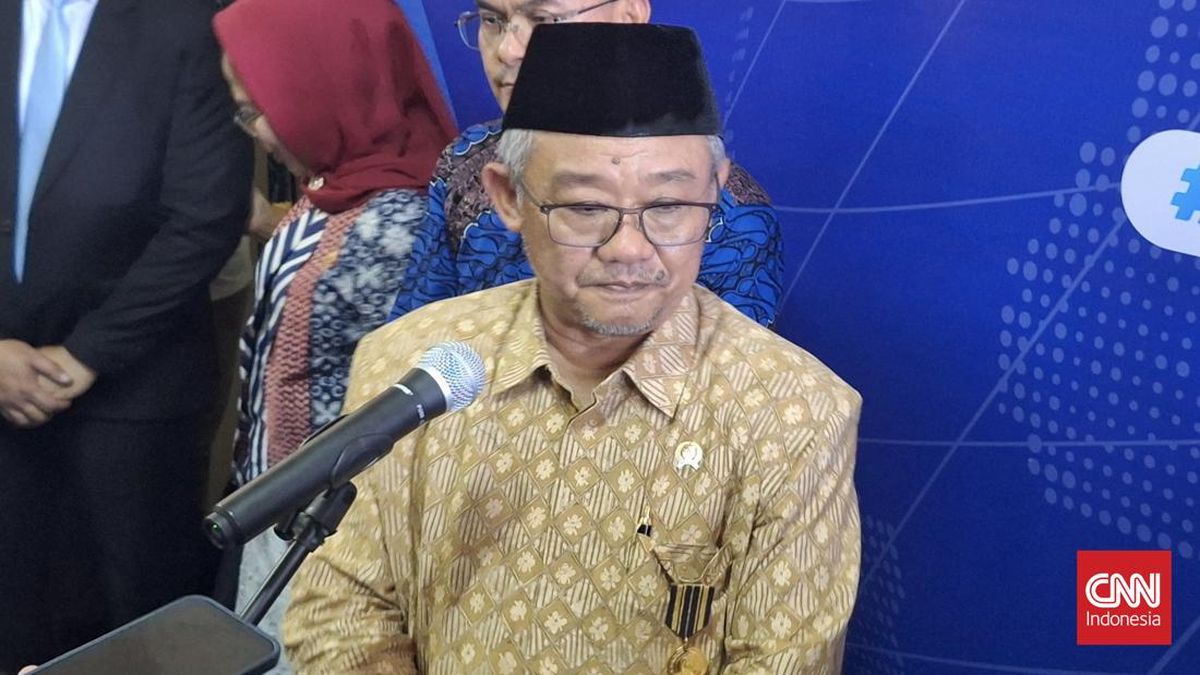
“We are looking for a scheme so that the budget can be drawn from other sources, allowing the prize budget to be increased,” said Minister of Primary and Secondary Education Abdul Mu’ti in a statement on Monday (7/9).
Mu’ti explained that rewarding high-achieving students is an implementation of Permendikdasmen Number 25 of 2025 on Student Talent Management.
Under the regulation, appreciation is one of the stages in talent management, following the processes of identification, development, and actualisation.
“We continue to support and appreciate the achievements of the nation’s children. Our apologies if perhaps the prizes are not large,” he said.
According to Mu’ti, the awarding of appreciation is not solely intended to give prizes to students. It is also expected to serve as an entry point for sustainable talent development.
“This appreciation is part of the recognition given to pupils who have shown dedication, hard work, fighting spirit, and achievement in talent competitions, including the OSN,” he said.
Mu’ti also reminded the public not to measure students’ success solely by the size of the prizes they receive.
“Those who win will also receive support for continuous talent development,” he said.
Meanwhile, Head of the National Talent Development Centre (Puspresnas) Maria Veronica Irene Herdjiono said that appreciation and guidance for high-achieving students do not stop at the giving of prizes or development funds.
She said Puspresnas continues to accompany talented high achievers so they have broader opportunities to develop and compete at the international level.
“Achievement at the national level is not the end of the development process. We continue to accompany high-achieving talents so they can grow and have even broader opportunities,” said Irene.
Support is also provided through opportunities to further their education. One avenue is the Talenta Indonesia Scholarship, a collaboration between Puspresnas and the Education Fund Management Institution (LPDP). The programme provides education funding for high-achieving talents to pursue undergraduate (S1/D4) studies, both at home and abroad.
Furthermore, Irene stressed that the OSN is not solely about pursuing medals or becoming a champion. In her view, the process of taking part in competitions is also a means for students to develop their abilities whilst building character.
“The OSN is not merely about medals or winning. The process of competing becomes a space for pupils to develop their abilities, build character, sportsmanship, fighting spirit, and the mentality of an outstanding Indonesian generation,” said Irene.